Table of Contents
Introduction
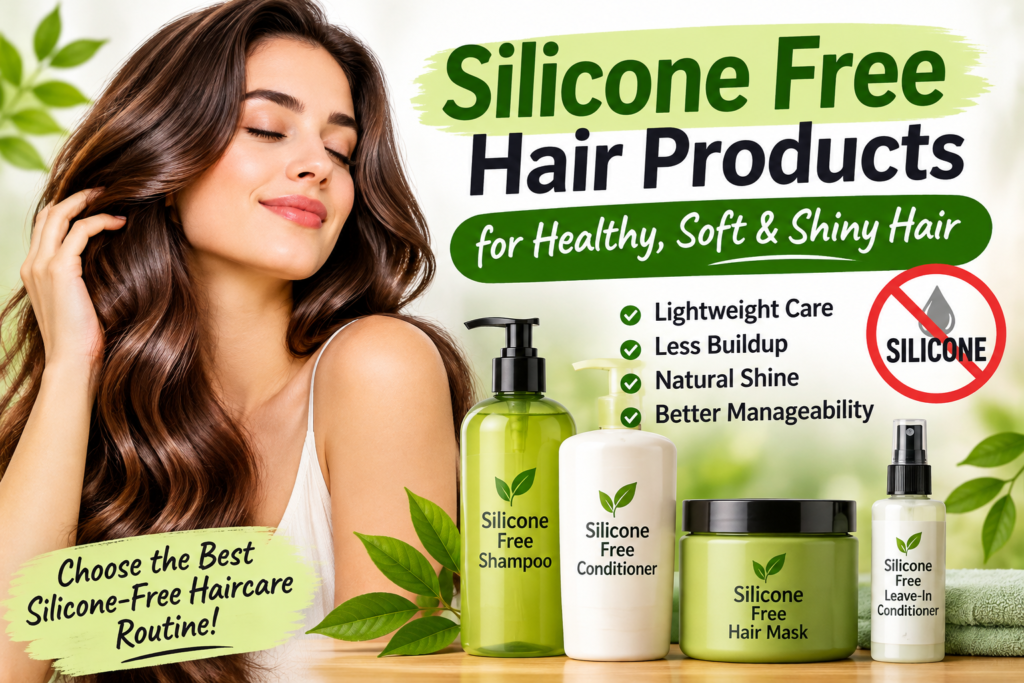
Silicone Free Hair Products have become increasingly popular among people who want softer, lighter, and more manageable hair without relying on silicone-based ingredients. Many shampoos, conditioners, hair masks, leave-in conditioners, and styling products contain silicones because they help smooth the hair, reduce frizz, and create a shiny appearance. However, some people prefer products without silicones because they want a lighter haircare routine or find that certain formulas leave buildup on their hair.
Choosing the right haircare products can make a significant difference in how your hair looks and feels. Whether you have straight, wavy, curly, fine, thick, or damaged hair, understanding silicone-free formulas can help you select products that match your hair’s needs.
Silicone-free haircare does not automatically mean better haircare for everyone. Instead, it offers an alternative for people who prefer lightweight formulas and want to explore different conditioning ingredients.
In this guide, you will learn what silicone-free hair products are, how they work, their benefits, which ingredients to look for, and how to build an effective haircare routine.
What Are Silicone Free Hair Products?
Silicone Free Hair Products are shampoos, conditioners, treatments, and styling formulas that do not contain silicone-based ingredients. Silicones are synthetic ingredients commonly used in cosmetic and haircare products to improve texture, smoothness, shine, and manageability.
They create a thin coating around hair strands, helping reduce friction and making hair easier to comb. Some silicones can also help protect hair from humidity and reduce the appearance of frizz.
Although silicones can be beneficial, certain types may accumulate on hair over time, particularly when used frequently without appropriate cleansing.
Silicone-free formulas use alternative conditioning and moisturizing ingredients to improve the appearance and feel of hair.
Common alternatives include:
- Aloe vera
- Coconut oil
- Argan oil
- Jojoba oil
- Shea butter
- Glycerin
- Panthenol
- Plant-based conditioning agents
These ingredients can help moisturize, soften, and improve hair manageability without relying on traditional silicone ingredients.
Why Do Hair Products Contain Silicones?
Before choosing silicone-free products, it is useful to understand why manufacturers include silicones in haircare formulas.
Silicones are popular because they provide several cosmetic benefits. They help create a smooth surface, reduce tangling, and make hair appear shinier.
Some common reasons manufacturers use silicones include:
1. Reducing Frizz
Silicones can coat the hair shaft and help reduce the effects of humidity. This can make frizzy hair appear smoother and more controlled.
2. Improving Shine
A smooth hair surface reflects light more evenly. This can create the appearance of healthier, shinier hair.
3. Making Hair Easier to Comb
Conditioning silicones reduce friction between strands, which can make detangling easier and help minimize mechanical breakage.
4. Providing a Smoother Texture
Silicones can make hair feel soft and silky immediately after application. This is one reason they are frequently used in conditioners and serums.
5. Supporting Styling Performance
Some silicone ingredients help protect hair from humidity and improve the performance of styling products.
However, not everyone prefers these effects. People who want lighter-feeling formulas may choose silicone-free alternatives.
Benefits of Silicone Free Hair Products
Silicone-free haircare offers several potential benefits, depending on hair type, product formulation, and individual preferences.
Silicone-Free Natural Conditioner | Plant-Based & Colour Safe | Naturals Beauty SA
Holistic Hair Hydrating Conditioner | Nourished Life AU
Your hair will thank you – Emily’s Pillow
13
1. Helps Reduce Certain Types of Product Buildup
Some silicones, particularly less water-soluble varieties, can accumulate on hair when cleansing is insufficient.
Silicone-free products remove these ingredients from your regular routine. This may help people who experience product residue or heavy-feeling hair.
However, silicone-free products can also contain oils, waxes, and conditioning agents that build up. Regular cleansing remains important.
2. Can Make Fine Hair Feel Lighter
Fine hair can become weighed down by rich conditioners and heavy styling products.
Many silicone-free formulas are designed with lightweight ingredients that provide conditioning without making hair feel excessively coated.
This can be helpful for people who want volume and movement.
3. Supports a Lightweight Haircare Routine
Some people prefer hair products that leave their strands feeling natural rather than heavily coated.
Silicone-free shampoos and conditioners can be useful when creating a lightweight routine, especially when paired with suitable moisturizing ingredients.
4. Offers Different Conditioning Ingredients
Silicone-free products often rely on ingredients such as aloe vera, glycerin, panthenol, and plant oils.
These ingredients provide different conditioning and moisturizing properties, allowing people to experiment with formulas that suit their hair.
5. May Help Improve Hair Manageability
Well-formulated silicone-free conditioners can soften strands, improve detangling, and reduce dryness.
The results depend on the conditioning ingredients rather than simply whether a product contains silicones.
6. Can Be Suitable for Wavy and Curly Hair
Wavy and curly hair often needs moisture and frizz control.
Some people with textured hair prefer silicone-free formulas because they want to avoid certain coating ingredients that may accumulate with repeated use.
Lightweight conditioners and moisturizing leave-in products can help maintain softness and curl definition.
Types of Silicone Free Hair Products
Silicone-free haircare is available in many different product categories. Choosing the right combination depends on your hair texture, scalp condition, and styling preferences.
Envirocare Silicone Free Shampoo 500Ml
Natural Nourishing Conditioner – Silicone & Sulphate Free | Naturals Beauty SA
Garnier Fructis маска за коса с ананас – Hair Food Hair Mask – Pineapple | PinkPanda.bg
11
1. Silicone-Free Shampoo
Silicone-free shampoo cleanses the scalp and hair without adding silicone-based ingredients.
A good shampoo should remove excess oil, sweat, dirt, and styling residue while maintaining a comfortable scalp condition.
Look for shampoos containing:
- Gentle cleansing agents
- Aloe vera
- Glycerin
- Panthenol
- Mild botanical extracts
If you have an oily scalp, choose a formula designed for regular cleansing. If your scalp is dry, consider a gentler moisturizing shampoo.
2. Silicone-Free Conditioner
Conditioner helps soften hair, improve detangling, and reduce friction between strands.
Silicone-free conditioners may use ingredients such as fatty alcohols, plant oils, and conditioning agents to improve smoothness.
Useful ingredients include:
- Behentrimonium chloride
- Cetearyl alcohol
- Shea butter
- Argan oil
- Jojoba oil
- Panthenol
Apply conditioner mainly to the mid-lengths and ends rather than directly to an oily scalp.
3. Silicone-Free Hair Masks
Hair masks provide more intensive conditioning than many everyday conditioners.
They are especially useful for dry, rough, or chemically treated hair that needs additional softness.
Common ingredients include shea butter, coconut oil, avocado oil, glycerin, and hydrolyzed proteins.
Use a hair mask according to its instructions, usually once or twice weekly depending on your hair’s needs.
4. Silicone-Free Leave-In Conditioner
Leave-in conditioners remain on the hair after washing.
They can help improve detangling, reduce dryness, and make styling easier.
Look for lightweight formulas containing aloe vera, glycerin, panthenol, and suitable conditioning agents.
Fine hair may benefit from sprays, while thick or curly hair may need a cream-based formula.
5. Silicone-Free Hair Serums
Hair serums are commonly used to improve shine, control flyaways, and make hair appear smoother.
Silicone-free serums may use lightweight plant oils and other conditioning ingredients.
Argan oil and jojoba oil are popular alternatives, although they should be used sparingly to avoid making hair greasy.
6. Silicone-Free Styling Products
Styling products help maintain hairstyles and control unwanted movement.
Silicone-free options include:
- Hair mousse
- Styling creams
- Curl-defining gels
- Hair sprays
- Texturizing products
Check the complete ingredient list because some styling products marketed as natural or lightweight may still contain silicones.
Best Ingredients to Look for in Silicone-Free Haircare
Not all silicone-free products offer the same results. The quality of a formula depends on its complete ingredient combination.
Here are some useful ingredients to consider.
Aloe Vera
How to Grow Eyelashes Naturally with Oils & Serums
Aloe vera is commonly used in moisturizing haircare products. It contains water and various plant compounds that help create a lightweight formula.
It can be useful in shampoos, conditioners, and leave-in products.
Argan Oil
Argan Oil for Skin & Hair: Benefits, Uses & DIY Guide – Whisper of Botanicals
Argan oil is a plant-derived oil used to soften hair and improve shine.
It contains fatty acids and vitamin E. A small amount can help condition dry hair, particularly the ends.
Coconut Oil
Coconut Wax for Candle Making | Benefits, Tips & Kerax Products
Coconut oil is frequently used in hair masks and conditioning treatments.
It has a high affinity for hair proteins and may help reduce protein loss in certain hair conditions. However, it can feel heavy on fine hair.
Shea Butter
Sheabutter: Pflegewirkung & Rezepte für Haare & Haut – NIVEA – NIVEA Schweiz
Shea butter is a rich emollient that helps soften dry hair.
It is particularly useful in products designed for thick, curly, or coarse hair.
Glycerin
Glycerin is a humectant that attracts and holds water.
It is widely used in moisturizing shampoos, conditioners, and leave-in products.
Its performance can vary depending on humidity and the overall formula.
Panthenol
Panthenol, also known as provitamin B5, is a conditioning ingredient used in many haircare products.
It helps improve the feel of hair and supports moisture retention.
Jojoba Oil
Jojoba oil is a lightweight liquid wax commonly used in conditioners and hair treatments.
It helps improve softness and can be a useful option for people who prefer lighter oil-based products.
Silicone-Free Hair Products for Different Hair Types
Choosing products according to your hair type is more important than following a general haircare trend.
A product that works beautifully for thick curls may feel too heavy on fine, straight hair.
1. Fine Hair
Fine hair can become flat when exposed to heavy conditioning formulas.
Choose lightweight silicone-free shampoos, conditioners, and leave-in sprays.
Recommended ingredients include:
- Aloe vera
- Panthenol
- Glycerin
- Lightweight conditioning agents
Avoid applying large amounts of heavy oils or rich butters near the roots.
2. Wavy Hair
Wavy hair often experiences a combination of frizz, dryness, and inconsistent wave definition.
Silicone-free shampoos and conditioners can be useful if you prefer lightweight products that do not make your waves feel coated.
Consider using:
- Lightweight moisturizing shampoo
- Silicone-free conditioner
- Curl-enhancing mousse
- Lightweight leave-in conditioner
Avoid excessive brushing after styling because it can disrupt natural wave patterns.
3. Curly Hair
Curly hair often needs consistent moisture and conditioning.
Look for silicone-free products containing shea butter, aloe vera, glycerin, and suitable plant oils.
A moisturizing hair mask once a week can help improve softness and manageability.
4. Dry Hair
Dry hair usually benefits from richer conditioning ingredients.
Choose products containing:
- Shea butter
- Coconut oil
- Argan oil
- Panthenol
- Fatty alcohols
Use conditioner after shampooing and apply a moisturizing treatment when necessary.
5. Oily Scalp
An oily scalp requires effective cleansing without unnecessarily drying the hair lengths.
Choose a lightweight shampoo that removes excess oil and buildup.
Apply conditioner only to the middle and lower sections of your hair.
Silicone-free shampoo alone will not control oil production, so choose a formula suitable for your scalp condition.
6. Damaged Hair
Hair damaged by heat styling, coloring, or chemical treatments may require additional conditioning and strengthening care.
Look for products containing hydrolyzed proteins, panthenol, and conditioning agents.
Remember that no shampoo or conditioner can completely repair severely damaged hair. Conditioning products can improve its appearance and reduce further mechanical damage.
How to Choose the Best Silicone-Free Hair Products
Selecting the right products requires more than checking whether the packaging says silicone-free.
Consider these factors before purchasing.
Check the Ingredient List
Look at the complete ingredient list rather than relying only on front-label claims.
Common silicone ingredients include:
- Dimethicone
- Amodimethicone
- Dimethiconol
- Cyclopentasiloxane
- Cyclohexasiloxane
- Phenyl trimethicone
- Trimethylsiloxysilicate
These ingredients can help you identify silicone-based formulas.
Understand Your Hair Needs
Think about what your hair needs most.
If your hair is fine, lightweight formulas may be a better choice. If it is thick and dry, richer conditioning products may provide better results.
Consider Your Scalp Type
Your scalp and hair lengths may have different needs.
For example, you might have an oily scalp but dry ends. In this situation, use a cleansing shampoo on your scalp and a moisturizing conditioner on the lengths.
Read Product Reviews Carefully
Customer reviews can provide information about texture, fragrance, application, and performance.
However, individual experiences vary. A product that works for one person may not work equally well for another.
Avoid Unnecessary Ingredients
If you have a sensitive scalp, consider fragrance-free products or formulas designed for sensitive skin.
Silicone-free does not automatically mean hypoallergenic or irritation-free.
How to Build a Silicone-Free Haircare Routine
A consistent routine can help maintain clean, soft, and manageable hair.
Scalp Care Guide: Routine, Treatments, and Tips – Garnier
How to Use Hair Conditioner: Top Tips | Luxe Cosmetics
5 Simple Steps to Detangle Curly Hair
10
Step 1: Cleanse Your Hair
Start with a silicone-free shampoo suitable for your scalp type.
Massage it gently into your scalp using your fingertips. Avoid scratching with your nails.
Rinse thoroughly to remove dirt, excess oil, and product residue.
Step 2: Apply Conditioner
Apply silicone-free conditioner to the mid-lengths and ends.
Allow it to sit for the recommended time before rinsing.
This helps soften the hair and improve detangling.
Step 3: Use a Hair Mask
If your hair feels dry or rough, use a silicone-free hair mask once or twice a week.
Apply it according to the instructions and avoid using excessive amounts.
Step 4: Apply Leave-In Conditioner
After washing, gently remove excess water with a microfiber towel or soft cotton T-shirt.
Apply a suitable leave-in conditioner to damp hair.
This can help reduce friction and improve manageability.
Step 5: Style Your Hair
Choose styling products according to your desired look.
For wavy hair, lightweight mousse or curl cream may help define natural waves.
For straight hair, a lightweight styling lotion can help improve smoothness.
Step 6: Protect Your Hair From Heat
If you regularly use a blow dryer, straightener, or curling iron, apply a heat-protectant product before styling.
Make sure your heat protectant is silicone-free if you want to maintain a completely silicone-free routine.
Silicone-Free vs. Silicone-Based Hair Products
Both types of haircare products can be effective. The main difference is their ingredients and the way they condition hair.
| Feature | Silicone-Free Products | Silicone-Based Products |
|---|---|---|
| Main ingredients | Oils, humectants, conditioning agents | Silicone compounds |
| Hair feel | Depends on formulation | Often smooth and silky |
| Frizz control | Depends on formula | Often effective |
| Product buildup | Possible | Possible |
| Fine hair | Lightweight options available | Some formulas may feel heavy |
| Shine | Can improve shine | Often creates immediate shine |
| Moisture | Depends on conditioning ingredients | Helps reduce moisture loss and improve feel |
Neither category is automatically superior. The right choice depends on hair texture, styling habits, and personal preference.
Common Mistakes to Avoid When Using Silicone-Free Hair Products
Switching to silicone-free haircare can be straightforward, but certain mistakes may prevent you from getting the results you want.
1. Expecting Immediate Results
Changing your haircare routine does not guarantee instant improvement.
Your hair may feel different when you switch formulas because the conditioning ingredients have changed.
Give a new routine time to evaluate its performance.
2. Using Too Much Hair Oil
Some people replace silicone-based serums with large amounts of natural oils.
However, excessive oil can make hair greasy and attract dirt.
Start with a small amount and increase only when necessary.
3. Ignoring Scalp Cleansing
Silicone-free products can still leave residue.
Oils, waxes, styling creams, and other conditioning ingredients may accumulate over time.
Wash your hair as often as your scalp needs.
4. Choosing Products Only Because They Are Natural
Natural ingredients are not automatically better or safer for everyone.
Plant extracts and essential oils can also cause irritation or allergic reactions.
Always consider the complete formula.
5. Using Heavy Products on Fine Hair
Rich creams and thick butters can make fine hair look flat.
Choose lightweight sprays, lotions, and conditioners instead.
6. Forgetting Heat Protection
Silicone-free haircare does not eliminate the risk of heat damage.
Use a suitable heat protectant whenever you style your hair with heated tools.
Are Silicone Free Hair Products Better for Wavy Hair?
Silicone-free hair products can be a good option for wavy hair, especially when the existing routine leaves strands feeling heavy or coated.
Wavy hair often needs a balance between moisture and lightweight conditioning.
Some silicone-based products provide excellent frizz control, but certain formulas may not suit people who prefer natural wave movement.
A silicone-free routine may include:
- Gentle silicone-free shampoo.
- Lightweight conditioner.
- Moisturizing leave-in spray.
- Curl-enhancing mousse.
- Lightweight styling gel.
The most important factor is choosing products that support your natural wave pattern without making your hair greasy or stiff.
Do Silicone-Free Hair Products Help With Hair Growth?
Silicone-free hair products do not directly stimulate hair growth.
Hair growth mainly depends on factors such as genetics, hormones, nutrition, overall health, and scalp condition.
However, a suitable haircare routine can help maintain hair length by reducing tangling and mechanical breakage.
For example, a moisturizing conditioner can make hair easier to comb, while a gentle shampoo can help maintain scalp cleanliness.
If you are experiencing unusual hair loss or persistent thinning, consider speaking with a qualified healthcare professional to identify the underlying cause.
How Often Should You Use Silicone-Free Hair Products?
The frequency depends on your scalp condition, hair type, and lifestyle.
Here is a general guide:
| Product | Suggested Frequency |
|---|---|
| Shampoo | According to scalp needs |
| Conditioner | After most shampoo washes |
| Hair mask | Once or twice weekly |
| Leave-in conditioner | After washing, when needed |
| Hair serum | As needed |
| Styling mousse | When styling |
| Hair oil | As needed, in small amounts |
People with oily scalps may need more frequent washing, while those with dry or textured hair may prefer less frequent shampooing.
There is no single routine that works for everyone.
Frequently Asked Questions
1. What Are Silicone Free Hair Products?
Silicone-free hair products are shampoos, conditioners, masks, and styling formulas that do not contain silicone-based ingredients. They use alternatives such as plant oils, humectants, and conditioning agents to improve hair softness and manageability.
2. Are Silicone-Free Hair Products Good for Everyday Use?
Yes, many silicone-free products are suitable for regular use. However, the frequency depends on the formula and your scalp condition. Choose gentle cleansing products and conditioners that match your hair type.
3. Do Silicone-Free Shampoos Remove Product Buildup?
They can remove many types of dirt, oil, and product residue. However, their cleansing ability depends on the surfactants in the formula. Silicone-free does not automatically mean clarifying.
4. Are Silicone-Free Products Suitable for Curly Hair?
Yes. Many people with curly hair prefer silicone-free formulas because they offer different conditioning options. Moisturizing ingredients such as shea butter, glycerin, and plant oils can help improve softness and manageability.
5. Can Silicone-Free Products Make Hair Less Frizzy?
Yes, depending on the formula. Ingredients such as argan oil, conditioning agents, and panthenol can help improve smoothness and manageability. However, some silicone-based products may provide stronger immediate frizz control.
6. Do Silicone-Free Products Make Hair Grow Faster?
No. Removing silicones does not directly increase hair growth. However, suitable conditioning products may help reduce breakage, allowing you to retain more of your existing hair length.
7. How Can I Identify Silicones in Hair Products?
Check the ingredient list for names such as dimethicone, amodimethicone, dimethiconol, and cyclopentasiloxane. These are common silicone-based ingredients used in haircare formulas.
8. Are Silicone-Free Products Suitable for Fine Hair?
Yes. Lightweight silicone-free shampoos, conditioners, and leave-in sprays can work well for fine hair. Avoid excessive amounts of rich oils and heavy conditioning creams.
9. Can I Use Silicone-Free Conditioner Every Day?
Many lightweight conditioners can be used frequently, but daily use is not necessary for everyone. Choose a product based on your hair’s dryness, texture, and washing schedule.
10. Do I Need to Stop Using All Silicones?
No. Silicones are not inherently harmful, and many people use silicone-containing products successfully. Switching to silicone-free products is a personal choice based on your preferences and how your hair responds.
Conclusion
Silicone Free Hair Products provide an alternative for people who prefer lightweight haircare formulas and want to avoid silicone-based ingredients in their regular routines. From shampoos and conditioners to hair masks, leave-in treatments, and styling products, there are many options available for different hair types.
The best approach is to understand your hair’s individual needs and choose products with suitable conditioning ingredients. Aloe vera, argan oil, glycerin, panthenol, shea butter, and jojoba oil are some ingredients worth considering when selecting silicone-free formulas.
Remember that silicone-free does not automatically mean better, healthier, or more effective. The right products are those that cleanse your scalp, condition your hair, improve manageability, and fit comfortably into your routine.
By choosing suitable formulas and maintaining consistent haircare habits, you can build a routine that keeps your hair feeling soft, manageable, and looking its best.
REad Next