
Table of Contents
Introduction
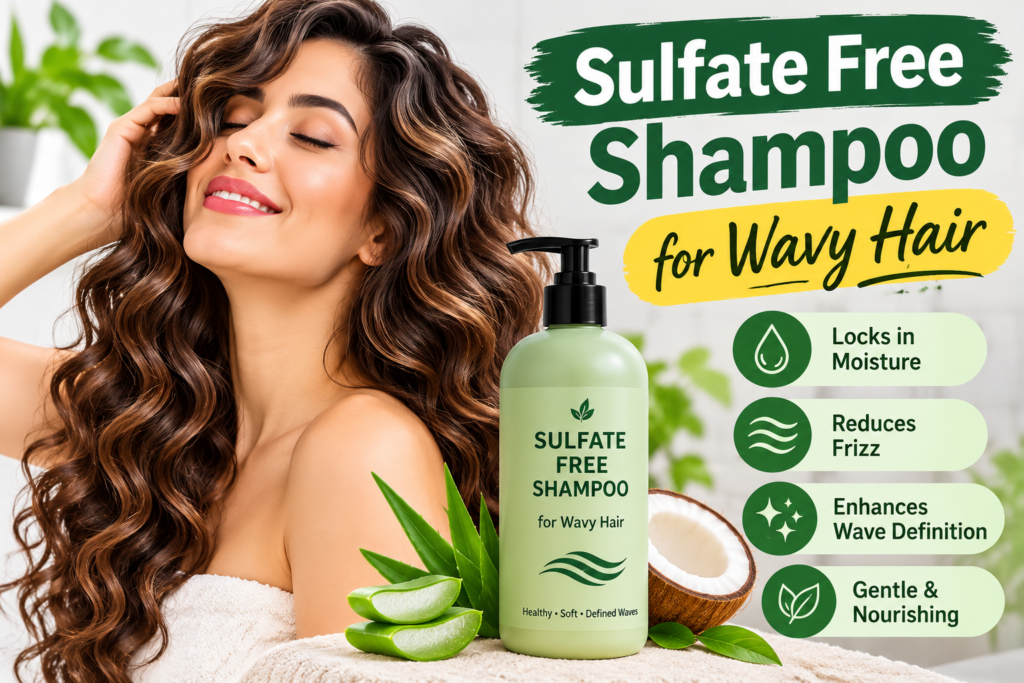
Sulfate Free Shampoo for Wavy Hair is an excellent choice for people who want to keep their waves soft, hydrated, and naturally defined without removing too much moisture from their hair. Wavy hair has unique needs because it sits between straight and curly hair. It can become oily at the roots, dry at the ends, and frizzy throughout the day. Using the wrong shampoo may make these problems worse.
Many traditional shampoos contain strong cleansing ingredients called sulfates. These ingredients create a rich lather and remove oil, dirt, and product buildup. However, they can sometimes strip away natural oils that help keep wavy hair smooth and manageable. When this happens, waves may lose their shape, become rough, or look dull.
A sulfate-free shampoo offers a gentler cleansing option. It can help maintain moisture while removing everyday dirt and excess oil. Choosing the right formula can make a noticeable difference in how your waves look and feel.
In this guide, you will learn what sulfate-free shampoo is, why wavy hair may benefit from it, which ingredients to look for, how to use it correctly, and how to build a simple hair care routine for beautiful waves.
What Is Sulfate Free Shampoo?
Sulfate-free shampoo is a hair cleansing product that does not contain certain sulfate-based cleansing agents commonly found in traditional shampoos.
Sulfates are surfactants that help remove oil, dirt, sweat, and styling products from the scalp and hair. They also produce the foam many people associate with shampoo.
Common sulfates found in hair care products include:
- Sodium Lauryl Sulfate (SLS)
- Sodium Laureth Sulfate (SLES)
- Ammonium Lauryl Sulfate
- Ammonium Laureth Sulfate
Although these ingredients are effective cleansers, some people find them too drying for their hair.
Sulfate-free shampoos use alternative cleansing ingredients that may provide a gentler washing experience. These formulas are often designed to clean the scalp without leaving the hair feeling excessively dry.
However, sulfate-free does not automatically mean that a shampoo is completely natural, chemical-free, or suitable for everyone. The overall formula matters more than a single ingredient label.
Why Wavy Hair Needs Special Shampoo
Wavy hair requires a balanced approach to cleansing and moisturizing. Its natural texture creates different challenges compared with straight hair.
The bends and curves in wavy strands can make it harder for natural scalp oils to travel evenly from the roots to the ends. As a result, the scalp may feel oily while the lower lengths remain dry.
Here are some common characteristics of wavy hair.
1. Wavy Hair Can Become Dry
Wavy hair may lose moisture more easily than straight hair because its texture makes natural oil distribution less uniform.
Dryness can cause the strands to feel rough and look less defined. A gentle shampoo can help reduce unnecessary moisture loss during washing.
2. Waves Are Easily Affected by Frizz
Humidity, friction, heat styling, and dryness can make wavy hair look frizzy.
When the hair lacks moisture, its surface may become rough, allowing waves to appear less smooth. A moisturizing shampoo can support better manageability.
3. Wavy Hair Can Have Oily Roots
Many people with wavy hair experience oily roots and dry ends.
This happens because scalp oil naturally collects near the roots, while the lengths may receive less lubrication.
The best shampoo should clean the scalp effectively without making the ends feel excessively dry.
4. Waves Can Lose Their Natural Shape
Heavy products and harsh cleansing routines may affect the natural appearance of waves.
A lightweight shampoo can help maintain a clean, comfortable foundation for styling products without unnecessarily weighing the hair down.
Benefits of Sulfate Free Shampoo for Wavy Hair
Choosing the right sulfate-free shampoo can offer several benefits for people with naturally wavy hair.
All You Need To Know About Hair Porosity – Calia Natural
1. Helps Maintain Natural Moisture
One of the biggest benefits of sulfate-free shampoo is that many formulas provide gentler cleansing.
Strong cleansing agents may remove more oil than necessary for certain hair types. This can leave wavy hair feeling dry, especially when it is washed frequently.
A suitable sulfate-free formula can clean the scalp while helping the hair retain a comfortable moisture balance.
2. Supports Softer Hair
Dry hair often feels rough and difficult to manage. A shampoo containing moisturizing ingredients can help improve softness and make the strands easier to handle.
Ingredients such as glycerin, aloe vera, and panthenol are commonly used in moisturizing hair care products.
3. Helps Reduce Frizz
Frizz is a common concern for people with wavy hair.
A gentle shampoo combined with moisturizing conditioner may help reduce dryness-related frizz. It can also make waves look smoother and more organized.
Remember that shampoo alone cannot eliminate all frizz. Your conditioner, styling products, drying technique, and environment also play important roles.
4. Helps Preserve Natural Wave Definition
Wavy hair looks best when its natural pattern remains visible.
A suitable cleansing formula can help prevent excessive dryness that may make waves appear rough or undefined.
When combined with a lightweight leave-in conditioner or curl cream, sulfate-free shampoo can support more noticeable wave definition.
5. Can Make Hair Easier to Manage
Hair that feels dry or tangled can be difficult to brush and style.
A gentle cleansing routine followed by proper conditioning may improve manageability. This can make detangling and styling easier.
6. Suitable for Many Hair Care Routines
Sulfate-free shampoo can fit into different hair care routines, including routines focused on hydration, frizz control, and maintaining natural texture.
However, people who use heavy styling products may occasionally need a stronger cleansing shampoo to remove buildup.
Best Ingredients to Look for in Sulfate Free Shampoo for Wavy Hair
The ingredients in your shampoo play an important role in determining how your hair feels after washing.
Instead of choosing a product based only on its sulfate-free label, check its ingredient list.
Hair Type Guides: Find and Understand Your Texture | Hair Types
1. Aloe Vera
Aloe vera is commonly used in moisturizing hair care products.
It helps provide a lightweight conditioning feel and can make hair feel softer. It is especially useful in formulas designed for dry or frizzy hair.
2. Glycerin
Glycerin is a humectant, meaning it attracts and helps retain water.
It is frequently included in hair care products to support hydration and improve softness.
Its performance can depend on the overall formula and environmental conditions.
3. Coconut Oil
Coconut oil is a popular ingredient in hair care products.
It can help reduce protein loss from hair when used appropriately. However, it may feel heavy on fine or low-density wavy hair.
People with fine waves may prefer shampoos with smaller amounts of heavier oils.
4. Panthenol
Panthenol, also known as provitamin B5, is commonly used in hair care formulations.
It helps improve the conditioning feel of hair and may make strands appear smoother and easier to manage.
5. Shea Butter
Shea butter is a rich moisturizing ingredient used in many conditioners and shampoos.
It can help soften dry hair, but formulas containing large amounts may weigh down fine waves.
6. Argan Oil
Argan oil is used in hair products to improve softness and shine.
It can help make dry-looking strands feel smoother. Lightweight formulations may be more suitable for wavy hair than very rich oil-based products.
7. Hydrolyzed Proteins
Hydrolyzed wheat, rice, and keratin proteins are commonly added to hair care formulas.
They can help improve the feel and appearance of damaged or weakened hair.
However, not everyone needs protein-rich products. If your hair starts feeling stiff or rough, consider reducing how often you use them.
Ingredients to Avoid or Use Carefully
Not every ingredient is harmful, but some may not suit your particular hair texture or scalp condition.
1. Strong Cleansing Sulfates
If your goal is to use sulfate-free shampoo, check the ingredient list for SLS, SLES, and other sulfate-based cleansing agents.
Some people tolerate these ingredients well, while others experience dryness or irritation.
2. Heavy Waxes
Certain waxes can create buildup when used frequently, especially if your shampoo is not strong enough to remove them.
This may make wavy hair appear flat or greasy.
3. Excessively Heavy Oils
Ingredients such as coconut oil, castor oil, and rich butters can be useful for dry hair.
However, too much of these ingredients may weigh down fine wavy strands.
4. Fragrance for Sensitive Scalps
Fragrance is not necessarily bad, but it can irritate some sensitive scalps.
If you frequently experience itching, redness, or discomfort, consider a fragrance-free shampoo.
How to Choose the Best Sulfate Free Shampoo for Your Wavy Hair
Choosing the right shampoo depends on your hair thickness, scalp condition, wave pattern, and styling habits.
Here are some important factors to consider.
1. Identify Your Hair Type
Before purchasing a shampoo, understand your hair’s basic characteristics.
| Hair Type | Shampoo Recommendation |
|---|---|
| Fine wavy hair | Lightweight, moisturizing formula |
| Thick wavy hair | Hydrating cleansing formula |
| Dry wavy hair | Moisture-focused shampoo |
| Oily scalp | Gentle but effective cleansing shampoo |
| Frizzy waves | Smoothing and moisturizing formula |
| Color-treated waves | Color-safe, gentle shampoo |
Fine wavy hair usually needs lightweight products, while thick or coarse waves may benefit from richer moisturizing ingredients.
2. Consider Your Scalp Condition
Your scalp condition is just as important as your hair texture.
If your scalp becomes oily quickly, choose a sulfate-free shampoo that provides effective cleansing without leaving residue.
If your scalp feels dry or tight, look for gentle formulas designed for sensitive or dry scalps.
3. Check the Cleansing Ingredients
Some sulfate-free shampoos use surfactants such as:
- Cocamidopropyl Betaine
- Sodium Cocoyl Isethionate
- Sodium Lauroyl Methyl Isethionate
- Decyl Glucoside
- Coco-Glucoside
These ingredients can provide cleansing without relying on traditional sulfate surfactants. Their gentleness still depends on the complete formulation.
4. Choose According to Your Hair Goals
Think about what you want your shampoo to accomplish.
- For dry waves, choose a moisturizing formula.
- For frizzy hair, look for conditioning ingredients.
- For fine waves, choose a lightweight shampoo.
- For oily roots, prioritize scalp cleansing.
- For damaged hair, consider formulas with conditioning agents and proteins.
5. Consider Product Buildup
If you regularly use gels, mousses, creams, oils, or hairsprays, your hair may need occasional deeper cleansing.
A sulfate-free shampoo can remove everyday dirt, but some gentle formulas may struggle with heavy product buildup.
You do not have to avoid stronger cleansers completely. Use a suitable clarifying shampoo occasionally when necessary.
How to Use Sulfate Free Shampoo Correctly
Even the best shampoo may not deliver the desired results if you use it incorrectly.
Following the right washing technique can help keep your waves clean, soft, and manageable.
How many days between hair washes: Finding your perfect routine
Step 1: Wet Your Hair Thoroughly
Start by rinsing your hair with lukewarm water.
Make sure your scalp and hair are completely wet before applying shampoo. This helps distribute the product more evenly.
Avoid extremely hot water because it may contribute to dryness and irritation.
Step 2: Apply a Small Amount of Shampoo
Take a suitable amount of shampoo into your palm.
The amount depends on your hair length, thickness, and the product’s concentration.
Start with a small quantity. You can always add more if necessary.
Step 3: Focus on Your Scalp
Apply the shampoo mainly to your scalp.
Use your fingertips to massage gently in circular movements. Avoid scratching with your nails because this can irritate the scalp.
There is usually no need to aggressively scrub the entire hair length.
Step 4: Rinse Completely
Rinse your scalp and hair thoroughly with lukewarm water.
Make sure no shampoo residue remains, particularly around the roots and behind the ears.
Step 5: Use a Conditioner
After shampooing, apply conditioner to the middle lengths and ends.
Choose a lightweight moisturizing conditioner if your waves become flat easily.
Leave it on according to the product instructions and rinse properly.
Step 6: Dry Your Hair Gently
Avoid rubbing your hair aggressively with a regular towel.
Instead, gently squeeze out excess water using a microfiber towel or soft cotton T-shirt.
This can help reduce friction and improve the appearance of your natural wave pattern.
How Often Should You Wash Wavy Hair?
There is no universal washing schedule for everyone with wavy hair.
Your ideal frequency depends on scalp oil production, exercise, weather, hair products, and personal comfort.
Here is a general guideline:
| Scalp and Hair Condition | Suggested Washing Frequency |
|---|---|
| Oily scalp | Every 1–2 days if needed |
| Normal scalp | Every 2–3 days |
| Dry wavy hair | Every 3–4 days, depending on comfort |
| Fine wavy hair | As needed to prevent oily buildup |
| Thick wavy hair | Based on scalp condition and product buildup |
These are starting points rather than strict rules.
If your scalp feels oily, itchy, or uncomfortable, you may need to wash more frequently. If your hair feels dry, you may benefit from adjusting your shampoo and conditioner rather than simply avoiding washing.
Sulfate Free Shampoo vs. Regular Shampoo
Many people wonder whether sulfate-free shampoo is better than regular shampoo.
Both types can clean hair effectively, but they may provide different cleansing experiences.
| Feature | Sulfate-Free Shampoo | Traditional Sulfate Shampoo |
|---|---|---|
| Cleansing | Often gentler | Can provide stronger cleansing |
| Foam | May produce less foam | Often produces more foam |
| Moisture | May help reduce excessive stripping | Can feel drying for some hair types |
| Product buildup | Depends on formulation | Often removes heavier buildup effectively |
| Wavy hair | Often suitable | May be too strong for some people |
| Oily scalp | Depends on cleansing strength | Can be useful for heavy oil buildup |
Neither type is automatically better for everyone.
People with wavy hair who experience dryness may prefer sulfate-free formulas. Those with very oily scalps or heavy product buildup may occasionally benefit from stronger cleansing products.
The best choice depends on your individual hair and scalp needs.
Common Mistakes to Avoid When Using Sulfate Free Shampoo
Switching to a sulfate-free formula does not guarantee perfect hair. Some common mistakes can reduce the benefits of your hair care routine.
1. Using Too Much Shampoo
Applying too much shampoo does not necessarily make your hair cleaner.
Start with a small amount and focus on the scalp. Add more only when needed.
2. Expecting Excessive Foam
Some sulfate-free shampoos produce less foam than traditional shampoos.
This does not mean they are ineffective. Foam production and cleansing ability are not the same thing.
3. Skipping Conditioner
Shampoo cleans your hair, while conditioner helps improve softness and manageability.
Skipping conditioner can leave wavy hair feeling dry and tangled.
4. Applying Heavy Products
Using too many oils, creams, and styling products can make waves look flat.
Choose lightweight products if your hair is fine or easily weighed down.
5. Ignoring Scalp Buildup
A gentle shampoo may not remove every type of styling product effectively.
If your scalp or roots begin to feel coated, consider occasional clarifying cleansing.
6. Changing Products Too Frequently
Switching shampoos every few days makes it difficult to understand how a product works for your hair.
Give a suitable formula a reasonable trial period, unless it causes irritation or discomfort.
Best Hair Care Routine for Soft and Defined Waves
Sulfate-free shampoo works best as part of a balanced hair care routine.
You do not need dozens of products to maintain healthy-looking waves. A few suitable products and consistent habits can be enough.
Get Defined Waves: Wavy Hair Routine Products
Morning Hair Care Routine
Start your morning by checking whether your waves need refreshing.
If your hair looks slightly flat, lightly mist it with water.
Apply a small amount of lightweight leave-in conditioner if necessary. Scrunch your waves gently to encourage their natural pattern.
Avoid applying too much product because it may make the hair greasy or heavy.
Washing Day Routine
On washing days, follow these steps:
- Wet your hair thoroughly.
- Apply sulfate-free shampoo to the scalp.
- Massage gently with your fingertips.
- Rinse completely.
- Apply conditioner to the middle lengths and ends.
- Detangle gently with your fingers or a wide-tooth comb.
- Rinse according to product instructions.
- Apply a lightweight leave-in product if needed.
- Scrunch your waves gently.
- Allow your hair to air-dry or use a diffuser on low heat.
Nighttime Hair Care Routine
Nighttime care can help protect your waves from friction.
Consider these habits:
- Use a satin or silk pillowcase.
- Avoid sleeping with soaking-wet hair.
- Keep your hair loosely secured if necessary.
- Avoid tight hairstyles that pull on the strands.
- Refresh your waves gently in the morning.
These small habits can help maintain your natural texture between washes.
Is Sulfate Free Shampoo Good for Fine Wavy Hair?
Yes, many fine-haired people find sulfate-free shampoo useful, particularly when their hair becomes dry after washing.
However, fine wavy hair can become flat when exposed to rich oils, heavy butters, or excessive conditioning ingredients.
Look for lightweight formulas that provide balanced cleansing.
Ingredients such as glycerin and panthenol may be useful in appropriately formulated products.
Avoid choosing a shampoo simply because it promises intense hydration. A lightweight moisturizing formula may be a better option for fine waves.
Is Sulfate Free Shampoo Good for Thick Wavy Hair?
Thick wavy hair often benefits from formulas that provide additional conditioning and moisture.
Because thicker hair can have dry lengths and ends, a hydrating shampoo may help improve softness and manageability.
Look for formulas containing moisturizing ingredients such as aloe vera, glycerin, and conditioning agents.
However, avoid excessive product application. Even thick waves can become weighed down by heavy formulas.
Can Sulfate Free Shampoo Help with Frizzy Wavy Hair?
Sulfate-free shampoo may help reduce dryness-related frizz when its formula is suitable for your hair.
Frizz can occur for several reasons, including:
- Lack of moisture
- Humidity
- Heat damage
- Frequent brushing
- Towel friction
- Chemical processing
- Damaged hair cuticles
A gentle shampoo can be one part of a frizz-control routine.
For better results, combine it with conditioner, a suitable leave-in product, and gentle drying techniques.
Keep in mind that sulfate-free shampoo cannot repair severe structural damage or completely prevent humidity-related frizz.
Frequently Asked Questions (FAQs)
1. Is sulfate free shampoo better for wavy hair?
Sulfate-free shampoo can be a good option for wavy hair, especially if your strands become dry, rough, or frizzy after washing. However, the best shampoo depends on your scalp condition and hair needs.
2. Does sulfate free shampoo help define waves?
A suitable sulfate-free shampoo can help maintain a balanced cleansing routine and reduce excessive dryness. This may help waves look softer and more defined when combined with proper conditioning and styling.
3. Can I use sulfate free shampoo every day?
You can use a suitable sulfate-free shampoo frequently if your scalp needs regular cleansing. However, daily washing is not necessary for everyone. Choose a schedule based on oil production, buildup, and comfort.
4. Does sulfate free shampoo cause less frizz?
Some sulfate-free formulas may help reduce dryness-related frizz. However, frizz also depends on humidity, hair damage, conditioning, and styling habits.
5. Is sulfate free shampoo suitable for oily wavy hair?
Yes. People with oily wavy hair can use sulfate-free shampoo, provided the formula cleans their scalp effectively. Lightweight cleansing formulas may be more suitable than rich moisturizing shampoos.
6. Does sulfate free shampoo clean hair properly?
Yes. Sulfate-free shampoos contain alternative cleansing agents that remove dirt, oil, and everyday impurities. Their cleansing strength varies depending on the formulation.
7. Can sulfate free shampoo remove product buildup?
Some sulfate-free shampoos can remove light product buildup. However, heavy oils, waxes, and styling products may require occasional clarifying shampoo.
8. Should I use conditioner after sulfate free shampoo?
Yes. Conditioner helps soften the hair, improve manageability, and reduce tangling. Apply it mainly to the middle lengths and ends.
9. Is sulfate free shampoo good for color-treated wavy hair?
Many sulfate-free shampoos are marketed for color-treated hair and may provide a gentler cleansing option. Look for a product specifically labeled as color-safe.
10. How long does it take to see results from sulfate free shampoo?
Some people notice a difference in softness after the first few washes. Other benefits, such as improved manageability, may become clearer after consistently using a suitable routine for several weeks.
Conclusion
Sulfate Free Shampoo for Wavy Hair can be a useful addition to a hair care routine focused on maintaining softness, moisture, and natural wave definition. Because wavy hair can experience oily roots, dry ends, and frizz, choosing a suitable cleansing formula is important.
Look for shampoos with gentle cleansing ingredients and moisturizing components such as aloe vera, glycerin, and panthenol. Consider your hair thickness and scalp condition before selecting a product.
Remember that healthy-looking waves require more than shampoo alone. Regular conditioning, gentle drying, lightweight styling products, and a suitable washing schedule all contribute to better results.
With the right combination of products and habits, you can maintain clean, soft, manageable waves while supporting your hair’s natural texture.
REad Next