
Table of Contents
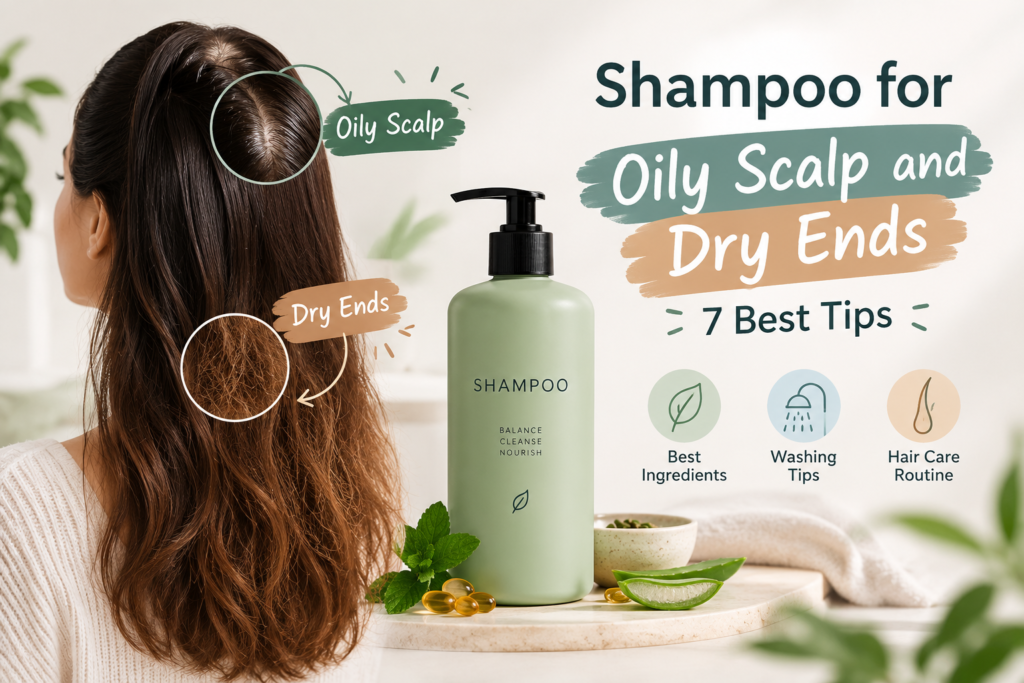
Having an oily scalp and dry ends can make hair care confusing. Your roots may become greasy only one day after washing, while the lengths and ends still feel rough, brittle, or dehydrated. This combination is common and is sometimes called combination hair.
Choosing the right shampoo for oily scalp and dry ends is important because using the wrong product can make one problem worse while trying to fix the other. A shampoo that removes too much oil may leave your ends even drier. On the other hand, a very moisturizing shampoo may make your roots look greasy and flat.
The best approach is to find a balanced shampoo that gently cleans the scalp without stripping the natural moisture from the hair lengths. With the right ingredients, washing routine, and conditioning products, you can maintain fresh roots and softer ends.
In this guide, we will explore what causes oily roots and dry ends, which shampoo ingredients to look for, how to choose the right formula, and how to build a simple hair care routine.
What Is Shampoo for Oily Scalp and Dry Ends?
Shampoo for oily scalp and dry ends is a hair-cleansing product designed to manage two different hair concerns at the same time.
The scalp naturally produces an oil called sebum. Sebum helps protect the skin and keep hair flexible. However, when the scalp produces excess oil, the roots can become greasy, sticky, and difficult to style.
Meanwhile, the ends of your hair may lack sufficient moisture. Since hair ends are the oldest parts of the hair strand, they are more exposed to brushing, heat styling, sunlight, and environmental damage.
A balanced shampoo should perform two main functions:
- Remove excess oil, sweat, and product buildup from the scalp.
- Clean the hair lengths gently without making already-dry ends feel rough.
- Maintain a comfortable scalp environment.
- Help hair feel soft, manageable, and refreshed after washing.
It is important to understand that shampoo mainly cleans the scalp. Conditioner and leave-in treatments provide additional moisture to dry hair ends.
Why Do You Have an Oily Scalp and Dry Ends?
Before selecting a shampoo, it helps to understand why your scalp and hair lengths behave differently.
Several factors can contribute to this combination.
1. Excess Sebum Production
The scalp contains sebaceous glands that produce natural oils. These oils travel along the hair strands and help maintain their flexibility.
Some people naturally produce more sebum than others. Hormonal changes, genetics, stress, and environmental conditions can influence oil production.
When excess sebum collects around the roots, hair may appear greasy even when the ends remain dry.
2. Frequent Heat Styling
Regular use of blow dryers, curling irons, and straighteners can damage the outer protective layer of hair.
High temperatures may cause moisture loss, leaving the ends rough and brittle.
If you frequently style your hair with heat, your roots may remain oily while the ends become increasingly dry.
3. Long Hair
People with longer hair often experience combination hair concerns.
The scalp continues producing natural oil, but that oil may not distribute evenly throughout long strands.
As a result, the roots become greasy while the lower sections receive less natural lubrication.
4. Harsh Shampoo Formulas
Some shampoos contain strong cleansing ingredients that remove too much oil.
Although these products may make the scalp feel extremely clean, they can leave the hair lengths dry, tangled, and difficult to manage.
Using an overly harsh shampoo regularly may worsen the appearance and feel of dry ends.
5. Environmental Damage
Sun exposure, pollution, wind, and dry weather can affect hair condition.
The ends are particularly vulnerable because they have been exposed to environmental stress for longer periods.
6. Chemical Treatments
Hair coloring, bleaching, relaxing, and chemical straightening can weaken the hair structure.
These treatments may increase dryness, breakage, and split ends while the scalp continues producing its normal amount of oil.
Best Ingredients to Look for in Shampoo for Oily Scalp and Dry Ends
Ingredients play an important role when choosing the right shampoo. A good formula should cleanse effectively while supporting the softness and manageability of the hair.
Here are some useful ingredients to consider.
1. Salicylic Acid
Salicylic acid is commonly used in scalp care products.
It helps loosen dead skin cells and remove buildup from the scalp. It can be useful for people who experience oily roots and product accumulation.
However, formulas containing salicylic acid should be selected according to your scalp’s needs. Excessive use may cause dryness or irritation in some people.
2. Glycerin
Glycerin is a humectant that attracts water and helps maintain moisture.
It is frequently included in hair care products to improve softness and reduce the rough feeling associated with dry hair.
A shampoo containing glycerin can be a useful option when you want cleansing without an overly drying finish.
3. Panthenol
Panthenol, also known as provitamin B5, is a popular ingredient in hair care formulas.
It helps improve hair softness, smoothness, and manageability.
It can also make dry lengths feel less rough after washing.
4. Aloe Vera
Aloe vera is commonly used in moisturizing and soothing hair care products.
It can help support scalp comfort and provide a lightweight conditioning effect.
People who dislike heavy hair products may prefer formulas containing aloe vera.
5. Hydrolyzed Proteins
Hydrolyzed proteins are used in many shampoos and conditioners to improve the feel of damaged hair.
They can help temporarily improve smoothness and reduce the appearance of roughness.
Examples include:
- Hydrolyzed keratin
- Hydrolyzed wheat protein
- Hydrolyzed rice protein
- Hydrolyzed silk protein
People with damaged or chemically treated ends may benefit from these ingredients.
6. Mild Cleansing Agents
A shampoo should remove excess oil without unnecessarily stripping the hair.
Some commonly used cleansing ingredients include:
- Sodium cocoyl isethionate
- Cocamidopropyl betaine
- Sodium lauroyl methyl isethionate
- Decyl glucoside
The overall formula matters more than any single ingredient. Even products containing gentle surfactants can cause irritation in some individuals.
7. Lightweight Conditioning Ingredients
Some conditioning ingredients help improve softness without leaving the hair feeling excessively heavy.
Examples include certain silicones, lightweight oils, and conditioning polymers.
These ingredients can help reduce friction and make dry ends easier to detangle.
Ingredients to Avoid or Use Carefully
Not every shampoo works for combination hair. Some formulas may be too heavy, while others may remove too much moisture.
Consider your individual hair response when choosing products.
Heavy Oils in Excessive Amounts
Ingredients such as coconut oil, castor oil, and shea butter can be beneficial in conditioners and treatments.
However, very rich formulas may leave fine hair looking flat or greasy when applied near the roots.
They are generally better suited to the lengths and ends.
Strong Clarifying Formulas for Daily Use
Clarifying shampoos are designed to remove stubborn buildup.
They can be helpful occasionally, especially if you use styling products regularly. However, using a strong clarifying shampoo too frequently may make dry ends feel rough.
Excessive Fragrance
Some people experience scalp irritation from fragrance ingredients.
If your scalp is sensitive, look for fragrance-free or lightly fragranced formulas.
Very Heavy Moisturizing Formulas
Shampoos designed for extremely dry or coarse hair may contain richer conditioning ingredients.
These can be useful for certain hair types, but they may not provide the fresh, lightweight finish that oily roots need.
How to Choose the Best Shampoo for Oily Scalp and Dry Ends
Finding the right shampoo requires considering both your scalp condition and hair texture.
Here are some practical factors to evaluate.
1. Choose a Balanced Formula
Look for a shampoo that offers effective cleansing with a gentle conditioning effect.
Avoid choosing a product simply because it says deep moisturizing or oil control on the label.
The goal is to clean the roots without leaving the lengths uncomfortable.
2. Consider Your Hair Texture
Hair texture can influence how different formulas perform.
Fine hair: Lightweight shampoos are usually preferable because heavy conditioning formulas can make fine hair look flat.
Thick hair: You may benefit from a balanced shampoo combined with a richer conditioner on the ends.
Wavy hair: Lightweight moisturizing ingredients can help reduce dryness while maintaining natural movement.
Curly hair: Curly hair often needs additional conditioning because natural scalp oils may not travel easily along the hair strands.
3. Check Your Scalp Sensitivity
If your scalp becomes itchy, irritated, or uncomfortable after washing, choose a gentle formula.
Avoid experimenting with multiple strong treatments at once.
Persistent itching, redness, or flaking may require advice from a dermatologist.
4. Consider Your Washing Frequency
Some people need to wash their hair daily, while others can comfortably wash it every two or three days.
Your ideal washing schedule depends on oil production, activity level, hair texture, and personal comfort.
You do not need to avoid washing simply because you are worried about drying your ends. Instead, choose an appropriate shampoo and condition the lengths.
5. Look for Lightweight Moisture
The best shampoo should leave your scalp feeling clean and your hair lengths feeling manageable.
Products containing glycerin, panthenol, or mild conditioning ingredients may be worth considering.
Best Types of Shampoo for Combination Hair
Different shampoo categories can help address oily roots and dry ends.
| Shampoo type | Main benefit | Best suited for |
|---|---|---|
| Balancing shampoo | Cleans excess oil gently | Combination hair |
| Clarifying shampoo | Removes product buildup | Occasional deep cleansing |
| Lightweight moisturizing shampoo | Supports softness | Dry lengths and fine hair |
| Volumizing shampoo | Helps reduce a flat appearance | Fine, oily hair |
| Scalp-focused shampoo | Targets scalp concerns | Oily or buildup-prone scalp |
| Gentle daily shampoo | Regular cleansing | Frequent washers |
A balancing shampoo is often a sensible starting point for combination hair.
However, the ideal option depends on whether your main concern is excess oil, dryness, scalp irritation, or damaged ends.
How to Wash Hair With an Oily Scalp and Dry Ends
Even a high-quality shampoo may not deliver the desired results if you use it incorrectly.
Following a proper washing technique can help improve your hair’s appearance and manageability.
Step 1: Brush Your Hair Gently
Before washing, gently detangle your hair using a wide-tooth comb or suitable brush.
This helps reduce tangles and makes washing easier.
Avoid aggressive brushing, particularly when your ends are already dry or damaged.
Step 2: Wet Your Hair Thoroughly
Use lukewarm water to wet your scalp and hair.
Very hot water may increase dryness and discomfort for some people.
Make sure your hair is completely wet before applying shampoo.
Step 3: Apply Shampoo to the Scalp
Take a small amount of shampoo and distribute it across your scalp.
Focus on areas that become oily, such as the crown, hairline, and back of the head.
Use your fingertips to massage gently.
Avoid scratching with your nails.
Step 4: Let the Foam Clean the Lengths
As you rinse, the shampoo will naturally travel through the hair lengths.
You generally do not need to scrub the ends directly unless they contain significant product buildup.
This approach helps reduce unnecessary friction and dryness.
Step 5: Rinse Thoroughly
Rinse your hair until the shampoo is completely removed.
Leftover product may make your roots feel heavy or cause buildup.
Step 6: Apply Conditioner to the Ends
Use a lightweight conditioner from the middle of your hair to the ends.
Avoid applying a rich conditioner directly to an oily scalp unless the product is specifically designed for scalp use.
Leave it on according to the product instructions and rinse thoroughly.
The Best Hair Care Routine for Oily Roots and Dry Ends
A consistent routine can help you manage combination hair without using too many products.
Here is a simple routine you can follow.
Your weekly hair care routine
botanical repair™ strengthening leave-in treatment | Aveda
1. Regular cleansing
Wash your scalp when it becomes oily using a balanced shampoo.
Why Are the Ends of My Hair So Dry? Let’s Ask Dr. Joe – Color Wow
2. Conditioning
Apply conditioner to the middle lengths and ends after shampooing.
From Dull to Dazzling: Unlock the Power of Hair Masks
3. Weekly hair mask
Use a moisturizing hair mask on dry ends once a week or according to its instructions.
4. Leave-in protection
Apply a small amount of lightweight leave-in conditioner or serum to the ends.
How to Recognize and Repair Damaged Hair
5. Regular trimming
Trim split ends when needed to maintain a neater, healthier appearance.
Common Mistakes to Avoid
Some everyday habits can make combination hair harder to manage.
Washing Only the Ends
Shampoo is primarily intended for cleansing the scalp.
Concentrating shampoo on the ends can increase dryness and friction.
Focus on the scalp and allow the rinsing process to clean the lengths.
Applying Conditioner to the Roots
Heavy conditioner near the scalp may make oily roots look greasy sooner.
Apply most conditioning products to the middle and lower sections of your hair.
Using Too Much Dry Shampoo
Dry shampoo can absorb excess oil and refresh roots between washes.
However, excessive use may contribute to product buildup and scalp discomfort.
It should not replace regular cleansing.
Using Very Hot Water
Hot water can make washing less comfortable and may contribute to dryness.
Lukewarm water is a better everyday choice.
Ignoring Split Ends
Split ends cannot be permanently repaired with shampoo.
Conditioners and serums can temporarily improve their appearance, but trimming is the most effective way to remove split ends.
Shampoo vs Conditioner: What Does Your Hair Need?
Shampoo and conditioner perform different functions.
Understanding their roles can make your routine more effective.
| Feature | Shampoo | Conditioner |
|---|---|---|
| Main purpose | Cleans scalp and hair | Improves softness |
| Removes excess oil | Yes | No |
| Helps with dryness | Depends on formula | Yes |
| Best application | Mainly scalp | Mid-lengths and ends |
| Helps detangling | Limited | Yes |
| Removes buildup | Yes | Not its main purpose |
For combination hair, using a balancing shampoo and a suitable conditioner is often more effective than expecting one product to solve every concern.
How Often Should You Wash Oily Scalp and Dry Ends?
There is no universal washing schedule for everyone.
People with naturally oily scalps may need to wash their hair more frequently than people with dry scalps.
Consider these general guidelines:
- Very oily scalp: Daily or every other day washing may be appropriate if needed.
- Moderately oily scalp: Washing every two days may work well.
- Normal scalp with dry lengths: Washing two or three times weekly may be sufficient.
- Active lifestyle: You may need to wash more often after sweating.
The important thing is to wash according to your scalp’s needs rather than following a fixed schedule.
If your scalp feels greasy, uncomfortable, or has visible buildup, washing may be more beneficial than waiting several additional days.
Natural Tips for Managing Oily Roots and Dry Ends
Along with shampoo and conditioner, certain simple habits can support healthier-looking hair.
Use Lightweight Hair Oils on the Ends
A small amount of lightweight hair oil can improve the appearance of dry ends.
Apply only a few drops to the lower sections of your hair.
Avoid using excessive amounts near the roots.
Protect Hair From Heat
Use a heat protectant before blow-drying, straightening, or curling.
Whenever possible, reduce the temperature and frequency of heat styling.
Avoid Excessive Brushing
Repeated brushing can create friction and increase breakage, particularly when hair is dry or damaged.
Use a suitable comb and work gently through tangles.
Protect Your Hair From Sun Exposure
Prolonged sun exposure can contribute to dryness and damage.
Wearing a hat or using hair products with appropriate UV protection may help reduce exposure.
Maintain a Balanced Diet
Hair health is influenced by overall nutrition.
Eating a balanced diet containing protein, healthy fats, vitamins, and minerals supports normal hair growth.
No single food or supplement can guarantee that oily roots and dry ends will disappear.
When Should You Change Your Shampoo?
Sometimes a shampoo that previously worked well may no longer provide the desired results.
You may want to reconsider your formula if:
- Your roots become greasy very quickly after washing.
- Your hair feels rough or tangled after shampooing.
- Your scalp feels unusually tight or uncomfortable.
- Your hair looks flat and lacks movement.
- You notice increased product buildup.
- Your ends appear increasingly dry.
Change one product at a time so you can better understand how your hair responds.
If you experience persistent scalp irritation, excessive flaking, or unusual hair loss, consult a qualified dermatologist instead of relying only on shampoo changes.
Frequently Asked Questions (FAQs)
1. What is the best shampoo for oily scalp and dry ends?
A balancing shampoo with gentle cleansing ingredients and lightweight conditioning components is a good starting point. Look for ingredients such as glycerin, panthenol, and mild surfactants. The best formula depends on your hair texture and scalp sensitivity.
2. Should I use moisturizing shampoo for oily roots?
You can use a lightweight moisturizing shampoo if your hair lengths feel dry. However, avoid extremely heavy formulas if they make your roots greasy or flat. A balanced shampoo is usually a better option.
3. How can I stop my scalp from getting oily so quickly?
Wash your hair according to your scalp’s needs, rinse thoroughly, and avoid applying heavy conditioners or oils near your roots. Dry shampoo may help temporarily, but regular cleansing remains important.
4. Is clarifying shampoo good for oily scalp and dry ends?
Clarifying shampoo can help remove excess product buildup and residue. However, frequent use may leave dry ends feeling rough. Use it occasionally when needed and follow with conditioner.
5. Should I apply shampoo to my hair ends?
Generally, shampoo should be concentrated on the scalp. The foam running through the lengths during rinsing is often enough for regular cleansing. Avoid aggressively scrubbing dry ends.
6. Can conditioner make my scalp oily?
Heavy conditioner applied directly to the scalp may make some hair types look greasy or weighed down. Applying conditioner mainly to the middle lengths and ends can help avoid this problem.
7. Is sulfate-free shampoo better for combination hair?
Sulfate-free shampoos can be a good option for people who find traditional formulas too drying. However, not every sulfate-free shampoo is automatically better. The complete formula and your hair’s response matter most.
8. Can oily scalp and dry ends be treated together?
Yes. You can manage both concerns with a balanced shampoo, regular conditioning, lightweight leave-in products, and appropriate washing habits. Focus on cleansing the scalp and moisturizing the ends separately.
9. Why are my hair ends dry even after using shampoo?
Shampoo mainly cleans the scalp and hair. It does not necessarily provide enough conditioning for dry or damaged ends. You may need a moisturizing conditioner, hair mask, or leave-in treatment.
10. Is daily washing bad for oily scalp?
Daily washing is not automatically harmful. If your scalp produces excess oil, daily cleansing with a suitable gentle shampoo may be appropriate. Pay attention to how your scalp and hair lengths respond.
Conclusion
Choosing the right shampoo for oily scalp and dry ends can make a noticeable difference in your hair care routine. The key is to balance effective scalp cleansing with gentle care for dry lengths.
Look for shampoos containing mild cleansing ingredients, glycerin, panthenol, or other lightweight conditioning components. Avoid using overly harsh formulas too frequently, and remember that conditioner and hair masks are important for maintaining softer ends.
Most importantly, treat your scalp and hair lengths according to their different needs. With consistent cleansing, suitable conditioning, and reduced heat damage, you can achieve fresher roots, smoother ends, and more manageable hair.
A simple and balanced routine is often more effective than using too many products or constantly changing shampoos.