
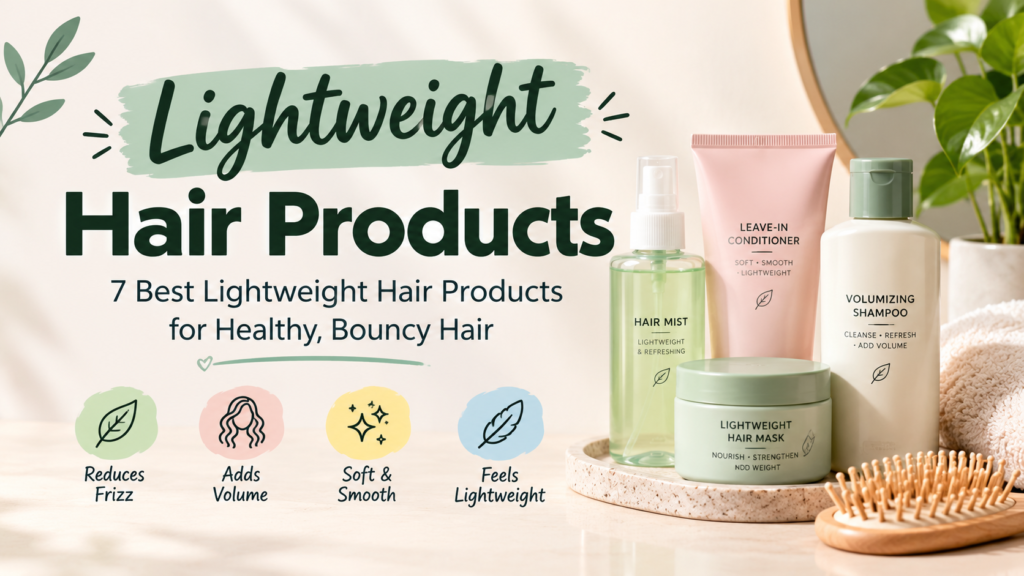
Having beautiful, healthy-looking hair does not always require using heavy creams, thick oils, or multiple styling products. Sometimes, the best way to improve your hair’s appearance is to choose lightweight hair products that provide moisture, softness, and protection without weighing your strands down.
Lightweight hair products are especially useful for people who have fine hair, thin hair, wavy hair, or hair that becomes greasy quickly. These products help maintain natural movement, reduce frizz, improve manageability, and support a fresh appearance throughout the day.
Many people struggle to find hair products that provide enough hydration without making their hair feel oily, sticky, or flat. Heavy conditioners and styling creams can sometimes remove the natural volume that people want to maintain. Lightweight formulas offer a practical alternative because they are designed to deliver benefits without leaving too much residue.
Whether you want more volume, better moisture, smoother strands, or defined waves, choosing the right lightweight hair products can make a noticeable difference in your hair care routine.
In this guide, you will learn what lightweight hair products are, their benefits, the different types available, how to choose the right formulas, and how to build a simple routine for healthy-looking hair.
What Are Lightweight Hair Products?
Lightweight hair products are specially formulated hair care products that provide hydration, nourishment, styling support, or protection without making hair feel heavy.
Unlike thick creams, dense oils, and heavy styling gels, lightweight formulas generally have thinner textures that spread easily through the hair. They are designed to help maintain softness and movement while reducing unwanted buildup.
These products can include:
- Lightweight shampoos
- Weightless conditioners
- Leave-in conditioners
- Lightweight hair oils
- Volumizing sprays
- Lightweight styling creams
- Mousse and foam products
- Heat protectant sprays
- Lightweight hair serums
- Refreshing hair mists
The main purpose of these products is to balance hair care benefits with natural movement.
For example, someone with fine hair may want moisture but does not want a thick conditioner that makes the roots look flat. A lightweight conditioner can provide softness while helping the hair maintain its volume.
Similarly, someone with wavy hair may need a styling product that controls frizz and defines waves without creating a stiff or greasy finish.
Why Choose Lightweight Hair Products?
Using the right hair products can improve how your hair looks and feels. However, choosing products that are too heavy for your hair type may create problems.
Lightweight formulas offer several advantages.
1. Maintain Natural Hair Volume
One of the biggest benefits of lightweight hair products is that they help maintain natural volume.
Heavy creams and oils can weigh down fine or thin hair, making it appear flatter than usual. Lightweight sprays, mousses, and conditioners can provide styling support without adding too much weight.
For people who enjoy fuller-looking hair, lightweight formulas can make everyday styling easier.
2. Reduce Greasy Appearance
Some hair products leave behind a thick coating that makes strands appear oily.
Lightweight formulas are often easier to distribute and may leave less noticeable residue when used correctly. This can be helpful for people whose hair becomes greasy quickly.
However, even lightweight products can cause buildup if too much is applied.
3. Improve Hair Manageability
Dry and tangled hair can be difficult to brush and style.
Lightweight conditioners and leave-in treatments help improve softness and reduce friction between strands. This can make detangling easier and reduce unnecessary pulling during styling.
4. Support Natural Hair Movement
Hair should ideally feel soft and flexible rather than stiff or coated.
Lightweight styling products can help control frizz and improve definition while allowing hair to move naturally.
This is particularly useful for people with wavy hair who want their natural texture to remain visible.
5. Provide Moisture Without Excessive Weight
Moisture is important for maintaining manageable hair.
However, not every hair type needs a rich moisturizing formula. Fine and low-density hair may respond better to lightweight conditioners, water-based leave-ins, and small amounts of serum.
The goal is to provide enough conditioning without making the hair feel overloaded.
Best Types of Lightweight Hair Products
Different hair products serve different purposes. Understanding their functions can help you choose the right options for your routine.
Miracle Volumizing Leave-In Lite – Its A 10 | CosmoProf
8
1. Lightweight Shampoo
A lightweight shampoo is designed to cleanse the scalp and remove excess oil, sweat, and everyday product residue without leaving the hair feeling unnecessarily coated.
It is a useful option for people who want clean, fresh-looking hair without using overly rich cleansing formulas.
When choosing a shampoo, consider your scalp condition.
- Oily scalp: Look for a gentle cleansing shampoo.
- Dry scalp: Choose a moisturizing formula.
- Fine hair: Consider lightweight volumizing shampoo.
- Wavy hair: Look for a gentle shampoo that does not leave the lengths feeling rough.
Avoid choosing a shampoo based only on its label. Ingredients, cleansing strength, and your scalp’s needs are more important.
2. Weightless Conditioner
Conditioner helps smooth the hair, improve softness, and reduce tangling.
A lightweight conditioner is particularly useful for fine hair because it provides conditioning without the dense texture of some rich formulas.
Apply conditioner mainly to the middle lengths and ends instead of concentrating it on the roots.
This approach can help prevent unnecessary heaviness near the scalp.
3. Lightweight Leave-In Conditioner
Leave-in conditioner is one of the most useful products for people who want additional moisture and easier detangling.
Unlike rinse-out conditioner, leave-in products remain in the hair after washing.
Lightweight spray formulas are often suitable for fine, wavy, and easily weighed-down hair.
Benefits include:
- Easier detangling
- Improved softness
- Reduced friction
- Better manageability
- Additional moisture
- Smoother-looking hair
Start with a small amount and distribute it evenly through damp hair.
4. Lightweight Hair Oil
Hair oil can help improve shine, smooth the appearance of dry ends, and reduce friction.
However, heavy application can make hair look greasy.
Lightweight oils or oil-based serums may be easier to use on fine hair when applied sparingly.
Some commonly used hair oil ingredients include argan oil, jojoba oil, and squalane.
Remember that the best option depends on your hair’s texture and how much product it can tolerate.
5. Volumizing Hair Spray
Volumizing sprays are designed to help create the appearance of fuller hair.
They can be applied near the roots or throughout the hair, depending on the product instructions.
These products are particularly helpful for people with fine or flat hair.
A good volumizing spray should provide styling support without making the hair excessively sticky or stiff.
6. Lightweight Hair Mousse
Mousse is a foam-based styling product that can add volume, support, and texture.
It is especially useful for people with wavy hair who want more definition without applying a thick styling cream.
To use mousse:
- Wash and condition your hair.
- Remove excess water with a microfiber towel.
- Dispense a small amount of mousse.
- Distribute it through damp hair.
- Scrunch gently if you have natural waves.
- Allow your hair to air-dry or use a diffuser.
The amount you need depends on your hair length, thickness, and the product’s hold.
7. Lightweight Hair Serum
Hair serum is commonly used to smooth the appearance of frizz, add shine, and improve the feel of dry ends.
Some serums contain silicone ingredients that create a smooth coating around the hair strands.
Lightweight serums are useful when you want a polished finish without applying thick styling products.
Use a small amount and avoid applying too much near the scalp.
8. Lightweight Heat Protectant
Heat styling can contribute to dryness and damage, especially when hair is repeatedly exposed to high temperatures.
Heat protectant products are designed to reduce heat-related damage when used according to their instructions.
Lightweight sprays are often easier to distribute through fine or thin hair.
Apply the product evenly before using a blow dryer, curling iron, or straightener.
Heat protectants can help reduce damage, but they do not make excessive heat exposure completely harmless.
Best Ingredients to Look for in Lightweight Hair Products
Ingredients play an important role in how a hair product feels and performs.
When choosing lightweight hair products, consider formulas that provide conditioning and hydration without excessive heaviness.
1. Aloe Vera
Aloe vera is commonly used in hair care products because of its water-based texture and conditioning properties.
It can help improve the feel of dry hair and is often included in lightweight conditioners, sprays, and styling products.
2. Glycerin
Glycerin is a humectant that attracts and retains moisture.
It is widely used in hair care formulas to help maintain hydration.
However, its performance can vary depending on the formula and environmental humidity.
3. Panthenol
Panthenol, also known as provitamin B5, is a conditioning ingredient used in many shampoos, conditioners, and leave-in products.
It can help improve softness, smoothness, and the appearance of hair.
4. Hydrolyzed Proteins
Hydrolyzed proteins are used in some hair products to improve conditioning and temporarily support the appearance and feel of damaged strands.
Examples include hydrolyzed wheat, rice, and keratin proteins.
People with protein-sensitive hair may prefer using these formulas less frequently if they notice stiffness or dryness.
5. Argan Oil
Argan oil is commonly used to smooth hair and improve shine.
Although it is an oil, small amounts in a well-formulated serum can work for some fine hair types.
The key is to avoid applying too much product.
6. Jojoba Oil
Jojoba oil is used in hair care products for its conditioning properties.
It may help improve the feel of dry ends and is commonly included in lightweight oil blends.
7. Silicones
Ingredients such as dimethicone and amodimethicone are used in many conditioners and serums.
They can help reduce friction, improve smoothness, and protect hair from some forms of mechanical damage.
Silicones are not automatically bad for hair. The important thing is choosing a formula that suits your hair and cleansing routine.
How to Choose Lightweight Hair Products for Your Hair Type
Not every lightweight product works equally well for every person.
Your hair texture, density, porosity, scalp condition, and styling preferences should guide your choices.
波浪髮型指南:海灘波浪到S形吹乾 | HairPreview
Hair Growth Routine For Natural Hair – Made2Flourish
9
Lightweight Products for Fine Hair
Fine hair has smaller individual hair strand diameters and can become weighed down easily.
For this hair type, choose products with lighter textures.
Recommended options include:
- Volumizing shampoo
- Lightweight conditioner
- Leave-in conditioning spray
- Hair mousse
- Lightweight heat protectant
- Small amounts of hair serum
Avoid applying large quantities of thick creams and oils.
Focus conditioner and styling products on the middle lengths and ends.
Lightweight Products for Wavy Hair
Wavy hair often needs a balance between moisture and definition.
Heavy products can make natural waves look flat, while products that provide too little conditioning may increase frizz.
Useful choices include:
- Gentle shampoo
- Lightweight conditioner
- Leave-in conditioner spray
- Lightweight mousse
- Flexible-hold gel
- Lightweight anti-frizz serum
After washing, apply styling products to damp hair and scrunch gently to encourage natural wave formation.
Lightweight Products for Curly Hair
Curly hair often requires more conditioning because its shape can make natural scalp oils less evenly distributed along the strands.
However, some people with fine curls still prefer lightweight products.
Consider:
- Moisturizing but lightweight shampoo
- Rinse-out conditioner
- Lightweight leave-in conditioner
- Curl-defining mousse
- Flexible-hold gel
- Lightweight hair oil for the ends
You may need to experiment with different amounts to find the right balance.
Lightweight Products for Oily Hair
People with oily scalps often want products that cleanse effectively without adding unnecessary residue.
Consider using:
- Gentle clarifying shampoo when needed
- Lightweight daily shampoo
- Light conditioner
- Water-based styling spray
- Lightweight heat protectant
Avoid applying rich oils directly to the scalp unless recommended for a specific scalp treatment.
Lightweight Products for Dry Hair
Dry hair needs conditioning, but lightweight formulas can still be useful.
Look for products containing glycerin, panthenol, conditioning agents, and suitable oils.
You may also benefit from using a richer conditioner occasionally if lightweight formulas alone do not provide enough softness.
How to Build a Lightweight Hair Care Routine
A good hair care routine does not need to include ten different products.
Using a few suitable products consistently can be more effective than layering several formulas.
Here is a simple routine you can follow.
Step 1: Cleanse Your Scalp
Start with a shampoo that suits your scalp condition.
Massage the shampoo gently into your scalp using your fingertips.
Avoid scratching or aggressively rubbing your hair.
Rinse thoroughly to remove product residue.
Step 2: Apply Lightweight Conditioner
Apply conditioner to the middle lengths and ends.
Leave it on for the recommended time and rinse properly.
If your hair is very fine, use a smaller amount.
Step 3: Remove Excess Water
Use a soft microfiber towel or cotton T-shirt to gently squeeze excess water from your hair.
Avoid rubbing aggressively because wet hair is more vulnerable to mechanical damage.
Step 4: Apply Leave-In Conditioner
Spray a lightweight leave-in conditioner onto damp hair.
Focus on areas that become dry or tangled.
Use a wide-tooth comb to distribute the product evenly if needed.
Step 5: Add a Styling Product
Choose a styling product based on your desired result.
For example:
- Mousse for volume and wave definition.
- Lightweight gel for flexible hold.
- Styling spray for texture.
- Serum for a smoother finish.
You do not need to use every product at once.
Step 6: Protect Your Hair From Heat
If you plan to use heat styling tools, apply an appropriate heat protectant.
Follow the product instructions and avoid using unnecessarily high temperatures.
Step 7: Finish With a Small Amount of Serum
If your hair needs extra shine or smoother-looking ends, apply a tiny amount of lightweight serum.
This step is optional.
Lightweight Hair Products vs. Heavy Hair Products
Understanding the difference between lightweight and heavy formulas can help you make better purchasing decisions.
| Feature | Lightweight Products | Heavy Products |
|---|---|---|
| Texture | Thin or fluid | Thick or creamy |
| Hair feel | Usually lighter | Often richer |
| Volume | Helps maintain movement | May reduce volume |
| Moisture | Light to moderate | Often richer |
| Best for | Fine and easily weighed-down hair | Dry, coarse, or very thick hair |
| Application | Often requires small amounts | May require careful distribution |
Neither category is automatically better.
A person with thick, coarse, or very dry hair may prefer richer products, while someone with fine hair may benefit from lighter formulas.
The right choice depends on individual hair needs.
Common Mistakes to Avoid When Using Lightweight Hair Products
Even a good product may not deliver the desired results if it is used incorrectly.
Here are some common mistakes to avoid.
1. Applying Too Much Product
Using too much product can make even lightweight formulas feel heavy.
Start with a small amount and add more only when necessary.
2. Applying Conditioner to the Roots
Applying too much conditioner near the scalp may make fine hair appear flat or greasy.
Concentrate it on the lengths and ends unless the product is specifically designed for scalp application.
3. Mixing Too Many Products
Layering several styling products can create buildup and make hair difficult to manage.
Start with a simple routine and introduce additional products only when needed.
4. Ignoring Your Scalp Type
Hair care is not only about the strands.
Your scalp condition also matters.
For example, someone with an oily scalp may need a different shampoo from someone with a dry scalp.
5. Choosing Products Only by Marketing Labels
Words such as weightless, natural, volumizing, and lightweight can be useful, but they do not guarantee that a formula will work for everyone.
Check the ingredient list, texture, instructions, and suitability for your hair type.
6. Not Washing Away Product Buildup
Styling products can accumulate over time.
If your hair begins to feel coated, dull, or difficult to style, you may need a more thorough cleansing routine.
How Often Should You Use Lightweight Hair Products?
The frequency depends on the product and your hair care needs.
| Product | Typical Usage |
|---|---|
| Lightweight shampoo | According to scalp needs |
| Lightweight conditioner | After shampooing |
| Leave-in conditioner | As needed after washing |
| Hair mousse | When styling |
| Hair serum | As needed |
| Heat protectant | Before heat styling |
| Volumizing spray | When additional volume is desired |
| Lightweight oil | Occasionally or as needed |
You do not need to apply every product daily.
For example, heat protectant is most relevant when using heat tools, while mousse may only be necessary when styling your waves.
Pay attention to how your hair responds and adjust the routine accordingly.
Tips for Getting the Best Results From Lightweight Hair Products
A few simple habits can help you get better results from your products.
Use products on damp hair: Many leave-in conditioners and styling products distribute more easily through damp hair.
Start with small quantities: This helps prevent unnecessary buildup and allows you to understand how much your hair needs.
Choose products according to texture: Fine, wavy, curly, and coarse hair may respond differently to the same formula.
Avoid excessive heat: Regular exposure to high temperatures can contribute to dryness and breakage.
Clean your hair properly: Remove excess styling residue when necessary.
Do not skip conditioner: Even fine hair may need conditioning to remain manageable.
Give products time: Try a consistent routine before deciding whether a product is suitable, unless it causes irritation or an unwanted reaction.
Are Lightweight Hair Products Good for Everyday Use?
Yes, many lightweight hair products can be suitable for regular use when they are appropriate for your hair and scalp.
A lightweight shampoo and conditioner may work well as part of a regular washing routine.
Leave-in conditioners, styling sprays, and serums can also be used as needed.
However, using too many products every day may create buildup.
The best approach is to keep your routine simple and use only products that serve a specific purpose.
For example, someone with fine wavy hair may only need shampoo, conditioner, leave-in spray, and mousse to maintain soft and defined waves.
Can Lightweight Hair Products Help With Frizz?
Yes, some lightweight hair products can help reduce the appearance of frizz.
Frizz can develop because of dryness, humidity, friction, and damage to the hair’s outer protective layer.
Lightweight conditioners, leave-in sprays, serums, and flexible-hold styling products can help improve smoothness and manageability.
For wavy hair, applying a lightweight leave-in conditioner followed by mousse or gel can help improve definition.
However, no product can permanently eliminate frizz.
Results depend on hair condition, weather, product ingredients, and styling habits.
Are Lightweight Hair Products Suitable for Thin Hair?
Yes, lightweight formulas are often a practical choice for thin hair.
Thick creams and heavy oils may make thin hair appear flatter, especially when applied near the roots.
Volumizing shampoos, light conditioners, mousse, and weightless sprays can help maintain the appearance of fuller hair.
It is also important to understand the difference between fine hair and thin hair.
Fine hair refers to the diameter of individual strands, while thin hair generally refers to lower hair density.
Someone can have fine hair with high density or coarse hair with low density.
Understanding this difference helps you choose products more effectively.
How to Know If Your Hair Products Are Too Heavy
Your current products may be too heavy if you regularly notice:
- Hair becoming flat shortly after styling.
- Greasy-looking strands despite washing.
- Reduced natural volume.
- Hair feeling coated or sticky.
- Waves losing their definition.
- Difficulty removing product residue.
- Hair looking dull rather than shiny.
These signs do not always mean the products are unsuitable. You may simply be using too much.
Try reducing the amount first. If the problem continues, consider switching to lighter formulas.
Frequently Asked Questions (FAQs)
1. What are the best lightweight hair products?
Some useful options include lightweight shampoo, weightless conditioner, leave-in conditioner spray, hair mousse, volumizing spray, and lightweight serum. The best combination depends on your hair type and styling needs.
2. Are lightweight hair products good for fine hair?
Yes. Lightweight formulas are often suitable for fine hair because they provide conditioning and styling support without adding excessive weight.
3. Can lightweight hair products moisturize dry hair?
Yes. Lightweight conditioners and leave-in sprays can provide hydration and improve softness. However, very dry or coarse hair may sometimes need richer conditioning treatments.
4. Do lightweight hair products cause buildup?
They can. Even products with thin textures may leave residue when applied excessively or not washed out properly.
5. Are lightweight hair products suitable for wavy hair?
Yes. Lightweight leave-in conditioners, mousse, and flexible-hold gels can help define natural waves without making them feel overly heavy.
6. Can I use lightweight hair oil every day?
You can use a small amount if your hair benefits from it. However, daily application is not necessary for everyone. Pay attention to whether your hair starts looking greasy or feeling coated.
7. What is the difference between lightweight conditioner and leave-in conditioner?
A regular conditioner is usually rinsed out after shampooing. A leave-in conditioner remains in the hair and provides additional conditioning after washing.
8. Do lightweight products make hair grow faster?
No. Lightweight hair products do not directly increase the rate of hair growth. They can improve manageability and reduce some forms of breakage, helping hair maintain its length.
9. Can lightweight products help add volume?
Yes. Volumizing sprays and mousses are designed to support fuller-looking styles. Lightweight conditioners can also help prevent unnecessary heaviness.
10. Should I use lightweight hair products on wet or dry hair?
It depends on the product. Leave-in conditioners and many mousses are generally applied to damp hair, while some serums and finishing products can be applied to dry hair. Always follow the manufacturer’s instructions.
Conclusion
Choosing the right lightweight hair products can make your hair care routine easier, especially if your hair becomes flat, greasy, or weighed down by traditional formulas.
Products such as lightweight shampoos, weightless conditioners, leave-in sprays, hair mousse, and lightweight serums can help improve softness, manageability, volume, and natural movement.
The most important thing is to understand your hair type and choose formulas that meet its specific needs. Fine and wavy hair may benefit from lighter textures, while thick or very dry hair may require a combination of lightweight and richer conditioning products.
You do not need a complicated routine or dozens of styling products to maintain healthy-looking hair. Start with a few suitable essentials, use them in the right amounts, and adjust your routine according to how your hair responds.
With consistent care and the right product choices, you can enjoy soft, manageable, and naturally beautiful hair without unnecessary heaviness.
Read Next