
Table of Contents
Introduction
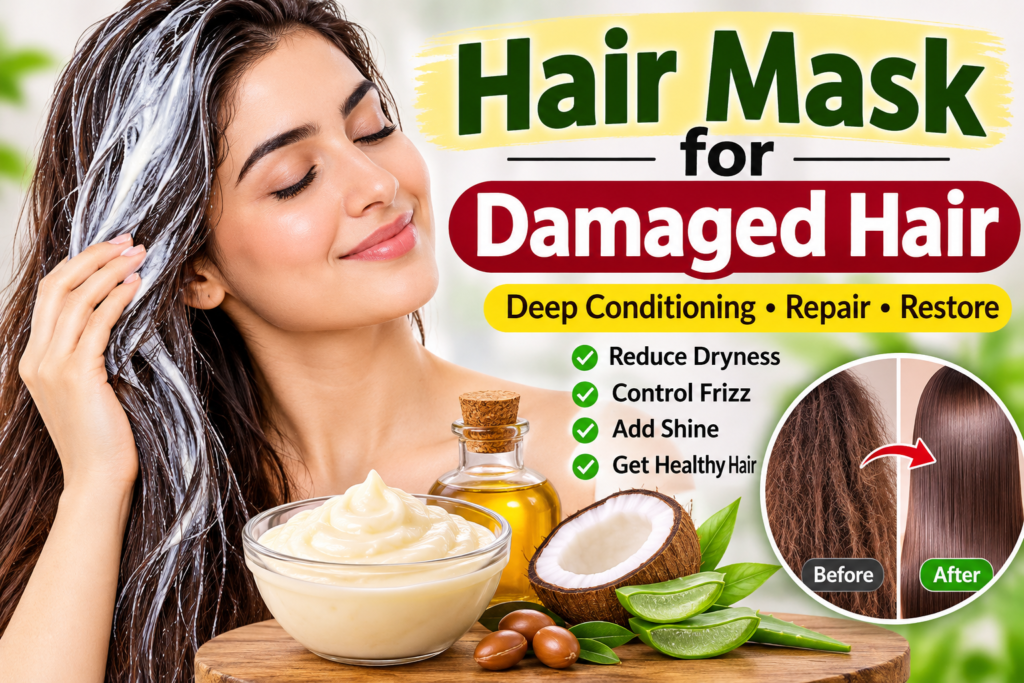
Hair Mask for Damaged Hair is an important part of a healthy hair care routine, especially for people dealing with dryness, breakage, split ends, frizz, and rough texture. Hair can become damaged for many reasons, including frequent heat styling, chemical treatments, hair coloring, excessive sun exposure, and improper hair care habits. Over time, these factors can weaken the hair strands, making them look dull, feel rough, and become difficult to manage.
A good hair mask can help improve the appearance and feel of damaged hair by providing deep conditioning, moisture, and nourishing ingredients. Unlike regular conditioners, hair masks are generally designed to stay on the hair for a longer period, allowing conditioning ingredients to coat the strands and improve softness.
Whether your hair is naturally dry, chemically treated, or damaged by heat styling, adding the right hair mask to your routine can make a noticeable difference. However, choosing the right formula is essential because different hair types have different needs.
In this guide, you will learn what causes hair damage, how hair masks work, which ingredients to look for, how to use them correctly, and how to build a simple routine for healthier-looking hair.
What Is a Hair Mask for Damaged Hair?
A hair mask is a deep-conditioning treatment designed to improve the condition of dry, weak, rough, or damaged hair. It usually contains moisturizing, conditioning, and protective ingredients that help make hair feel smoother and easier to manage.
A hair mask for damaged hair focuses on improving softness, reducing the appearance of frizz, and helping prevent further breakage caused by dryness and rough handling.
Most hair masks contain ingredients such as:
- Shea butter
- Coconut oil
- Argan oil
- Keratin
- Panthenol
- Aloe vera
- Glycerin
- Hydrolyzed proteins
These ingredients serve different purposes. Some help attract and retain moisture, while others condition the hair surface or temporarily improve the feel of weakened strands.
It is important to understand that hair masks cannot completely reverse severe structural damage. However, regular conditioning treatments can improve the appearance, texture, and manageability of damaged hair.
Common Causes of Hair Damage
Before selecting a hair mask, it is helpful to understand what is causing your hair problems. Identifying the main cause can help you choose products that address your specific needs.
1. Excessive Heat Styling
Frequent use of hair dryers, curling irons, and flat irons can make hair dry and brittle. High temperatures may weaken the hair’s protective outer layer and contribute to breakage.
Using heat styling tools without protection can make the problem worse.
To reduce heat-related damage:
- Limit the use of flat irons and curling tools.
- Choose lower temperature settings.
- Apply a heat protectant before styling.
- Allow hair to air-dry when possible.
2. Chemical Treatments
Hair coloring, bleaching, relaxing, and perming can change the structure of hair. These treatments may weaken the strands and make them more vulnerable to dryness and breakage.
Bleached hair often requires extra conditioning because the chemical process can damage the hair’s outer protective layers.
A moisturizing hair mask can help improve softness and reduce roughness.
3. Frequent Hair Washing
Washing your hair too frequently with harsh shampoos may remove some of its natural oils. This can leave certain hair types feeling dry and rough.
Using a gentle shampoo and following with a suitable conditioner can help maintain moisture.
4. Environmental Factors
Sun exposure, wind, pollution, and swimming in chlorinated water can affect hair quality.
These environmental factors may contribute to dryness, tangling, and dullness.
Protecting your hair when spending extended periods outdoors and rinsing it after swimming can help reduce unnecessary stress.
5. Improper Hair Brushing
Brushing wet hair aggressively or pulling through tangles can cause breakage.
Wet hair is more vulnerable to stretching and mechanical damage, so gentle handling is important.
Use a wide-tooth comb and start detangling from the ends before moving toward the roots.
Benefits of Using a Hair Mask for Damaged Hair
Using a suitable hair mask regularly can provide several benefits. Results depend on the ingredients, hair condition, and consistency of your routine.
1. Provides Deep Conditioning
One of the main benefits of a hair mask is its conditioning effect. Rich formulas can coat the hair strands and help reduce the rough feeling associated with dryness.
This can make damaged hair feel softer and smoother.
2. Helps Reduce Breakage
Dry and tangled hair can break more easily during brushing and styling.
A conditioning mask can improve slip, making it easier to detangle hair without excessive pulling.
Although it cannot repair every type of damage, it may help reduce breakage caused by rough handling.
3. Improves Hair Smoothness
Damaged hair often has a rough surface that makes it difficult to style.
Hair masks containing conditioning agents, oils, and silicones can help smooth the outer surface of the strands.
As a result, hair may look shinier and feel more manageable.
4. Helps Control Frizz
Frizz is often associated with dryness, humidity, and an uneven hair surface.
Moisturizing hair masks can improve softness and help hair appear more controlled.
For people with naturally wavy, curly, or coarse hair, a suitable mask can make styling easier.
5. Improves Hair Manageability
Tangled hair can make everyday styling frustrating.
A good hair mask can provide extra conditioning, making it easier to comb, style, and maintain damaged hair.
6. Adds Shine
Hair that looks dull may benefit from conditioning ingredients that smooth the hair surface.
When the hair surface reflects light more evenly, strands can appear shinier and healthier.
Best Ingredients to Look for in a Hair Mask for Damaged Hair
Choosing a hair mask becomes easier when you understand its ingredients. Different ingredients provide different conditioning benefits.
Here are some useful ingredients to consider.
1. Shea Butter
Shea butter is a rich conditioning ingredient commonly used in hair care products.
It helps soften dry hair and provides a smooth, conditioned feel. It may be especially useful for thick, coarse, or curly hair.
However, people with fine hair may prefer lighter formulas because rich products can weigh their hair down.
2. Argan Oil
Argan oil is widely used in hair care because it helps condition the hair and improve shine.
It can make dry strands feel softer and smoother. It is often included in masks designed for frizzy or chemically treated hair.
3. Coconut Oil
Coconut oil is known for its ability to penetrate hair fibers to some extent. Research suggests that it may help reduce protein loss when used as a pre-wash treatment.
It can be useful for people with dry or damaged hair, although not every hair type responds equally well to it.
4. Keratin
Keratin is a protein associated with the structure of hair.
Some hair masks contain hydrolyzed keratin or other protein ingredients to improve the feel and appearance of damaged strands.
These products may temporarily help hair feel stronger and smoother. However, they do not permanently rebuild damaged hair.
5. Aloe Vera
Aloe vera is commonly used in moisturizing hair care products.
It helps provide a lightweight conditioning feel and may be suitable for people who prefer less heavy formulas.
6. Glycerin
Glycerin is a humectant, meaning it attracts water.
It is frequently included in hair masks and conditioners to support moisture retention and improve softness.
7. Panthenol
Panthenol, also known as provitamin B5, is a conditioning ingredient.
It helps improve the smoothness and manageability of hair and is commonly found in moisturizing treatments.
How to Choose the Right Hair Mask for Your Hair Type
Not every hair mask works equally well for everyone. Your hair thickness, texture, and level of damage should influence your choice.
Hair Mask for Dry and Damaged Hair
If your hair feels rough, brittle, and difficult to manage, choose a deeply conditioning mask.
Look for ingredients such as:
- Shea butter
- Argan oil
- Glycerin
- Coconut oil
- Panthenol
These ingredients can help improve softness and reduce the dry feeling.
Hair Mask for Fine and Damaged Hair
Fine hair can become flat when exposed to heavy conditioning products.
Choose a lightweight mask that provides conditioning without leaving a greasy residue.
Look for:
- Aloe vera
- Panthenol
- Lightweight conditioning agents
- Small amounts of nourishing oils
Apply the product mainly to the middle lengths and ends.
Hair Mask for Curly and Damaged Hair
Curly hair often experiences dryness because natural scalp oils may not spread easily along the curved strands.
A richer conditioning mask may help improve softness and make curls easier to detangle.
Look for shea butter, argan oil, glycerin, and other moisturizing ingredients.
Hair Mask for Bleached and Chemically Treated Hair
Bleached or chemically treated hair may require both conditioning and carefully selected protein treatments.
Consider products containing:
- Hydrolyzed proteins
- Keratin
- Conditioning agents
- Argan oil
- Panthenol
If your hair feels stiff or unusually rough after protein treatments, switch to a more moisturizing formula.
Hair Mask for Heat-Damaged Hair
Hair frequently exposed to high temperatures may benefit from conditioning masks that improve softness and reduce friction.
Look for moisturizing ingredients and combine your treatment with a heat-protection routine.
How to Use a Hair Mask for Damaged Hair Correctly
Using a hair mask correctly is important for getting the best possible results.
Follow these simple steps.
Step 1: Wash Your Hair
Start by washing your hair with a gentle shampoo.
Focus on cleaning your scalp rather than aggressively scrubbing the lengths. Rinse thoroughly to remove dirt, oil, and product buildup.
Step 2: Remove Excess Water
After shampooing, gently squeeze excess water from your hair.
You can also use a soft microfiber towel. Avoid rubbing your hair aggressively because this may increase tangling and breakage.
Most rinse-out masks work best on damp hair, but always follow the product instructions.
Step 3: Apply the Hair Mask
Take an appropriate amount of product and distribute it through the middle lengths and ends.
Avoid applying a rich mask directly to the scalp unless the product specifically recommends scalp application.
Use your fingers or a wide-tooth comb to distribute the treatment evenly.
Step 4: Leave It on for the Recommended Time
Different products have different application instructions.
Some masks need only five minutes, while others may require 10 to 20 minutes.
Do not assume that leaving a mask on longer will produce better results.
Step 5: Rinse Thoroughly
Use lukewarm water to rinse out the mask.
Make sure there is no heavy product residue left behind, especially if your hair is fine or easily weighed down.
Step 6: Dry Your Hair Gently
Avoid rough towel drying.
Use a soft towel or microfiber cloth to remove excess moisture. If you use a blow dryer, choose a moderate temperature and apply heat protectant.
How Often Should You Use a Hair Mask?
The ideal frequency depends on your hair type, damage level, and the product formula.
Here is a general guide:
| Hair Type | Suggested Frequency |
|---|---|
| Very dry hair | 1–2 times weekly |
| Damaged hair | 1–2 times weekly |
| Fine hair | Once weekly |
| Curly hair | Once weekly or as needed |
| Chemically treated hair | 1–2 times weekly |
| Normal hair | Every 1–2 weeks |
These are starting points rather than strict rules.
If your hair becomes greasy, flat, or coated, reduce the frequency or use a lighter product.
Homemade Hair Mask Ideas for Damaged Hair
Some people prefer homemade hair treatments because they can use simple ingredients available at home.
However, homemade masks have limited scientific evidence for repairing damaged hair. They should be considered optional conditioning treatments rather than replacements for tested hair care products.
1. Coconut Oil Pre-Wash Treatment
Coconut oil may help reduce protein loss from hair when used before washing.
Ingredients:
- 1–2 teaspoons of coconut oil
- A small amount of additional oil if needed for longer hair
How to use:
- Take a small amount of coconut oil.
- Rub it between your palms.
- Apply it lightly to the lengths and ends.
- Leave it for around 20–30 minutes.
- Wash your hair with a gentle shampoo.
Use a small quantity to avoid excessive greasiness.
2. Aloe Vera Conditioning Mask
Aloe vera is commonly used in hair care products for its lightweight conditioning properties.
Ingredients:
- 2 tablespoons of pure aloe vera gel
- 1 teaspoon of a suitable hair conditioner
How to use:
- Mix the ingredients.
- Apply the mixture to damp hair.
- Leave it for 10–15 minutes.
- Rinse thoroughly.
Use a clean, commercially prepared aloe vera gel without irritating additives.
3. Honey and Conditioner Mask
Honey is a humectant and may help provide a moisturizing feel.
Ingredients:
- 1 tablespoon of honey
- 2 tablespoons of regular conditioner
How to use:
- Mix the ingredients until smooth.
- Apply to the middle lengths and ends.
- Leave for 10–15 minutes.
- Rinse thoroughly.
Avoid using ingredients that irritate your scalp, and perform a small patch test before trying a new treatment.
Common Mistakes to Avoid When Using Hair Masks
Even a good hair mask may not provide the expected results if it is used incorrectly.
Here are some common mistakes to avoid.
1. Applying Too Much Product
Using more product does not necessarily improve results.
Excessive application can make hair greasy, heavy, and difficult to rinse.
Start with a small amount and add more only when necessary.
2. Applying the Mask to Dirty Hair
Most rinse-out masks are designed to be used after shampooing.
Applying them to hair covered with oil, dirt, or styling products may prevent even distribution.
Always follow the product instructions.
3. Using Protein Treatments Too Frequently
Protein-based treatments can help improve the feel of some damaged hair.
However, using multiple protein-heavy products may leave certain hair types feeling stiff or rough.
Balance protein treatments with moisturizing conditioners.
4. Ignoring Your Hair Type
A rich mask may work well for thick, coarse hair but leave fine hair flat.
Always choose a product based on your hair’s needs rather than following trends.
5. Expecting Permanent Repair
Hair masks improve conditioning and appearance, but they cannot permanently restore hair that has been severely damaged.
Split ends cannot be permanently repaired with a mask. Trimming damaged ends is often the most effective solution.
Hair Mask vs. Regular Conditioner: What Is the Difference?
Hair masks and regular conditioners both help improve hair softness and manageability, but they are designed for slightly different purposes.
| Feature | Hair Mask | Regular Conditioner |
|---|---|---|
| Main purpose | Intensive conditioning | Everyday conditioning |
| Texture | Often thicker | Usually lighter |
| Application time | Usually longer | Usually shorter |
| Frequency | Usually weekly | Often after every shampoo |
| Best for | Dry or damaged hair | Regular maintenance |
| Conditioning level | Often richer | Usually lighter |
You do not necessarily need to replace your regular conditioner with a hair mask.
Many people benefit from using conditioner after shampooing and adding a hair mask once a week.
Tips to Prevent Further Hair Damage
Using a hair mask is only one part of maintaining healthy-looking hair. Your daily habits also play an important role.
1. Reduce Heat Styling
Try to limit frequent use of flat irons and curling tools.
When heat styling is necessary, use a heat protectant and avoid unnecessarily high temperatures.
2. Use a Gentle Shampoo
Choose a shampoo suitable for your scalp and hair type.
If your lengths are dry, avoid repeatedly applying strong cleansing products to them.
3. Avoid Tight Hairstyles
Tight ponytails, buns, and braids can create tension on the hair.
Choose loose hairstyles and avoid pulling hair too tightly.
4. Protect Hair During Sleep
Use a smooth pillowcase or loosely tie your hair before sleeping.
This may help reduce friction and tangling overnight.
5. Trim Split Ends
Split ends cannot be permanently sealed by conditioners or masks.
Regular trims can remove damaged ends and help your hair look neater.
6. Protect Hair From Sun and Chlorine
Wear a hat during extended sun exposure and rinse your hair after swimming.
A suitable leave-in conditioner may also help improve manageability.
How Long Does It Take for a Hair Mask to Show Results?
The time required to notice improvements depends on the condition of your hair and the product you use.
Some people notice softer and smoother hair after the first application. Others may need several weeks of consistent use to see improvements in manageability.
Here is a general expectation:
| Time Period | Possible Results |
|---|---|
| First use | Softer and smoother feel |
| 1–2 weeks | Improved manageability |
| 3–4 weeks | More consistent conditioning results |
| 6–8 weeks | Better maintenance of softness with regular use |
Remember that these are general expectations, not guaranteed results.
A hair mask does not make hair grow faster or permanently repair broken strands. Healthy hair habits and gentle handling are equally important.
Frequently Asked Questions (FAQs)
1. What Is the Best Hair Mask for Damaged Hair?
The best hair mask depends on your hair type and the cause of damage. Look for moisturizing and conditioning ingredients such as shea butter, argan oil, glycerin, panthenol, and suitable proteins.
2. Can a Hair Mask Repair Damaged Hair?
A hair mask can improve the softness, smoothness, and manageability of damaged hair. However, it cannot permanently repair severe structural damage or completely restore split ends.
3. How Many Times a Week Should I Use a Hair Mask?
Most people with dry or damaged hair can start with one or two applications per week. Fine hair may need only one application weekly.
4. Should I Apply a Hair Mask to Wet or Dry Hair?
Most rinse-out hair masks are designed for clean, damp hair. However, some treatments are specifically formulated for dry hair, so always check the product instructions.
5. Can I Use a Hair Mask Instead of Conditioner?
A hair mask can provide deeper conditioning, but it does not always replace regular conditioner. You can use a conditioner after shampooing and apply a hair mask once a week.
6. Is Coconut Oil Good for Damaged Hair?
Coconut oil may help reduce protein loss and improve the feel of dry hair. However, it may feel too heavy for some hair types, so use a small amount.
7. Can Hair Masks Help With Split Ends?
Hair masks can temporarily smooth the appearance of split ends, but they cannot permanently repair them. Trimming is the most reliable way to remove split ends.
8. Should I Use a Hair Mask Before or After Shampoo?
Most rinse-out hair masks should be applied after shampooing. Some pre-wash treatments are designed to be used before shampoo, so follow the product directions.
9. Can I Leave a Hair Mask Overnight?
Only leave a mask overnight if its manufacturer specifically recommends overnight use. Regular rinse-out masks are generally designed for shorter application times.
10. Are Hair Masks Suitable for All Hair Types?
Yes, different hair masks are available for fine, thick, curly, straight, dry, and chemically treated hair. The important thing is choosing a formula that matches your hair’s needs.
Conclusion
A good Hair Mask for Damaged Hair can be a valuable addition to your hair care routine. It helps improve softness, reduce frizz, increase shine, and make dry or damaged strands easier to manage.
The best results come from choosing the right ingredients for your hair type and using the treatment consistently. Ingredients such as argan oil, shea butter, coconut oil, glycerin, and panthenol can provide useful conditioning benefits.
However, hair masks are not a complete solution for severe damage. Combining regular conditioning treatments with gentle washing, reduced heat styling, careful brushing, and regular trims can help maintain healthier-looking hair.
By understanding your hair’s needs and following a simple routine, you can improve its appearance, manageability, and overall condition over time.
Read Next