
Table of Contents
What Is 2C Hair?
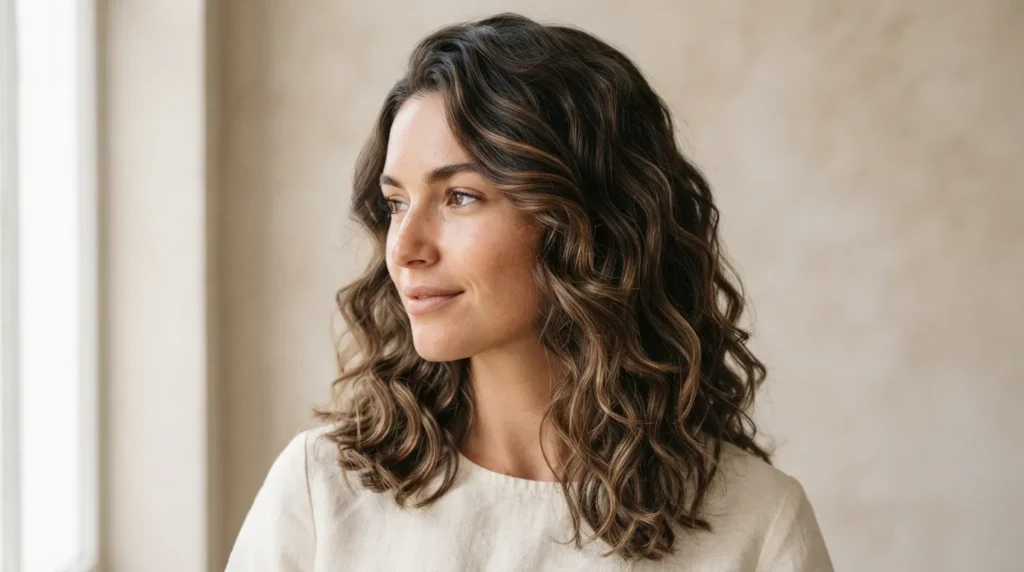
2C hair is a wavy hair type with a stronger, more defined wave pattern than 2A and 2B hair. Instead of forming mostly loose bends, 2C waves often create noticeable S-shaped waves that begin relatively close to the roots and continue through the lengths.
The pattern can look almost curly in some areas, especially when the hair is wet or styled with products. However, 2C hair generally maintains a wave pattern rather than forming consistent spiral curls like many 3A hair types.
One reason 2C hair can be difficult to manage is that it often combines several characteristics. It may have plenty of natural volume while also experiencing dryness, frizz, tangling, or product buildup.
The goal is not to force every strand into an identical shape. A good routine should support your natural wave pattern while giving the hair enough moisture, definition, and hold without making it heavy.
Practical example: If your hair looks relatively straight when brushed but develops strong S-shaped waves after washing and air drying, you may have a 2C pattern or a combination of 2B and 2C waves.
What Does 2C Hair Look Like?
2C hair usually has visible, well-defined waves that are stronger than typical loose waves. The wave pattern may start near the roots or become more obvious from the mid-lengths downward.
The overall appearance can vary significantly depending on hair density, strand thickness, moisture levels, haircut, climate, and styling technique.
Common Characteristics of 2C Hair
Typical characteristics include:
- Strong S-shaped waves
- Noticeable natural texture
- Moderate to high hair volume
- Frizz when the hair lacks moisture or is disturbed while drying
- More definition when styled while wet
- A tendency to become puffy when brushed dry
- Possible dryness through the ends
- More wave definition with suitable styling products
- Different wave patterns across the same head
Some people have very fine 2C hair, while others have coarse or thick hair. Therefore, two people can both have 2C waves while needing completely different routines.
Fine, Medium, and Thick 2C Hair
Fine 2C hair can become weighed down easily. Lightweight leave-in products, mousse, or a small amount of styling cream may work better than multiple rich products.
Medium-textured 2C hair usually has more flexibility. A lightweight conditioner followed by mousse or gel can provide a useful balance of moisture and hold.
Coarse or thick 2C hair may require more conditioning and stronger styling products to maintain definition. However, adding more product is not always the solution. Too much product can create buildup and make waves appear dull or limp.
Practical example: Someone with fine 2C hair might use a lightweight conditioner and mousse, while someone with thick 2C hair may prefer conditioner, a small amount of curl cream, and gel.
How to Identify 2C Hair
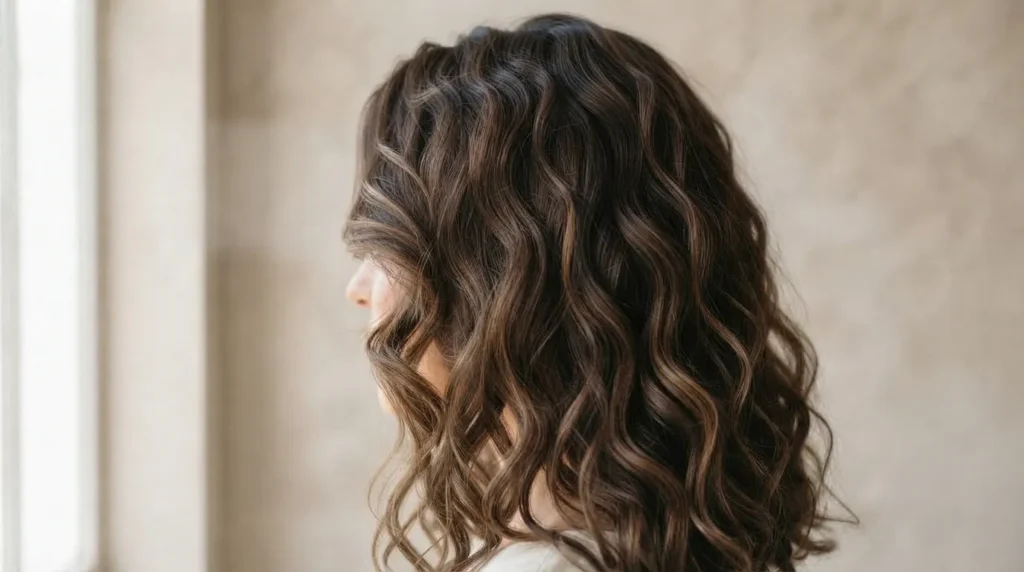
Hair typing can be useful as a starting point, but it should not become a strict rule. Your hair may show more than one pattern.
To identify possible 2C hair, look at your natural texture after washing. Avoid judging the pattern immediately after brushing or applying heavy products.
Ask yourself:
- Does my hair naturally form clear S-shaped waves?
- Are my waves stronger than typical 2A or 2B waves?
- Does my hair become more textured as it dries?
- Does brushing dry hair make it look larger or frizzier?
- Do some sections form loose curls while others remain wavy?
- Does my natural texture become more visible when I use suitable styling products?
If most answers are yes, your hair may fall within the 2C range.
Your hair texture, density, and wave pattern are separate characteristics. For example, you can have fine 2C hair with low density or thick 2C hair with high density.
Practical example: If the hair around your face forms strong waves but the crown is flatter, that does not automatically mean you have two different hair types. Different sections commonly behave differently.
2C Hair vs. Other Hair Types
Understanding the difference between neighboring patterns can make product and styling decisions easier.
2A vs. 2B vs. 2C Hair
| Hair Type | Typical Pattern | Volume | Definition |
|---|---|---|---|
| 2A | Very loose waves | Low to moderate | Subtle |
| 2B | Defined waves, often from mid-lengths | Moderate | Noticeable |
| 2C | Strong S-shaped waves | Moderate to high | Strong |
| 3A | Loose spiral curls | Moderate to high | Curl-based |
The categories overlap. A person can have 2A sections, 2B sections, and 2C sections at the same time.
2C Hair vs. 3A Hair
The biggest difference is generally the shape of the pattern.
2C hair primarily forms waves, while 3A hair tends to form recognizable loose spirals or ringlets.
Wet hair can make this distinction confusing because waves can look temporarily more curled. Judge the pattern after the hair has dried naturally without brushing it out.
Practical example: If a section repeatedly forms an elongated S rather than a circular spiral, it is more consistent with a wavy pattern.
How to Care for 2C Hair
A successful routine for 2C hair usually focuses on four things: gentle cleansing, appropriate moisture, wave definition, and controlled drying.
You do not necessarily need a large collection of products. In many cases, a simple routine works better because it reduces the chance of buildup.
The Basics of a Healthy 2C Hair Routine
Start with a cleanser that removes oil and buildup without leaving your hair feeling excessively stripped.
Follow with conditioner, concentrating on the lengths and ends if your roots become oily quickly.
After washing, apply styling products to wet or very damp hair. This helps encourage the natural wave pattern before it becomes disrupted.
Finally, allow the hair to dry without repeatedly touching or brushing it.
Practical example: A simple routine could be shampoo, conditioner, lightweight leave-in, mousse or gel, gentle scrunching, and air drying.
How Often Should You Wash 2C Hair?
There is no universal number of wash days for 2C hair.
Your ideal schedule depends on scalp oiliness, activity level, product use, climate, and how quickly buildup develops.
If your scalp becomes oily quickly, you may need more frequent cleansing. If your hair is dry and your scalp remains comfortable, you may prefer washing less often.
Co-washing can work for some people, but it may not remove all styling residue. Occasional thorough cleansing can be useful when hair begins feeling coated or heavy.
Practical example: If your waves look good on day one but become greasy at the roots by day three, adjust your cleansing frequency based on your scalp rather than following a fixed schedule.
Choosing Shampoo and Conditioner
Look for a shampoo that suits your scalp rather than choosing solely based on the word “curly” or “wavy” on the label.
Conditioner should provide enough moisture to make detangling easier without leaving your waves limp.
If your hair is fine, avoid automatically choosing the richest formula available. Lightweight hydration can sometimes provide better results.
How to Moisturize 2C Hair Without Weighing It Down
Moisture does not mean using the heaviest possible product.
Start with conditioner. If additional hydration is needed, use a small amount of leave-in conditioner on wet hair.
Pay attention to how your hair responds. If waves lose volume and become greasy or coated, reduce the amount or frequency of rich products.
Deep conditioning can be useful when hair feels unusually dry, but it does not necessarily need to be performed every wash day.
Practical example: If your ends feel dry but your roots become oily, apply extra conditioning to the ends rather than covering the entire scalp area with rich products.
Detangling 2C Hair
Detangle when the hair is wet and has enough slip from conditioner.
Start at the ends and gradually work upward. A wide-tooth comb or fingers can help reduce unnecessary pulling.
Avoid aggressively brushing dry waves because it can separate wave clumps and increase visible frizz.
The Best 2C Hair Care Routine
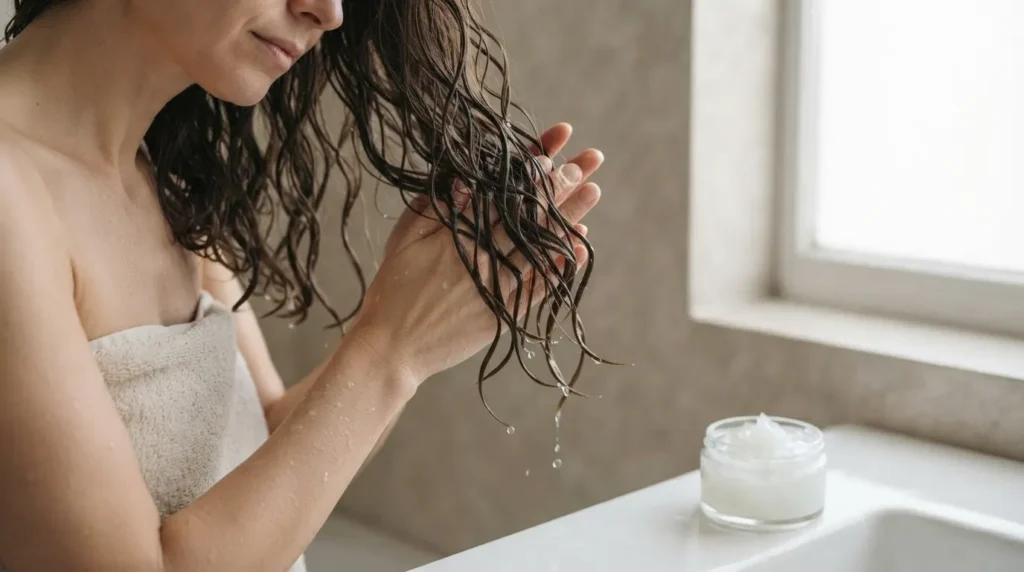
A practical wash day does not need to be complicated.
Step 1: Cleanse
Wet the hair thoroughly and cleanse the scalp gently. Concentrate the shampoo where oil and buildup accumulate.
Let the rinse carry some cleanser through the lengths rather than aggressively scrubbing the ends.
Step 2: Condition
Apply conditioner through the lengths and ends. Detangle gently while the conditioner is present.
Rinse according to your hair’s needs. Very dry hair may benefit from leaving a small amount of conditioner behind, while fine hair may prefer a cleaner rinse.
Step 3: Apply Leave-In and Styling Products
Apply products while the hair is wet or very damp.
A lightweight leave-in can provide moisture. Depending on your hair, follow with curl cream, styling cream, mousse, or gel.
You do not need every product in one routine.
Step 4: Define Your Waves
Use your hands to encourage wave clumps. Scrunch upward from the ends toward the roots.
If certain sections refuse to form properly, gently finger-style those sections instead of repeatedly brushing them.
Step 5: Dry Your Hair
You can air dry or use a diffuser.
The main goal is to disturb the hair as little as possible while it dries.
A microfiber towel can help remove excess water without the rough handling associated with vigorously rubbing hair with a standard towel.
Practical example: After washing, apply a small amount of leave-in and mousse to soaking-wet hair, scrunch, gently remove excess water with a microfiber towel, then air dry or diffuse on a gentle setting.
How to Reduce Frizz in 2C Hair
Frizz is not automatically a sign that your hair is unhealthy. Some natural frizz is normal, particularly with wavy textures.
However, excessive frizz can often be reduced by changing how you wash, style, and dry your hair.
Helpful habits include:
- Avoid brushing dry waves
- Use conditioner regularly
- Apply styling products to wet hair
- Avoid excessive touching while drying
- Use a microfiber towel
- Consider a silk pillowcase or satin bonnet
- Use enough styling hold for your hair
- Protect hair from excessive heat
- Clarify when product buildup is affecting definition
Humidity can also increase frizz because moisture in the environment affects the hair’s surface and shape.
Practical example: If your hair looks defined immediately after styling but becomes fuzzy after you touch it repeatedly, the problem may be mechanical disturbance rather than a lack of product.
How to Define and Enhance 2C Waves
Wave definition comes from working with your existing pattern rather than forcing every section into a perfect shape.
Scrunching
Scrunching is one of the easiest methods.
With wet or damp hair, cup the ends toward the scalp and gently squeeze. Repeat throughout the hair.
Avoid squeezing aggressively. The objective is to encourage wave formation without creating unnecessary tangling.
Plopping
Plopping involves wrapping wet, product-treated hair in a soft fabric to encourage wave clumps while removing some excess water.
It can work particularly well for people whose waves become stretched by the weight of dripping water.
However, not everyone gets better results from plopping. If your hair becomes flattened or loses root volume, another drying method may suit you better.
Finger Styling
Finger styling can help individual sections form cleaner waves.
Take a small section of wet hair and guide it into its natural direction with your fingers. This is particularly useful around the face, where wave shape can be more noticeable.
Practical example: If one front section looks almost straight while the surrounding hair is wavy, lightly finger-style that section while wet rather than applying large amounts of extra product.
Best Products for 2C Hair
The best products for 2C hair depend on your strand thickness, density, porosity, scalp behavior, and desired finish.
Instead of searching for one universally “best” product, look for products that solve your specific problem.
Shampoo and Conditioner
Choose shampoo according to your scalp and conditioner according to your hair’s moisture needs.
If you experience frequent product buildup, occasional clarifying can help reset the hair.
Leave-In Conditioner
A leave-in can provide additional softness and moisture after washing.
Fine hair usually benefits from a lighter application, while coarse or very dry hair may tolerate more.
Curl Cream or Styling Cream
A curl cream can help soften and group waves while providing some control.
Use a small amount first. Adding more later is easier than trying to correct hair that has been overloaded.
Mousse
Mousse can be useful when you want volume and lightweight wave definition.
It is particularly helpful for hair that becomes flat with heavier creams.
Hair Gel
Gel provides stronger hold and can help waves maintain their shape during drying.
Once fully dry, some gels create a temporary firm feeling. Gently scrunching the dry hair can soften that finish without brushing out the wave pattern.
Practical example: Fine 2C hair may perform well with leave-in plus mousse, while thicker hair may need leave-in plus curl cream and gel.
How to Style 2C Hair
Good 2C hair styling starts with wet-hair technique.
Apply products evenly, encourage wave clumps, and choose a drying method based on your desired result.
Air Drying
Air drying is simple and avoids direct heat.
After applying styling products, arrange the waves and leave the hair alone while it dries.
The disadvantage is that long drying times can make it tempting to touch the hair repeatedly, which may increase frizz.
Diffusing
A diffuser distributes airflow more gently than directing a strong stream of air at one section.
Use a suitable heat setting and avoid excessively high temperatures.
You can begin with the diffuser positioned near the hair without aggressively moving the waves around. As the hair becomes more stable, gently cup sections toward the scalp if desired.
Using Heat Safely
Heat styling can alter the appearance and feel of wavy hair when used excessively.
If you use a blow dryer or other heated tool, use a heat protectant and avoid unnecessarily high temperatures.
Do not repeatedly apply heat to the same section.
Practical example: If you need your hair dry quickly before leaving home, apply heat protectant, use a diffuser on a moderate setting, and stop once the hair is sufficiently dry rather than continuing to heat it for extra definition.
Easy Hairstyles for 2C Hair
2C waves can work well in simple styles such as:
- Low ponytails
- Loose half-up styles
- Low buns
- Side parts
- Loose braids
- Clipped-back front sections
- Half-up claw-clip styles
The best option depends on your wave length and haircut.
Protective Hairstyles
Protective styles can reduce daily manipulation.
Loose braids, gentle buns, and other low-tension styles can be useful, particularly when you want to minimize friction or repeated styling.
Avoid styles that pull tightly on the hairline.
Best Haircuts for 2C Hair
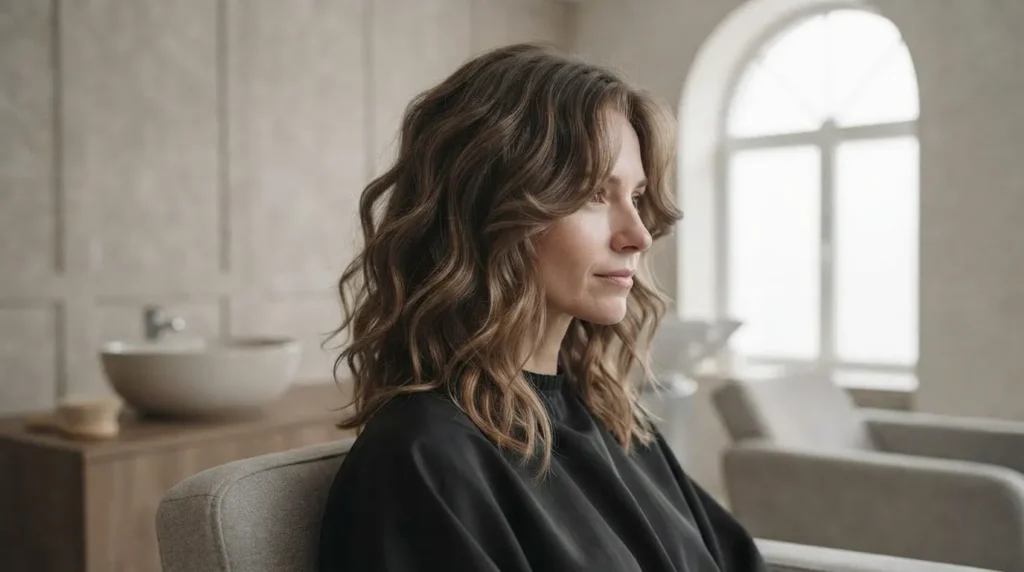
A haircut can dramatically change how 2C waves behave.
The right cut depends on your hair density, length, face-framing preference, and how much volume you want.
Layered Haircuts
Layers can help thick or dense 2C hair move more naturally.
Strategic layers can reduce a heavy triangular shape and allow waves to form more freely.
However, too many short layers can create unwanted volume, so the cutting approach should match your density.
Bob Haircuts
A bob can make 2C waves appear fuller and more structured.
A shorter length can also make waves spring upward because there is less weight pulling them down.
Face-Framing Waves
Face-framing pieces can highlight the natural wave pattern around the face.
The length should be selected according to how much movement and volume you want.
Choosing a Haircut for Your Hair Density
Hair density matters just as much as wave pattern.
Dense 2C hair may benefit from shape and strategically placed layers, while fine 2C hair may need a cut that preserves the appearance of fullness.
Practical example: If thick 2C hair looks bulky at the sides, a stylist can use shape and controlled layering rather than simply removing large amounts of hair.
2C Hair Care in Different Seasons
Your routine may need small changes throughout the year.
Summer and Humidity
Humidity can increase frizz and reduce styling longevity.
A product with stronger hold may help maintain wave definition. Avoid repeatedly touching the hair after styling.
Sweat and frequent swimming may also require adjustments to your cleansing routine.
Winter Dryness
Cold, dry weather can make the lengths feel rougher.
You may need slightly more conditioning or occasional deep conditioning during winter.
Indoor heating can also contribute to a drier environment.
UV Protection
Extended sun exposure can affect the appearance and condition of hair.
When spending significant time outdoors, consider physical protection such as a hat and use hair products designed for UV protection if they fit your routine.
Practical example: Someone whose waves become dry during winter might keep the same shampoo but add more conditioner to the lengths and use a small amount of leave-in after washing.
2C Hair Care Mistakes to Avoid
Several common habits can make wavy hair harder to manage.
Brushing Dry Waves
Dry brushing separates wave clumps and can create a fluffy appearance.
If you need to detangle, do it while the hair is wet and conditioned.
Using Too Much Product
More product does not always mean more definition.
Excess styling cream, oil, or gel can create buildup and make waves look heavy.
Touching Hair While It Dries
Repeatedly rearranging wet waves can break up clumps and increase frizz.
Once your hair is styled, allow it to dry with minimal disturbance.
Ignoring the Scalp
A good hair routine also considers scalp cleanliness.
If the scalp feels oily, uncomfortable, or coated, changing styling products alone may not solve the problem.
Using High Heat Too Often
Frequent high heat can make maintaining natural texture more difficult.
Use a heat protectant and choose the lowest practical heat setting.
Following Someone Else’s Routine Exactly
Two people with 2C hair can have completely different needs.
Hair density, strand thickness, porosity, climate, and styling preferences all matter.
Practical example: If a heavy curl cream works beautifully for a friend’s thick 2C hair but leaves your fine waves flat, that does not mean your hair is behaving incorrectly. The product simply may not suit your characteristics.
2C Hair Quick-Reference Chart
| Goal | What to Try | What to Avoid |
|---|---|---|
| More definition | Apply products to wet hair and scrunch | Brushing dry hair |
| Less frizz | Gentle drying and minimal touching | Rough towel drying |
| More volume | Lightweight products and suitable layers | Excess heavy cream |
| More moisture | Conditioner and targeted leave-in | Overloading the roots |
| Better hold | Mousse or gel | Constantly touching waves |
| Faster drying | Diffuser | Very high heat |
| Less buildup | Periodic thorough cleansing | Layering many products daily |
| Easier detangling | Conditioner and gentle combing | Pulling through dry knots |
| Better overnight texture | Satin bonnet or silk pillowcase | High-friction bedding |
| Healthier heat styling | Heat protectant and moderate heat | Repeated high-temperature styling |
2C Hair FAQs
What is 2C hair?
2C hair is a wavy hair pattern characterized by strong, clearly visible S-shaped waves. It generally has more definition and volume than 2A or 2B hair and may sometimes resemble loose curls.
How do I know if I have 2C hair?
Look at your natural pattern after washing and drying without brushing it out. If you consistently see strong S-shaped waves, especially compared with looser 2A or 2B patterns, your hair may fit the 2C category.
How often should I wash 2C hair?
There is no fixed schedule. Wash according to your scalp’s oiliness, product buildup, activity level, and hair condition. Some people need more frequent cleansing, while others can comfortably go longer between washes.
How can I make my 2C waves more defined?
Apply styling products to wet or very damp hair, scrunch upward, use gentle finger styling on individual sections, and minimize touching while the hair dries.
How do I reduce frizz in 2C hair?
Use enough conditioner, avoid dry brushing, handle wet hair gently, use a microfiber towel, and avoid repeatedly touching the hair during drying. Humidity-resistant styling products may also help.
Is 2C hair wavy or curly?
2C is generally classified as wavy hair. Its strong wave pattern can sometimes look similar to loose curls, particularly when wet or heavily styled.
What products are best for 2C hair?
The best combination depends on your hair. Common options include shampoo, conditioner, leave-in conditioner, curl cream, mousse, and gel. Fine hair often benefits from lighter products, while thick or coarse hair may tolerate richer formulas.
Should I air dry or diffuse 2C hair?
Both can work. Air drying uses no direct heat but can take longer. Diffusing can speed up drying and help preserve volume when used gently with appropriate heat settings.
What is the best haircut for 2C hair?
There is no single best haircut. Layered cuts, bobs, and face-framing styles can all work well. The best choice depends on your hair density, length, wave pattern, and preferred amount of volume.
Final Takeaway
2C hair looks its best when your routine works with its natural wave pattern instead of fighting it. Focus on gentle cleansing, balanced moisture, wet-hair styling, controlled drying, and a haircut suited to your density. You do not need dozens of products—consistent technique and the right level of moisture and hold usually make the biggest difference.
Read Next
Pingback: Low Porosity 2C Hair Care: Complete Routine