
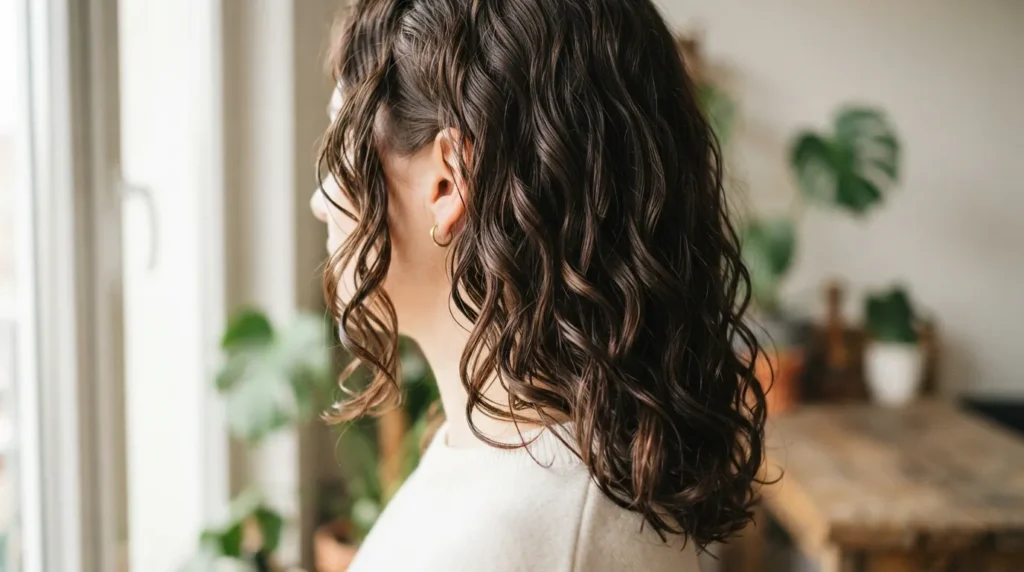
A solid 2C hair care routine comes down to three things: the right moisture balance, the right products, and a drying method that lets your natural wave pattern do the work. Type 2C hair sits at the edge of wavy and curly — S-shaped strands with more definition than 2A or 2B, but without the tight coil of a true curl. Get the routine wrong and you’ll fight frizz all day. Get it right and your waves clump, bounce, and hold shape with almost no effort.
This guide walks through everything from identifying your texture to building a wash-day routine, choosing styling products, diffusing correctly, and fixing the most common mistakes that flatten or frizz 2C hair.
What Is 2C Hair? (Characteristics & How to Identify It)
2C hair falls on the wavy end of Andre Walker’s hair typing system, one step past 2B. The strands form a defined S-pattern from root to tip, usually with more volume and a coarser feel than 2A or 2B waves.
Common characteristics of 2C hair:
- Waves start closer to the root, sometimes with a slight curl at the crown
- Strands are often thicker or coarser than other 2-type waves
- Hair is prone to frizz and humidity swelling
- Definition improves with the right hair oil, curl cream, or styling gel
- Air-dried 2C hair often looks straighter at the roots and wavier at the ends
Worked example: If you towel-dry your hair and see loose ringlets forming around your face but a flatter crown, and your strands feel thick between your fingers, you’re likely dealing with 2C rather than 2B. The extra body and coarseness are the tell.
Hair type isn’t fixed for life — porosity, protein levels, and even the products you use can shift how defined your curl pattern looks day to day.
2C vs. 2A and 2B: What’s the Real Difference?
The 2-type category covers a wide range, and it’s easy to misidentify your texture if you’re only looking at one strand.
| Type | Wave Shape | Volume | Frizz Tendency |
|---|---|---|---|
| 2A | Loose, barely-there S-bend | Low | Low |
| 2B | Defined S-waves from mid-shaft down | Medium | Medium |
| 2C | Strong S-pattern starting near the root | Medium-high | High |
The biggest giveaway is where the wave begins. 2A and 2B waves usually kick in around the ear or mid-shaft, while 2C waves often start right at the root, which is part of why 2C hair reads as “thicker” or “curlier” even when strand thickness is similar across all three types.
What Causes Frizz in 2C Hair?
Frizz happens when the outer layer of the hair shaft — the cuticle — lifts and lets moisture in or out unevenly. For 2C hair, three triggers show up most often:
- Humidity. Raised cuticles absorb ambient moisture, causing strands to swell and separate from the wave pattern.
- Dryness. Under-moisturized hair also raises the cuticle, which is why both extremes — too wet and too dry — cause frizz.
- Mechanical friction. Cotton pillowcases, rough towels, and over-brushing rough up the cuticle layer during sleep and styling.
Sulfates and heavy silicones can compound the problem. Sulfates strip natural oils and disrupt hydration, while non-water-soluble silicones build up over time and block moisture from reaching the hair shaft.
Worked example: Two people with identical 2C texture can have opposite frizz triggers. One person’s hair frizzes because their gel is too light to withstand humidity — their fix is a firmer-hold styler. The other’s hair frizzes because a heavy leave-in coats the shaft without absorbing — their fix is switching to a water-based formula applied to soaking-wet hair. The symptom looks the same; the cause and the solution don’t.
Product buildup is a slower-moving but equally common frizz trigger. Silicones, dry shampoo residue, and hard water minerals coat the hair shaft over several wash cycles, making strands look dull and less responsive to styling products — even ones that used to work well. A clarifying shampoo every few weeks resets the canvas.
The Best 2C Hair Care Routine
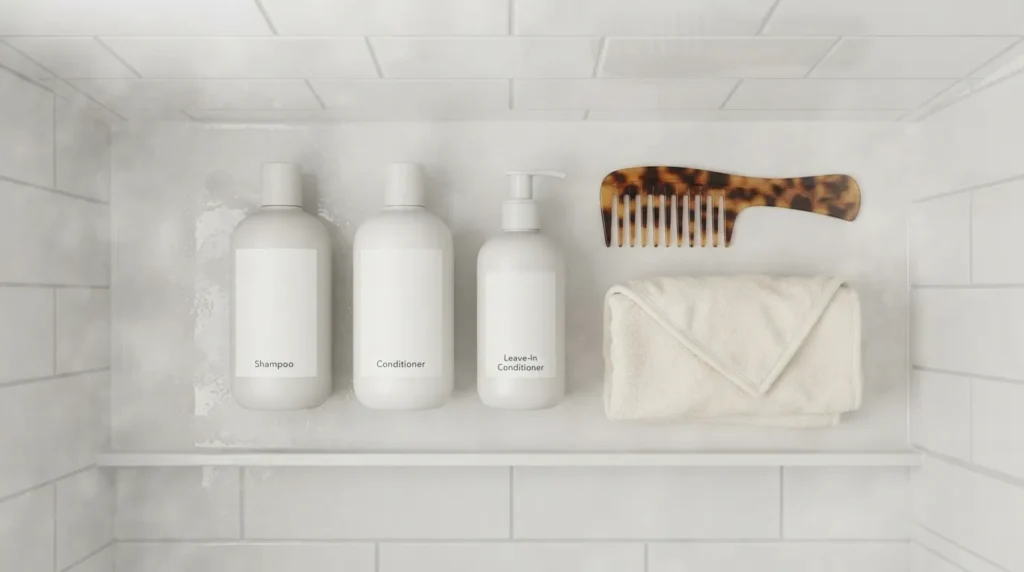
A reliable 2C hair care routine balances cleansing, moisture, and light protein — most 2C hair leans toward normal-to-low porosity, so it doesn’t need heavy protein treatments as often as curlier types.
How Often Should You Wash 2C Hair?
Most 2C hair does best on a 2–4 day wash cycle. Washing too often strips natural oils and sebum, leading to dryness and frizz. Waiting too long lets product buildup weigh down waves and dull shine.
| Hair Concern | Recommended Wash Frequency |
|---|---|
| Fine, low-density 2C hair | Every 2–3 days |
| Medium 2C hair | Every 3 days |
| Thick, coarse 2C hair | Every 4–5 days |
| Active/high sweat exposure | Every 2 days, co-wash between full washes |
Best Shampoo for 2C Hair
Look for a sulfate-free, lightweight cleansing shampoo that removes buildup without stripping natural oils. Fine 2C hair benefits from clarifying shampoo once every 2–3 weeks to clear product residue without over-drying strands in between.
Best Conditioner for 2C Hair
A lightweight, hydrating conditioner with humectants (like glycerin or aloe) restores moisture without collapsing volume. Heavier, silicone-rich conditioners tend to weigh down fine or medium 2C strands.
Leave-In Conditioner for 2C Hair
A leave-in treatment is where most of the frizz control happens. Apply it to soaking-wet hair, section by section, to lock in moisture before styling products go on. This step also improves elasticity and cuts down on tangles later in the week.
Why Porosity Changes Your Product Choices
Hair porosity — how easily your cuticle absorbs and holds moisture — determines which products actually work.
- Low porosity 2C hair: cuticles lie flat and resist moisture. Use lightweight, water-based leave-ins and apply heat (like a warm towel) to help product absorb.
- High porosity 2C hair: cuticles are raised and lose moisture fast. Richer creams and a hair mask once a week help seal in hydration.
Worked example: If your leave-in conditioner seems to “sit” on your hair rather than absorb, and your waves dry rough and dull, you likely have low porosity. Switching to a lighter, water-based formula applied on soaking-wet hair usually solves it within a wash or two.
Medium porosity 2C hair sits in between — cuticles neither resist nor over-absorb moisture, so most standard leave-ins and conditioners perform as expected without much troubleshooting. If you’re not sure where you fall, a simple strand test helps: drop a clean strand of hair into a glass of water. Hair that floats for several minutes is usually low porosity; hair that sinks quickly is usually high porosity; hair that sinks slowly sits in the medium range.
How Deep Conditioning Fits Into the Routine
A weekly hair mask or deep conditioning treatment restores moisture that daily washing and styling gradually strip away. For 2C hair, 15–20 minutes under a warm towel or shower cap is usually enough — the heat helps the cuticle open slightly so the treatment can penetrate rather than sit on the surface. Over-treating with heavy, protein-rich masks more than once a week can leave 2C hair feeling stiff or straw-like, since most 2C strands don’t need the extra protein that thicker, more porous curl types often require.
Best Styling Products for 2C Hair
The right stack is lightweight and buildable — 2C hair frizzes easily under heavy products but also falls flat without enough hold.
| Product | Purpose | Best For |
|---|---|---|
| Curl cream | Adds definition and softens strands | Daily use, all porosities |
| Styling gel | Locks in curl clumps, controls frizz | High humidity, second-day styling |
| Hair mousse | Adds volume without weight | Fine 2C hair |
| Hair serum or oil | Smooths flyaways, adds shine | Finishing step after drying |
| Heat protectant | Shields strands during diffusing | Anyone using heat tools |
Layering a curl cream under a light gel — the “cream-gel” method — is one of the most reliable ways to get soft, frizz-resistant definition without the crunchy or stiff feel some gels leave behind.
Worked example: For fine 2C hair that falls flat by midday, try a walnut-sized amount of mousse at the roots followed by a light gel through the mid-lengths and ends only. Skipping product at the root and reserving hold products for the ends keeps volume intact while still controlling frizz where it’s most visible.
If a gel leaves hair feeling stiff or “crunchy” once dry, that’s not a sign to skip gel altogether — it means it’s time to scrunch out the crunch (SOTC). Once hair is fully dry, gently scrunch sections between your palms to break the outer cast and release soft, touchable waves underneath.
How to Style 2C Hair
Styling 2C hair starts in the shower. Apply leave-in conditioner and styling products to soaking-wet hair, then use finger coiling or scrunching to encourage curl clumps to form before you ever pick up a diffuser.
How to Diffuse 2C Hair
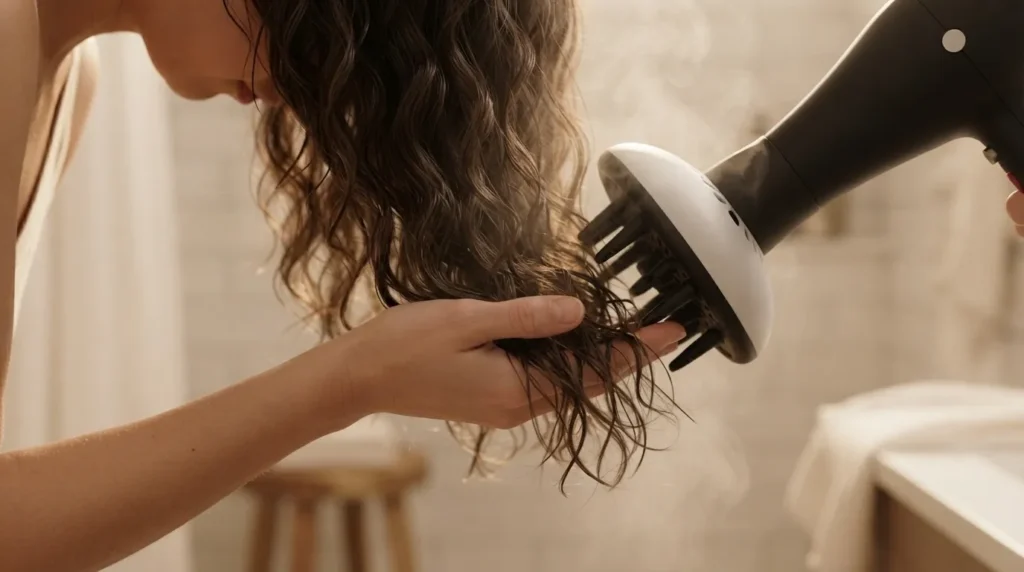
- Flip hair upside down and cup sections into the diffuser bowl.
- Use low heat and medium airflow to avoid disrupting the wave pattern.
- Scrunch gently as you go, holding each section for 10–15 seconds.
- Stop at “80% dry” and let the rest air dry to avoid frizz from over-drying.
Air Dry vs. Diffuse: Which Is Better for 2C Hair?
Both methods work — the right choice depends on your goals and your schedule.
| Factor | Air Drying | Diffusing |
|---|---|---|
| Time | Longer (1–3 hours) | Faster (10–20 minutes) |
| Definition | Softer, looser waves | Tighter, more defined clumps |
| Volume | Can fall flatter | Adds lift at the root |
| Frizz risk | Lower if left undisturbed | Higher if diffused too aggressively |
| Best for | Rest days, fine hair | Special occasions, thicker hair |
Worked example: If you’re short on time before work but want defined waves, diffuse on low heat until 80% dry, then let the crown finish air drying while you get ready — this keeps volume up without over-processing the ends.
How to Refresh 2C Hair Between Washes
On a refresh day, lightly mist hair with water (a spray bottle works better than a full rinse) and scrunch in a small amount of leave-in conditioner or curl cream. Avoid piling on new product — a light layer revives clumps without causing buildup.
Worked example: On day two, roots often look flatter while ends stay defined. Focus the refresh spray and product at the crown and root area rather than re-wetting the whole head — this lifts volume where it’s lost without disturbing the still-intact wave pattern lower down.
For hair that’s more than two days past a wash, a small amount of dry shampoo at the roots before refreshing can absorb excess oil and buy an extra day before a full wash is needed.
Overnight Care for 2C Hair
Description:
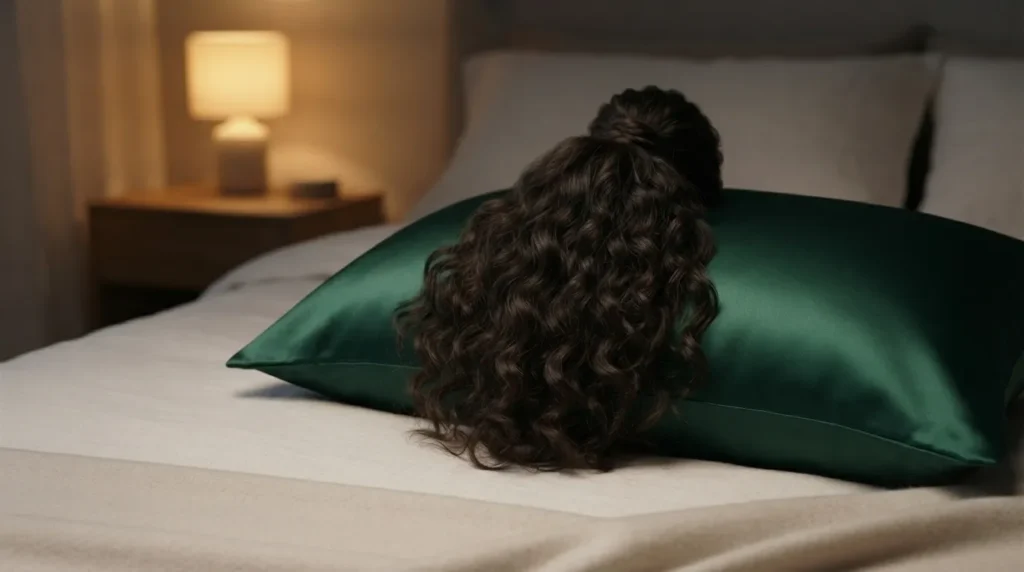
Protecting waves overnight prevents most of the frizz you’d otherwise fight the next morning:
- Switch to a satin pillowcase or silk bonnet to reduce friction
- Try “pineappling” — a loose, high ponytail — to preserve volume and shape
- Avoid sleeping on fully wet hair; it disrupts the wave pattern and encourages tangles
Worked example: For longer 2C hair, one high pineapple at the crown can crush waves underneath it. Try two loose pineapples, one on each side of the head, to distribute the hair and protect more of the length without flattening the top layer.
Braiding hair into two or three loose plaits before bed is another reliable overnight option, especially for thicker 2C hair that tends to tangle. It preserves more wave definition than a single high pineapple while still reducing friction against the pillow.
Common 2C Hair Mistakes (and How to Reduce Frizz)
- Over-brushing dry hair. Brushing breaks up curl clumps and roughs up the cuticle. Detangle wet hair with a wide-tooth comb or fingers instead.
- Touching hair while it dries. Repositioning strands mid-dry is one of the most common causes of frizz — let hair set undisturbed.
- Using heavy, silicone-rich products. These build up fast on fine-to-medium 2C strands and weigh down natural bounce.
- Skipping a heat protectant. Diffusing without one accelerates dryness and breakage over time.
- Overwashing or underwashing. Both throw off the scalp’s sebum balance, which affects frizz and shine.
- Using a regular bath towel to dry. Terrycloth towels are rough enough to rough up the cuticle and break curl clumps apart. A microfiber towel or an old cotton t-shirt is gentler and cuts drying time.
- Applying products to dry hair. Most leave-ins, creams, and gels are formulated to work on wet hair, where the cuticle is open and receptive. Applying the same products to dry strands often just sits on top and looks greasy.
Products to Avoid for 2C Hair
Heavy butters (like raw shea butter used alone), non-water-soluble silicones (look for ingredients ending in “-cone” or “-conol” without a “PEG” or “PPG” prefix), and drying alcohols in styling gels are the most common product-side culprits behind flat, frizzy, or buildup-prone 2C hair.
How to Add Volume to 2C Hair
Volume drops when product weighs hair down at the root or when hair is styled while lying flat. Clip roots up while diffusing, apply mousse focused at the crown, and consider “plopping” hair upward in a microfiber towel rather than down, which encourages lift instead of collapse.
Worked example: Root-clipping works by lifting one-inch sections of hair straight up at the crown and pinning them in place with duckbill clips while the rest of the hair dries. Once fully dry, removing the clips releases root lift that lasts through the day — a low-effort trick that works with almost any drying method.
Drying hair upside down for the first several minutes, whether air drying or diffusing, is another simple way to build volume before switching back to an upright position to finish.
Best Haircuts for 2C Hair
Layered cuts — especially long layers or a shag — let 2C waves move and clump naturally instead of sitting in one heavy shape. A blunt, one-length cut can look weighty and reduce visible wave definition, especially on thicker hair.
A long layered bob (lob) works well for medium-density 2C hair that wants movement without losing length, while a curtain-fringe or face-framing layers can help soften a flatter crown by encouraging waves to form closer to the face. For thick 2C hair, heavier layering through the mid-lengths reduces bulk and helps curl clumps form more evenly instead of clustering into one dense section.
Best Hairstyles for 2C Hair
Half-up styles, low buns, and braid-outs all work well with 2C texture. Braiding damp hair before it fully dries (a “braid-out”) is a heatless way to add extra wave definition for second- or third-day hair.
A loose, low ponytail secured with a soft scrunchie protects ends from friction while still showing off wave pattern through the length. For special occasions, a half-up twist at the crown adds structure to the top section while letting the rest of the waves fall naturally — a good middle ground between fully styled and fully undone.
Seasonal Tips for 2C Hair
- Summer: Humidity is the main enemy — use an anti-frizz serum and a gel with firmer hold to lock in definition.
- Winter: Indoor heating dries out strands fast, so increase deep conditioning frequency and add a hair oil to the routine.
- Rainy seasons: Lean on protective styles like buns or braids on high-humidity days to avoid fighting frizz all day.
- Spring and fall transitions: Weather swings between dry and humid can mean alternating between a lightweight gel for humid stretches and a richer leave-in during drier days — keep both on hand rather than committing to one formula year-round.
Worked example: Someone who diffuses successfully all winter may suddenly find the same routine leaves hair frizzy in early summer. The fix usually isn’t a new routine altogether — swapping a light-hold gel for a firmer-hold formula during humid months is often enough to keep the same wash-day routine working year-round.
FAQs About 2C Hair
How do I know if I have 2C hair?
Look for a defined S-pattern with more volume and coarseness than 2A or 2B waves, often flatter at the root and wavier toward the ends.
How often should I wash 2C hair?
Every 2–5 days depending on density and oil production — fine hair usually needs more frequent washing than thick 2C hair.
What causes 2C hair to frizz so easily?
A mix of humidity, under- or over-moisturized strands, and mechanical friction from towels, pillowcases, or brushing.
Can I use a curling iron on 2C hair?
Yes, but it’s rarely necessary — diffusing while wet with a curl cream and gel combo achieves similar definition with less heat damage.
Is co-washing good for 2C hair?
Co-washing (conditioner-only washing) works well between full shampoo days for hair that dries out easily, but it shouldn’t fully replace a cleansing shampoo, or buildup will accumulate.
Why does my 2C hair look wavy on top but straight underneath?
This is common and usually comes down to weight — the top layer catches more air and product, while underlayers get compressed by the hair above them. Root-clipping sections or diffusing upside down helps distribute airflow more evenly through all layers.
Does 2C hair get curlier with age or with the right routine?
Curl pattern itself doesn’t change, but definition can improve significantly once buildup is cleared, porosity is addressed, and products are matched to the hair’s actual moisture needs — many people see noticeably better clumping within a few weeks of adjusting their routine.
A consistent 2C hair care routine isn’t complicated — it’s about matching moisture, protein, and product weight to your specific porosity and density, then leaving your waves alone while they dry. Nail those basics and frizz stops being a daily fight.
Read Next.
Pingback: Best Braids for 2C Hair: Styles, How-To & Care Tips