
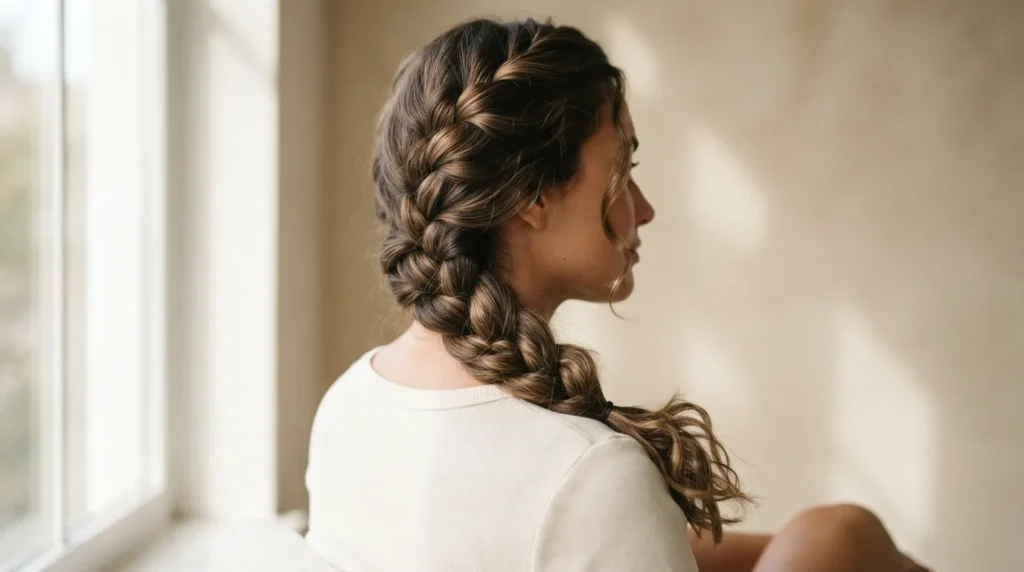
Best Braids for 2C Hair Styles How-To and Care Tips
If you’ve got 2C hair, you already know the drill: your waves look great one hour and frizzy the next. Braids for 2C hair solve that problem better than almost any other styling method, because they hold your wave pattern in place, cut down on frizz, and protect your strands from friction and manipulation.
This guide covers everything from prep products to specific braid styles, how long to keep braids in, and how to maintain them without losing your curl definition. Whether you’re doing this yourself at the bathroom mirror or you’re a stylist working with wavy-textured clients, you’ll find practical, tested guidance here.
Can You Braid 2C Hair?
Yes — 2C hair braids beautifully. The wave pattern is loose enough to work with, but defined enough that braids hold shape without needing heavy product or heat.
The main thing to understand about 2C hair is that it sits at the looser end of the wave spectrum, just before curls tighten into a 3A pattern. That means it’s prone to two things at once: minimal natural volume at the root and a tendency to frizz when humidity or friction disrupts the strand.
Braiding directly addresses both issues. It smooths the hair as it’s sectioned, and it locks the wave pattern into place while the braid is worn. Whether you’re testing overnight braids for wavy hair or a daytime protective style, the technique works with 2C texture rather than against it.
Quick check before you braid: Your hair should be at least shoulder-length for most classic braid styles to hold well. Shorter 2C hair can still be braided, but styles like French braids or a crown braid will need small, tight sections to stay in place.
It also helps to know where 2C sits relative to other wave and curl patterns. Straighter 2A and 2B hair often struggles to hold a braid at all, since there’s less natural texture to grip the plait. Tighter 3A curls, by contrast, hold braids easily but can shrink noticeably once unraveled. 2C hair sits in a useful middle ground — enough natural bend to keep a braid in place, without the dramatic shrinkage that comes with a tighter curl pattern. That balance is part of why braid styles for wavy hair have become such a popular, low-effort styling category.https://www.aad.org/public/everyday-care/hair-scalp-care/hair/healthy-hair-tips
Benefits of Braiding 2C Hair
Braids aren’t just a look — for 2C hair specifically, they solve real texture problems.
- Moisture retention. Braids reduce the surface area exposed to air, which slows moisture loss and helps prevent dryness-related breakage.
- Frizz control. Smoothing hair into a braid limits the friction that causes flyaways, especially in humid weather.
- Low manipulation. Once braided, you’re not brushing, re-styling, or handling your hair daily — which reduces hair breakage over time.
- Curl and wave preservation. Braids train the hair to hold a wave pattern, which is useful for anyone trying to enhance loose curls without heat.
- Time savings. A well-done braid style can last several days, cutting down your daily routine significantly.
For anyone managing textured hair with a busy schedule, this combination of protection and low effort is exactly why braid styles for wavy hair have stayed popular.
Products to Use Before Braiding 2C Hair
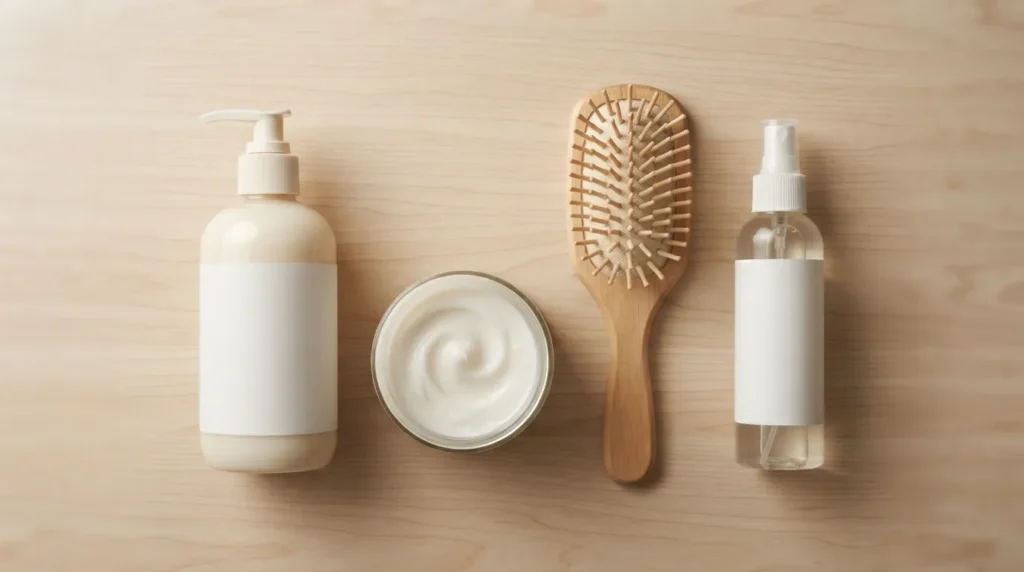
What you use before you braid matters more than the braid technique itself. Product choice affects hold, frizz, and how your waves look once you take the braids out.
| Product Type | Purpose | When to Apply |
|---|---|---|
| Leave-in conditioner | Adds moisture and hair elasticity before styling | On damp hair, before other products |
| Curl cream | Defines wave pattern and softens strands | After leave-in, section by section |
| Styling gel (light hold) | Controls frizz and helps braids stay smooth | Applied sparingly to edges and part lines |
| Detangling spray | Prevents braid tension from causing breakage | Before sectioning, on wet or dry hair |
| Silk or satin serum (optional) | Adds shine and reduces frizz | Light application after braiding |
Worked example: Say you’re prepping 2C hair for overnight braids. Start with a detangling spray and comb through gently. Follow with a leave-in conditioner, then a walnut-sized amount of curl cream distributed evenly.https://us.davines.com/blogs/news/hair-porosity-test Skip heavy gel for overnight styles — it can leave hair stiff or crunchy by morning. This combination keeps hair hydrated and manageable without weighing down the wave pattern.
Avoid anything with high alcohol content in gels or mousses, since it dries out 2C strands and increases the odds of breakage where the braid sections meet.
How to Braid 2C Hair Without Frizz
Frizz-free braid styles come down to prep, tension, and technique — not a single miracle product.
- Start on damp, not wet, hair. Fully wet hair swells and can lead to frizz as it dries under tension. Slightly damp hair holds a braid better and dries into a defined shape.
- Detangle before you section. Any knots left in will show up as bumps or loose frizz once the braid is in.
- Apply product section by section. Rather than coating all your hair at once, work in small sections so each part is evenly saturated.
- Keep tension even but not tight. Overly tight braids cause breakage at the hairline; too loose and the braid won’t hold the wave pattern.
- Secure ends properly. Use a soft hair tie to prevent the last inch of hair from unraveling and frizzing overnight.
- Let braids dry completely before removing. Taking braids out while hair is still damp is one of the most common causes of frizz.
Worked example: A common mistake is braiding straight after a shower, while hair is dripping. Instead, towel-dry with a microfiber cloth or cotton T-shirt to remove excess water, apply your products, and braid once hair is damp but not soaked. This alone eliminates a large share of frizz complaints from 2C braid users.
Best Braids for 2C Hair
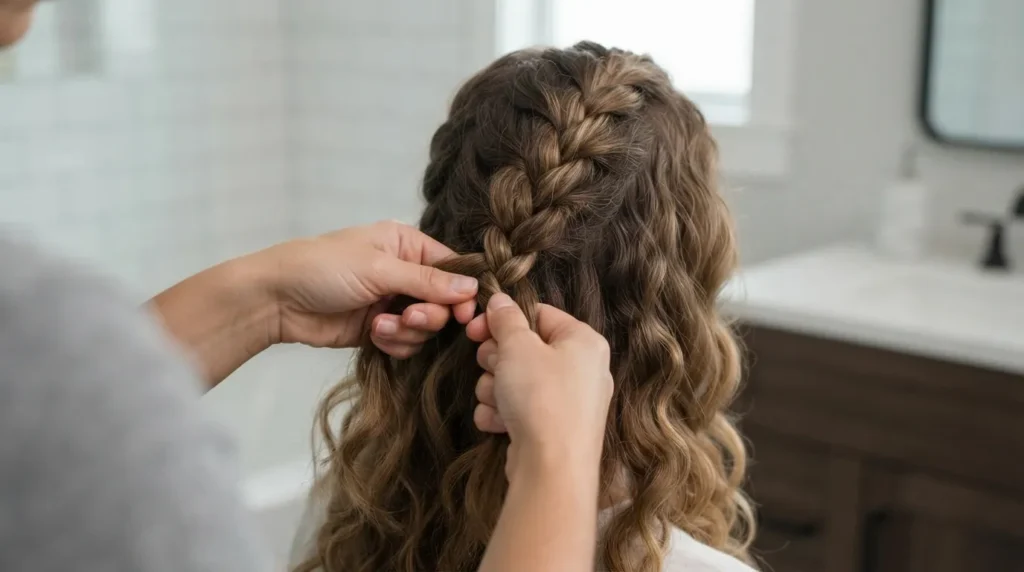
Not every braid style suits every wave pattern. Here’s how the most requested options work specifically for 2C texture.
French Braids
French braids work well on 2C hair because the technique naturally smooths flyaways as you incorporate new sections. They sit close to the scalp, which makes them a solid choice for both protective wear and a polished daytime look.
Dutch Braids
A Dutch braid is essentially an inverted French braid, and it tends to show up more prominently against wavy texture, giving extra definition. It’s a strong option if you want the braid pattern itself to be part of the style, not just a way to manage hair.
Fishtail Braids
Fishtail braids look more intricate but are actually forgiving on 2C hair, since slight imperfections in tension blend into the wave pattern rather than standing out. They work particularly well for loose, romantic everyday looks.
Crown Braids
A crown braid wraps around the head and is one of the better protective braids for 2C hair, since it tucks ends away and keeps hair off the neck and shoulders — useful for workouts or humid days.
Boxer Braids
Two tight, symmetrical braids running back from the front hairline. Boxer braids hold up well overnight and are a favorite for anyone looking for low maintenance hairstyles for 2C hair that still photograph well.
Loose Side Braids
A single loose braid over one shoulder is the easiest everyday option. It requires minimal tension, making it a good starting style if you’re new to braiding your own wavy hair.
Rope and Waterfall Braids
Rope braids use a two-strand twist instead of a traditional three-strand plait, giving a textured look that pairs naturally with a wave pattern. Waterfall braids let sections fall loose as you go, creating a soft, beachy effect that echoes natural waves rather than fighting them.
Protective and Everyday Braided Hairstyles for 2C Hair
Braided Ponytail
Combining a braid with a ponytail base gives you the protection of a braid with the convenience of a pulled-back style — useful for gym sessions or long workdays.
Half-Up Braids
Braiding just the top section while leaving the rest down keeps face-framing hair controlled while still showing off your natural waves underneath.
Braids for Wet Hair
Braiding hair while damp (not soaked) and letting it air-dry is one of the most effective heatless hairstyle methods for 2C hair. Once unraveled, it produces a soft, natural braid-out wave without any heat tool involved.
Overnight Braids for 2C Hair
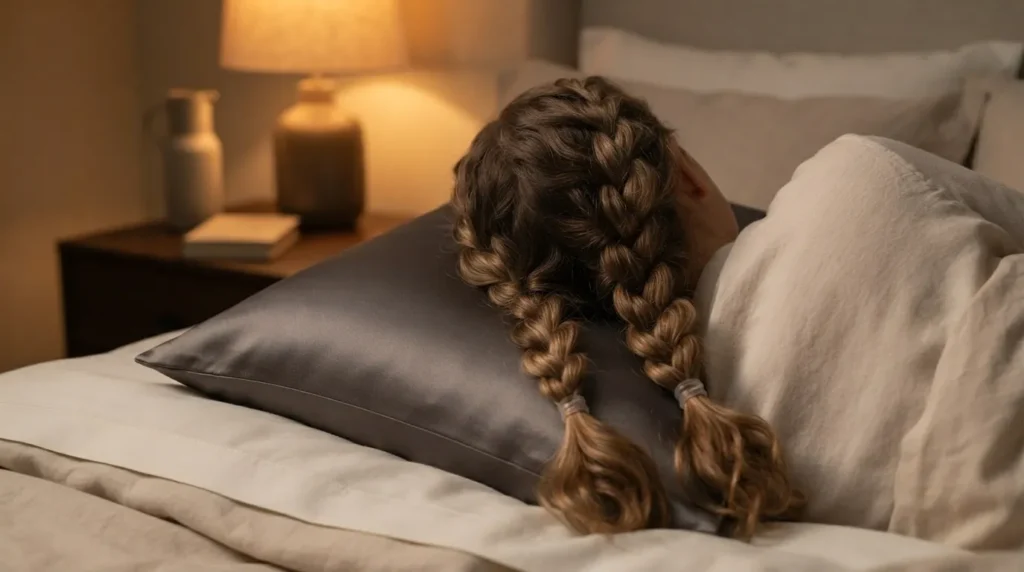
Sleeping Braids
Overnight braids for 2C hair work best when they’re loose enough to sleep on comfortably but tight enough to hold shape by morning. Two or three loose braids, rather than one tight one, usually distribute tension more evenly across the scalp and reduce discomfort.
Pair sleeping braids with a satin bonnet or silk pillowcase. Cotton pillowcases pull moisture from hair and increase friction, which undoes much of the frizz control your braids just gave you.https://www.aad.org/public/everyday-care/hair-scalp-care/hair
Braid-Out Waves
Braiding damp hair before bed and taking it down in the morning is a classic braid-out method. On 2C hair, this typically produces soft, loose waves rather than tight curls — ideal if your goal is enhancing your natural texture rather than changing it.
Worked example: Someone with fine 2C hair braids three sections overnight using a lightweight curl cream, sleeps on a silk pillowcase, and removes the braids in the morning by finger-separating (not brushing) the sections. The result is soft, beachy waves that last through the day without added product.
Braids for Fine vs. Thick 2C Hair
Braid tension, section size, and product amount should shift depending on hair density, even within the same 2C wave pattern.
| Factor | Fine 2C Hair | Thick 2C Hair |
|---|---|---|
| Section size | Smaller sections hold better | Larger sections are manageable |
| Product amount | Light — avoid weighing hair down | More product needed for full coverage |
| Braid tension | Looser, to avoid visible scalp tension | Slightly firmer for hold |
| Best styles | Fishtail, loose side braid | French braid, boxer braids, Dutch braid |
| Overnight comfort | Very comfortable, minimal bulk | May need extra-loose braids for comfort |
Braids for Fine 2C Hair
Fine strands hold braids well but can look flat if too much product is used. Stick to lightweight leave-ins and curl creams, and avoid gel unless you want a sleeker finish.
Braids for Thick 2C Hair
Thicker 2C hair may need more time to fully dry inside a braid, so factor that into overnight or multi-day styles. Larger, well-secured sections prevent the braid from loosening under the extra hair weight.
How Long Should You Keep Braids In?
For most 2C hair, three to five days is a reasonable range for a single braid style before removing, washing, and re-styling. Beyond that, product buildup and natural oil at the scalp can start affecting both hair health and hold.
Overnight-only braids (removed each morning) can be repeated nightly as part of a regular routine, since they’re not left in for extended periods and don’t carry the same buildup risk.
How to Maintain Braids on 2C Hair
Braid maintenance for 2C hair is less about redoing sections and more about protecting what’s already there.
- Refresh with a light mist. A water and leave-in conditioner mix keeps braids from drying out mid-week.
- Protect at night. Continue using a satin bonnet or silk pillowcase for the full duration you’re wearing the style.
- Avoid touching too often. Frequent handling loosens braid tension and introduces frizz at the roots.
- Watch the hairline. If you notice tightness or small bumps, the braid tension is too high and should be adjusted or redone.
- Cleanse the scalp gently. A diluted dry shampoo or scalp-focused cleanser between full washes helps with scalp care without disturbing the braid pattern.
Mistakes to Avoid When Braiding 2C Hair
- Braiding fully soaked hair. It swells and dries unevenly, increasing frizz once the braid comes out.
- Using heavy products meant for coarser textures. These can weigh down fine or medium 2C strands.
- Braiding too tightly at the hairline. This is a leading cause of tension-related breakage and, over time, can affect the hairline permanently.
- Skipping nighttime protection. Cotton pillowcases undo the frizz control braids are meant to provide.
- Leaving braids in too long. Past the five-to-seven-day mark, buildup and matting become more likely.
- Ignoring signs of scalp irritation. Redness, tenderness, or flaking under a braid usually means it’s time to take the style down, regardless of how many days it’s “supposed” to last.
- Re-braiding the exact same part line repeatedly. Shifting your part slightly each time you re-braid reduces concentrated tension on any one section of the hairline.
Braid-Friendly Products for Long-Term Hair Health
Braiding is a low manipulation hairstyle, but that only pays off if the products underneath support healthy hair between styles. A few habits make a noticeable difference over weeks and months, not just for a single style.
Rotate in a deep conditioning treatment every one to two weeks, even while wearing braids — a lightweight, rinse-out formula applied at the scalp and roots (where access allows) helps offset the dryness that comes with any protective style. Keep an eye on hair elasticity by gently stretching a strand when wet; hair that snaps rather than stretches and springs back is a sign it needs more moisture, not more protein.
Finally, treat your detangling tools as part of the routine, not an afterthought. A wide-tooth comb or detangling brush used before each braiding session prevents the kind of small knots that turn into breakage under tension. For further reading on wave and curl maintenance, the American Academy of Dermatology’s guidance on healthy hair care practices (aad.org) is a solid external resource, and pairing this guide with an internal resource on [general curly and wavy hair care routines] rounds out a full styling and maintenance plan.https://www.aad.org/public/everyday-care/hair-scalp-care/hair/curly-hair-care
Frequently Asked Questions
Are braids good for 2C hair?
Yes. Braids protect the hair from manipulation, help retain moisture, and preserve the natural wave pattern, making them one of the better low-manipulation styling options for this texture.
Can you braid 2C hair overnight?
Yes. Overnight braids are one of the most common ways to style 2C hair, especially for achieving a braid-out wave by morning without heat.
How long should you keep braids in 2C hair?
Three to five days for a worn protective style; overnight-only braids can be repeated nightly.
What products should you use before braiding 2C hair?
A detangling spray, leave-in conditioner, and lightweight curl cream cover most needs. Heavier gels are optional and best used sparingly.
How do you keep 2C hair from getting frizzy in braids?
Braid on damp (not wet) hair, use light, hydrating products, keep tension even, and sleep with a satin bonnet or silk pillowcase.
How do you maintain braids on 2C hair?
Mist lightly with water and leave-in conditioner, avoid excessive touching, and protect the style at night to extend its life without frizz.
Final Thoughts
Braids for 2C hair aren’t a one-size-fits-all technique — fine and thick strands need different tension and product amounts, and the right style depends on whether you want a protective look, an overnight routine, or a heatless wave. Get the prep right, keep tension balanced, and protect the style while you sleep, and braids become one of the most reliable tools in a wavy-hair routine.
REad Next.
Pingback: 2C Hair Care Routine: Complete Wavy Hair Guide