
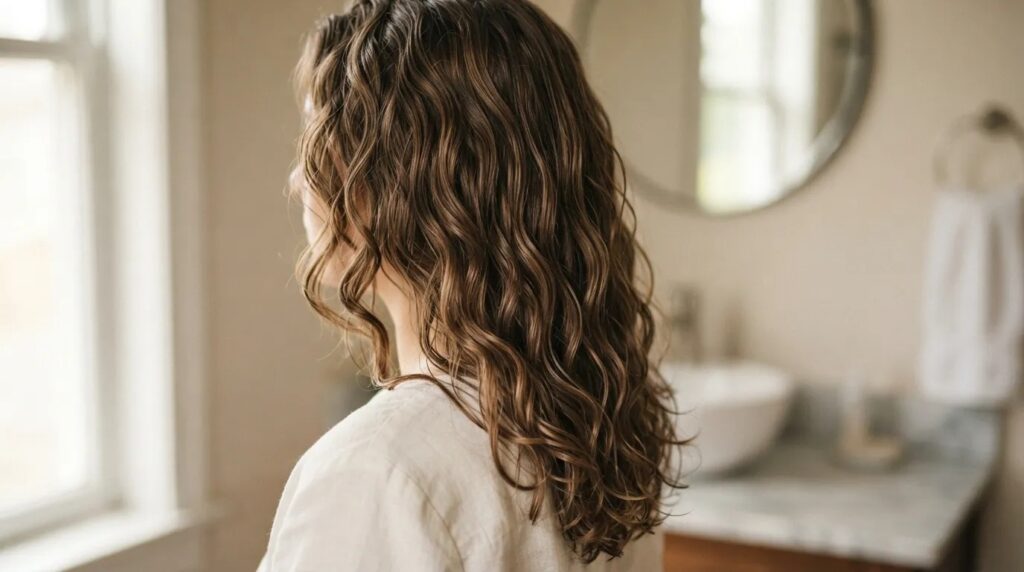
What Is 2C Hair?
2C hair type sits at the curlier end of the wavy spectrum on the Andre Walker hair typing system, the four-category chart (1 through 4) most stylists and product brands still use as shorthand for curl pattern.
Type 2 covers wavy hair, and 2C is the wave pattern that curls the most before it can be called curly. If your hair forms a loose S-shape starting close to the roots, has noticeable volume, and edges toward ringlets in places, you’re almost certainly working with 2C hair.
Unlike straight or slightly wavy hair, 2C waves have real body. They frizz more easily than 2A or 2B hair, but they also hold styling product and definition better once you find the right routine.
Characteristics of 2C Hair
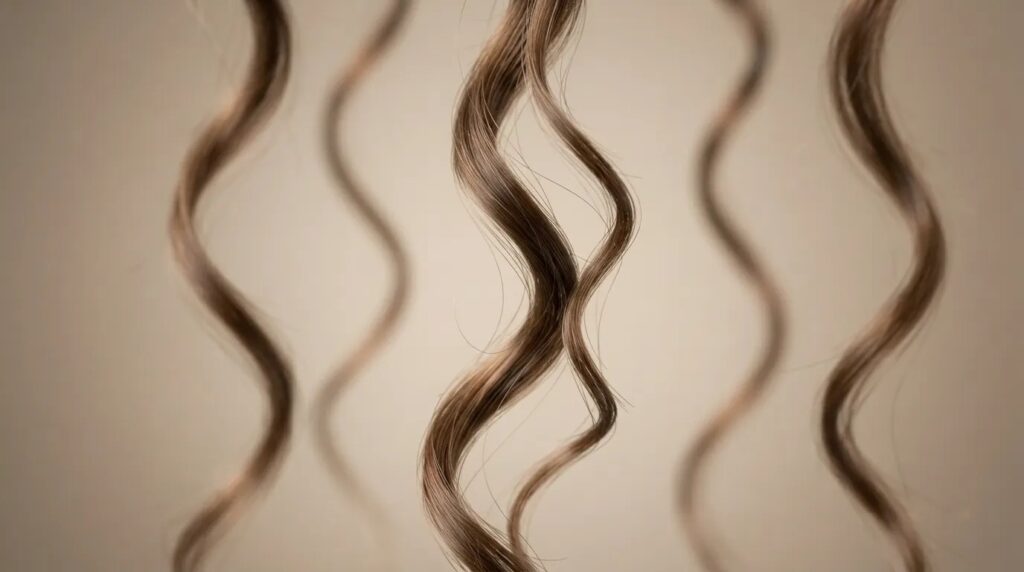
What Does 2C Hair Look Like?
2C hair typically shows these traits:
- Defined S-shaped waves that start at or near the scalp, not just at the ends
- More volume and texture than 2A or 2B waves
- A tendency to frizz, especially in humidity or when the hair is dry
- Denser strands packed closely together, which can make the hair look and feel fuller
- A borderline pattern — some sections may curl into loose ringlets, especially underneath
If you’ve ever looked at your hair and thought “is this wavy or curly,” 2C is usually the answer. It’s the hair type most often mistaken for 3A curly hair, and the two require very similar care.
Hair Texture, Density, and Porosity in 2C Hair
Curl pattern is only one variable. Two people can both have 2C waves and need completely different routines because of texture, density, and porosity.
Hair texture refers to the diameter of an individual strand — fine, medium, or coarse. Fine 2C hair weighs down easily under heavy products, while coarse 2C hair needs richer creams to stay hydrated.
Hair density describes how many strands grow per square inch of scalp. High-density 2C hair can handle more product volume; low-density hair needs lighter formulas to avoid looking flat.
Hair porosity measures how well the hair cuticle absorbs and retains moisture. Low-porosity 2C hair resists product absorption and benefits from lightweight, water-based leave-ins. High-porosity hair loses moisture fast and needs richer, sealing products.
Practical scenario: A reader with fine, low-density, low-porosity 2C hair should skip heavy butters and deep conditioners that sit on the strand — a lightweight, sulfate-free shampoo and a light curl mousse will define waves without weighing them down.
A quick way to check porosity at home: drop a clean, oil-free strand of shed hair into a glass of water. If it floats for several minutes, porosity is likely low. If it sinks quickly, porosity is likely high. This isn’t a lab-grade test, but it’s a useful starting point for choosing lighter or richer products.
Elasticity is worth checking too. Gently stretch a wet strand — healthy 2C hair should stretch slightly and spring back without snapping. Hair that snaps or barely stretches at all is usually a sign of protein overload or heat and chemical damage, and it needs a moisture-focused routine before anything else.
2C Hair vs Other Curl Types
Because 2C sits at a boundary, it’s the type most often confused with its neighbors.
| Hair Type | Wave/Curl Shape | Volume | Frizz Risk | Closest Match |
|---|---|---|---|---|
| 2A | Barely-there waves, mostly straight at the root | Low | Low | Fine, straightish hair |
| 2B | Consistent S-waves from mid-length down | Medium | Medium | Classic “beachy wave” |
| 2C | S-waves starting near the root, some ringlets | High | High | Wavy-curly hybrid |
| 3A | Loose, springy curls with a defined circumference | High | High | Curly hair |
2C Hair vs 2A Hair
2A hair is the mildest wave type — mostly straight with a slight bend near the ends. 2C hair, by contrast, waves from much closer to the root and holds far more volume. Someone with 2A hair can usually air dry with minimal product; 2C hair almost always needs a defined routine to avoid frizz.
2C Hair vs 2B Hair
2B hair forms consistent, medium waves starting around the mid-shaft. 2C hair type adds more root volume, more texture, and a stronger tendency to frizz. Products that work for 2B hair are often too light for 2C hair, which needs slightly more hold and moisture.
2C Hair vs 3A Hair
This is the closest comparison. 3A hair forms a full ringlet you could wrap around a marker; 2C hair forms an open S-shape that only curls into a ringlet in some sections, usually underneath or at the ends. Many people with 2C hair see it shift toward 3A over time with better moisture and less heat damage — more on that below.
Why 2C Hair Gets Frizzy, Dry, or Flat
Common Problems with 2C Hair
2C hair type runs into a specific set of recurring issues:
- Frizz, driven by humidity, friction, and lack of moisture at the hair cuticle
- Dryness, because wavy hair’s natural oils travel more slowly down the shaft than straight hair
- Lost definition by midday, often from over-brushing or under-moisturizing
- Flatness at the crown, especially with heavier styling creams
- Breakage and split ends, frequently linked to heat damage or rough towel-drying
Practical scenario: A reader whose waves look great fresh out of the shower but fall flat and frizzy by afternoon is usually dealing with a moisture-hold imbalance — the product had definition but not enough hold to survive friction from a bag strap, hat, or pillow.
What Causes Product Buildup?
Product buildup happens when styling residue, hard-water minerals, and natural oils accumulate on the hair cuticle faster than a regular shampoo removes them. For 2C hair, buildup shows up as dull, weighed-down waves that stop responding to styling products the way they used to. A monthly clarifying shampoo resets the scalp and strand so regular products can work again.
The Best 2C Hair Care Routine
A reliable 2C hair care routine follows the same core sequence every wash day: cleanse, condition, treat (occasionally), style, and protect.
How Often Should You Wash 2C Hair?
Most 2C hair does best washed every 2 to 4 days. Washing too often strips natural oils and increases frizz; waiting too long lets product buildup and scalp oil flatten the wave pattern. Scalp health matters as much as the strands — a congested scalp can slow healthy hair growth over time.
Best Shampoo for 2C Hair
Look for a sulfate-free shampoo for regular washes — it cleanses without stripping moisture the way harsher sulfates can. Keep a clarifying shampoo on hand for once-a-month resets when buildup dulls the waves. A hydrating shampoo with glycerin or aloe works well for drier, coarser 2C hair.
Best Conditioner for 2C Hair
Fine or low-density 2C hair usually does better with a lightweight conditioner that adds slip without weight. Medium-to-coarse 2C hair benefits from a richer deep conditioner used weekly to replenish moisture and improve elasticity.
Should You Deep Condition or Use Protein?
Deep conditioning weekly helps most 2C hair, since wavy hair loses moisture faster than straight hair. Protein treatments are useful occasionally — but overuse causes protein overload, which makes waves feel stiff, straw-like, and prone to breakage. If your hair feels hard rather than soft after a protein treatment, cut back and prioritize moisture instead.
Best Products for Styling 2C Hair
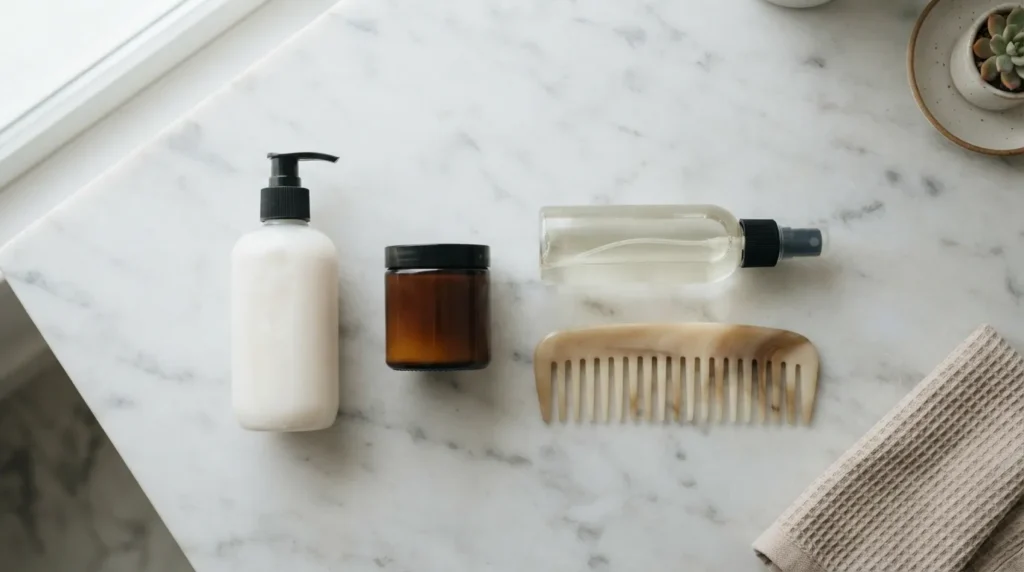
Best Curl Cream, Mousse, and Gel for 2C Hair
- Curl cream adds moisture and softness — best for low-porosity or fine 2C hair that needs light hold.
- Curl mousse adds volume and definition without heaviness — a strong choice for fine-to-medium 2C hair prone to flatness.
- Hair gel offers the strongest hold and frizz control, ideal for humid climates or all-day definition. A light gel used correctly won’t cause crunch once scrunched out.
- Styling cream and volumizing products work well layered together — cream first for moisture, a lightweight mousse or gel on top for hold.
Practical scenario: A reader in a humid climate whose waves revert to frizz within an hour should layer a curl cream with a light-hold gel, applied to soaking-wet hair, then leave the gel to fully dry before touching the hair — this is what actually controls frizz, not the product alone.
Products to Avoid for 2C Hair
- Heavy silicones that build up and require clarifying shampoo more often than desired
- Alcohol-heavy gels that dry out already moisture-hungry waves
- Anti-frizz serums meant for straight hair, which weigh down wave pattern instead of enhancing it
- Sulfate-heavy shampoos used daily, which strip the natural oils 2C hair depends on
How to Style 2C Hair
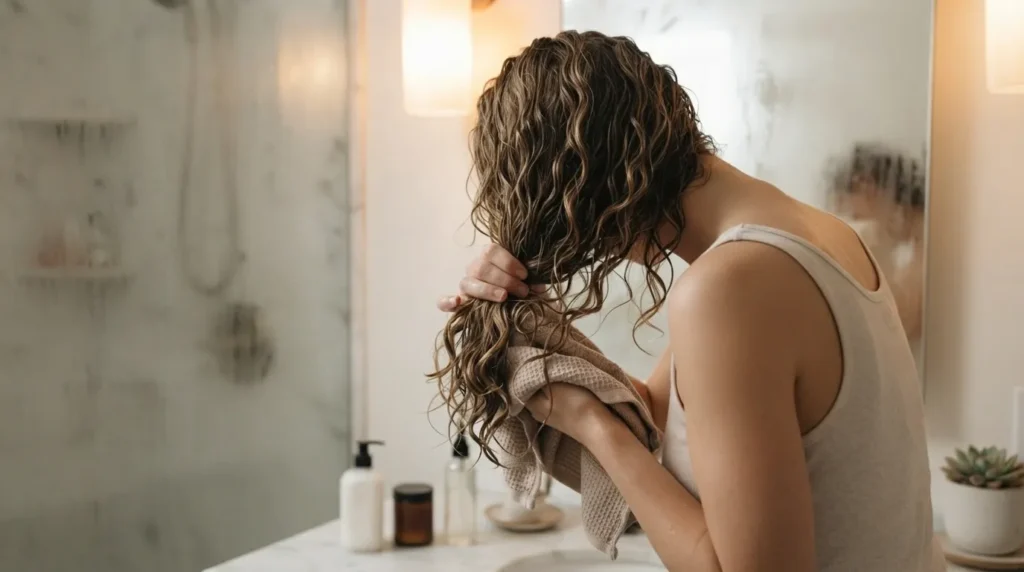
How to Scrunch and Plop 2C Hair
Apply leave-in conditioner and curl cream to soaking-wet hair, then scrunch upward from the ends toward the scalp to encourage the wave pattern to clump. For extra definition, follow with plopping — flipping hair into a microfiber towel or T-shirt and letting it sit for 10–20 minutes to set the shape without frizz-inducing friction. Micro plopping (a shorter, 2–5 minute version) works well for fine 2C hair that doesn’t need as much drying time.
How to Diffuse or Air Dry 2C Hair
Diffusing on low heat and low speed speeds up drying while preserving curl clumps — cup sections of hair into the diffuser bowl rather than moving it around randomly. Always apply a heat protectant first. Air drying is gentler and works well when time allows, though it can take longer for denser 2C hair to fully dry.
How to Add Volume Without Losing Definition
Clip roots up while hair dries to prevent them from drying flat, or apply a small amount of root-focused volumizing mousse before diffusing. Avoid touching or scrunching the hair again once it’s fully dry — this reintroduces frizz and can undo volume at the root.
Practical scenario: A reader with dense 2C hair that looks great at the ends but flat at the crown should focus root-lifting effort where it matters most — clip-drying the front and crown sections for the first 10 minutes of diffusing, then releasing the clips and letting the rest of the hair dry normally.
Once hair is fully dry, resist the urge to “fix” any one section by re-wetting and re-scrunching just that spot. Spot-touching dry waves almost always creates a visible mismatch in texture and frizz level compared to the rest of the head. If touch-ups are needed, use a small amount of water-based refresh spray on the whole head rather than one area.
How to Refresh 2C Hair Between Wash Days
A simple curl refresh routine extends the life of a wash day:
- Lightly mist hair with water (a spray bottle, not a full rinse)
- Add a small amount of leave-in conditioner or diluted curl cream
- Scrunch gently to reactivate wave clumps
- Diffuse briefly on low heat, or let air dry
This restores moisture balance and wave definition without a full reset.
Overnight Hair Protection: Silk Pillowcase vs Satin Bonnet
Cotton pillowcases absorb moisture and create friction, both of which increase frizz and disrupt wave pattern overnight.
| Option | Best For | Pros | Cons |
|---|---|---|---|
| Silk pillowcase | People who move a lot in their sleep | Full-head coverage, low friction | Can slip off the pillow |
| Satin bonnet | Preserving a set style overnight | Keeps hair contained and protected | Less breathable, can feel tight |
Either option beats cotton. Some people combine both — a bonnet plus a silk pillowcase — for maximum protection.
Best Haircuts and Hairstyles for 2C Hair
Layered cuts tend to bring out 2C wave pattern better than one-length cuts, which can pull the wave down with their own weight. A long layered cut, a lived-in shag, or a curly bob (cut dry, ideally by a stylist experienced with textured hair) all work well.
For styling day-to-day, low buns, half-up styles, and braid-outs let the natural texture show while keeping hair manageable in humidity or heat.
Practical scenario: A reader growing out a blunt, one-length cut and noticing their waves look weaker than they used to isn’t necessarily losing their natural texture — the extra weight at the ends is often pulling the wave pattern straight. Adding even a few long layers can restore visible definition without a dramatic length change.
Curtain bangs and face-framing layers also tend to work well with 2C hair, since they follow the movement of the wave instead of cutting against it. A stylist experienced with textured or curly hair will typically cut dry or partially dry, so the natural shrinkage and wave pattern are visible in real time.
Mistakes to Avoid With 2C Hair
- Brushing dry hair, which breaks up wave clumps and causes frizz — detangle wet, with fingers or a wide tooth comb
- Rubbing hair dry with a regular towel instead of plopping or blotting with a microfiber towel
- Skipping heat protectant before diffusing or using hot tools
- Over-washing or over-conditioning without paying attention to how the hair actually responds
- Using too much product at once, which leads to buildup and weighed-down waves
Is 2C Hair Rare, and Can It Change?
2C hair type isn’t rare — it’s one of the more common wave patterns, especially among people with mixed or varied family hair genetics. Genetics determine the baseline shape of the hair follicle, which is the main driver of curl pattern.
That said, 2C hair can appear to shift over time. Healthier hair (less heat damage, better hydration, less chemical damage from coloring or relaxing) often reveals a curlier pattern that was always there but suppressed by damage. This is why some people report their hair “became curlier” — it’s less a permanent change and more a return to the strand’s natural, undamaged shape.
Frequently Asked Questions
What is 2C hair type?
2C hair type is a wavy hair pattern on the Andre Walker system, defined by S-shaped waves that start near the root, higher volume than 2A or 2B hair, and a tendency toward loose ringlets in some sections.
How do I know if my hair is 2C?
Check freshly washed, product-free hair. If it forms visible S-waves from close to the scalp, has noticeable volume, and some strands curl into loose rings, it’s likely 2C.
Can 2C hair become curly (3A)?
It can appear that way as damage decreases and moisture improves, since damaged 2C hair often looks straighter than its natural pattern.
What’s the best routine for 2C hair?
Wash every 2–4 days with a sulfate-free shampoo, condition every wash, deep condition weekly, apply products to soaking-wet hair, and dry with a diffuser or by plopping.
Why is my 2C hair always frizzy?
Frizz usually comes from insufficient moisture, product applied to hair that’s too dry, or friction from towels, brushes, or cotton pillowcases.
Final Thoughts
2C hair type rewards a consistent, moisture-focused routine more than any single “miracle” product. Get the basics right — gentle cleansing, real hydration, wet application, and low-friction drying — and the natural wave pattern does most of the work on its own.
Read Next.
Pingback: 2C Hair Type Guide: Characteristics, Care Tips & Routine