

Table of Contents
Pixie Cut for 2C Hair Best Styles and Tips
A pixie cut for 2C hair can be a practical way to show off natural waves while giving your hairstyle a lighter, more defined shape. Type 2C hair usually sits between strong waves and loose curls, so the right cut can make its natural texture easier to manage rather than forcing it into a completely different shape.
The key is choosing a haircut that works with your natural wave pattern. Length, layers, fringe, volume, and styling technique can all change how a short cut behaves.
This guide covers the best pixie styles for 2C hair, face-shape considerations, styling techniques, frizz control, maintenance, and longer alternatives. Whether you cut your hair at home with professional guidance or visit a stylist, these ideas can help you explain exactly what you want.
What Is 2C Hair?
2C hair is a wavy hair type characterized by prominent, defined waves that can sometimes form loose curls. The wave pattern often creates an S-shaped appearance, especially when the hair is allowed to dry naturally.
Unlike very loose waves, 2C hair usually has noticeable texture and can develop substantial volume. It may also become frizzy when exposed to humidity, excessive brushing, or overly drying products.
The same head of hair can contain different textures. Some sections may look like tight waves, while others may form loose curls. This is one reason a haircut should be chosen according to your actual texture rather than only the category written on a hair chart.
A shorter haircut can also change how the wave pattern appears. Removing length may allow the hair to spring upward and show more natural texture around the crown.
Practical example: If your longer hair looks relatively flat at the roots but becomes strongly wavy toward the ends, cutting away some length may reveal more crown volume. A stylist can then use controlled layers to keep that volume balanced.
Is a Pixie Cut Good for 2C Hair?
Yes, a pixie can work well with 2C hair, but the result depends heavily on the cut and your natural texture.
A blunt, one-length short haircut may create unwanted bulk in some areas. By contrast, carefully positioned layers can help the waves form naturally and create movement.
A good pixie for 2C hair should account for:
- Natural wave direction
- Hair density
- Shrinkage after drying
- Desired volume
- Face shape
- Styling habits
- How frequently you want to visit a stylist
The biggest advantage is that short hair can make styling faster. The biggest consideration is maintenance: a short shape can lose its intended silhouette as it grows.
Practical example: Someone who wants a low-maintenance hairstyle might choose a textured pixie with enough length on top to encourage natural waves. Someone who enjoys styling may prefer a longer pixie with fringe that offers more options.
Best Pixie Cuts for 2C Hair
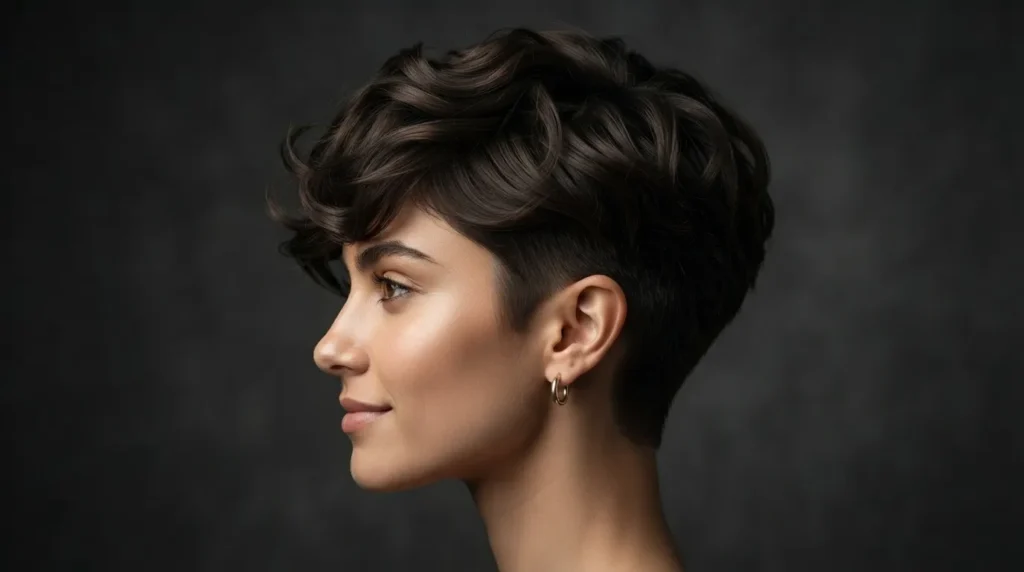
There is no single best cut for every person with 2C hair. The most suitable option depends on your texture, density, face shape, and preferred styling time.
Classic Pixie Cut for 2C Hair
A classic pixie keeps the sides and back relatively short while leaving some length on top.
For 2C hair, keeping additional length on top can help preserve the natural wave pattern. It also gives you enough hair to use curl cream, mousse, or other lightweight products.
The top can be shaped with subtle layers instead of being aggressively thinned. This allows the waves to retain their natural structure.
Practical example: If your waves become more defined as they get shorter but you do not want an extremely short haircut, a classic pixie with a longer top can provide a useful middle ground.
Layered Pixie Cut for 2C Hair
A layered pixie can help distribute volume and prevent the hair from appearing too heavy in one area.
Layers are especially useful when the hair has different levels of density. Instead of removing large amounts of hair everywhere, a stylist can strategically shape sections to support the existing wave pattern.
Face-framing layers can also soften the transition between the short sides and longer top.
Avoid assuming that more layers automatically mean better definition. Too many short layers can sometimes increase puffiness, particularly when the hair naturally expands as it dries.
Practical example: For dense 2C hair, controlled layers around the crown can reduce visual heaviness while allowing the natural texture to remain visible.
Textured Pixie Cut for 2C Hair
A textured pixie works particularly well when you want movement rather than a perfectly smooth finish.
The haircut uses the natural variation in the hair instead of trying to make every section identical. This can make the hairstyle look relaxed and modern.
The texture should be created through the haircut rather than relying entirely on heavy styling products.
Practical example: If your hair naturally forms uneven waves, a textured short haircut can make those differences look intentional instead of something you need to correct.
Curly Pixie Cut for 2C Hair
Although 2C is technically in the wavy category, some people with this pattern have sections that form loose curls.
A curly pixie leaves enough length for those curls to form while keeping the overall silhouette short. Curl cream or mousse can enhance definition without making the hair feel overly coated.
The finished shape may look different from a straight-hair pixie because the curls and waves take up more visual space.
Wavy Pixie Cut for 2C Hair
A wavy pixie emphasizes the S-shaped wave pattern.
Rather than brushing the hair completely straight, styling usually involves encouraging the waves to group together. This can be done with a small amount of product and gentle scrunching.
A wavy pixie is a good option if you want your natural texture to remain the main feature of the haircut.
Tapered Pixie Cut for 2C Hair
A tapered pixie gradually becomes shorter around the sides and back while keeping more length toward the top.
This creates a clean outline without removing the wave-friendly length from the upper section.
The contrast between shorter sides and textured top can also highlight natural crown volume.
Long Pixie Cut With Side-Swept Fringe
A longer pixie gives you more flexibility around the front.
A side-swept fringe can follow the natural direction of the waves and provide some face framing. This option is useful if you want a short hairstyle but are not ready for a very exposed forehead or extremely short front section.
Micro Pixie for 2C Hair
A micro pixie is substantially shorter than a traditional pixie.
Because there is less length, the natural wave pattern may become less obvious in some sections. The result depends on how tightly your hair bends naturally.
This cut is best considered when you are comfortable with a very short style and understand that growing it back into a longer hairstyle will take time.
How to Choose a Pixie Cut for Your Face Shape
Face shape can help guide the proportions of a haircut, but it should not be treated as a strict rulebook.
The most useful approach is to discuss which features you want the haircut to emphasize and where you want volume.
Pixie Cut for an Oval Face
An oval face generally works with many different pixie proportions.
You can experiment with a classic pixie, textured top, side-swept fringe, or more noticeable layers.
Practical example: If you want a simple everyday style, a classic pixie with natural waves on top can provide definition without requiring complicated styling.
Pixie Cut for a Round Face
For a round face, some people prefer creating visual height around the crown rather than adding excessive width at the sides.
A slightly longer top with controlled crown volume can create a balanced silhouette.
A stylist can also adjust the fringe and side length according to your natural wave direction.
Pixie Cut for a Heart-Shaped Face
A heart-shaped face can work with a pixie that balances the forehead and chin area.
A side-swept fringe or slightly longer front section can create a softer transition around the face.
Your natural waves can make the fringe more dimensional than a completely straight style.
Pixie Cut for a Square Face
If you have a square face, softer texture can create contrast with strong facial angles.
A textured pixie with natural waves or a soft fringe may be preferable if you want movement around the face.
The goal is not to hide your features but to create a hairstyle whose shape works comfortably with them.
How to Style a 2C Pixie Cut
The best styling routine for 2C hair is usually simple. Too many products or too much manipulation can separate the wave groups and create frizz.
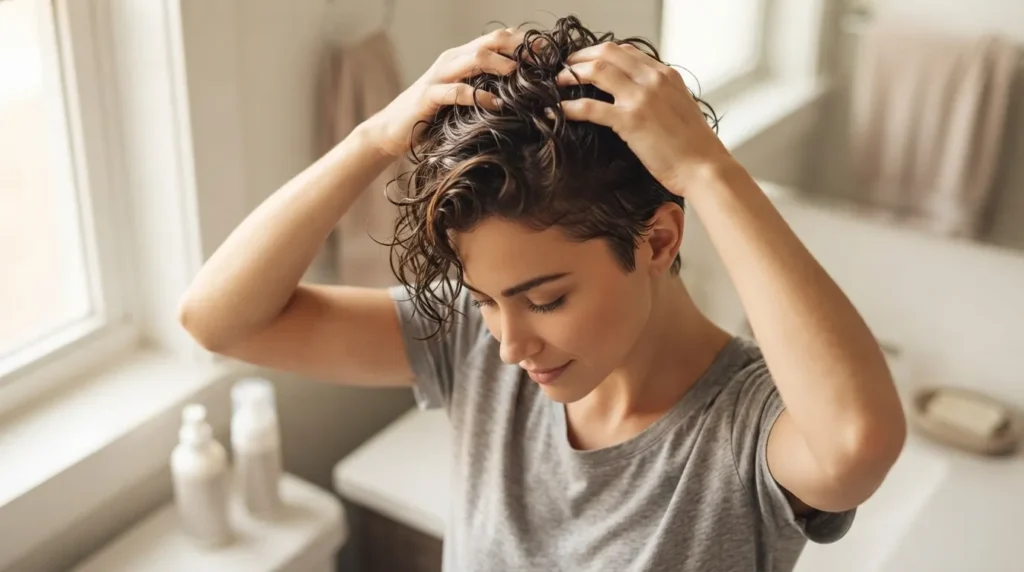
Start with clean, damp hair and focus on encouraging the natural pattern.
Start With the Right Hair Routine
A gentle shampoo and suitable conditioner can provide a good foundation.
If your hair tends to feel dry, focus on hydration rather than repeatedly adding strong styling products. A leave-in conditioner can be useful when your hair needs extra softness, but use an amount appropriate for your hair density.
Avoid treating every wash day exactly the same. Your hair may need different levels of moisture depending on weather, styling frequency, and how it feels.
Practical example: If your hair feels soft and waves form easily, you may need only a small amount of leave-in product. If it feels rough and the waves separate quickly, a more moisturizing routine may be helpful.
Use Lightweight Styling Products
2C hair can benefit from products that provide definition without making the waves heavy.
Common options include:
- Curl cream
- Mousse
- Lightweight leave-in conditioner
- Light styling gel
- Heat protectant when using heat
Start with a small amount. It is easier to add more product than to correct hair that has been overloaded.
Scrunch for Better Wave Definition
After applying styling product, gently scrunch the hair upward.
This encourages the natural wave groups to form.
Avoid repeatedly touching the hair while it dries. Excessive manipulation can disturb the wave pattern and increase frizz.
Practical example: Apply a small amount of mousse to damp hair, scrunch the top and sides several times, then leave the hair alone while it dries. Compare the result with aggressive brushing to see which method preserves more natural definition.
Air Drying vs. Diffusing
Both methods can work.
Air drying is simple and minimizes heat exposure. However, it may take longer and can leave the roots flatter depending on your hair’s natural behavior.
A diffuser can speed up drying and help support volume when used with appropriate heat settings.
If using heat, a heat protectant is a sensible part of the routine. Avoid excessive heat or very high temperatures.
Practical example: If your pixie tends to lose crown volume during air drying, gently diffusing the roots may help maintain more lift.
How to Reduce Frizz in 2C Hair
Frizz is not necessarily a sign that something is wrong with your hair. Wavy hair naturally contains individual strands that may not group perfectly together.
However, you can reduce unwanted frizz by changing how you wash, dry, and style your hair.
Useful habits include:
- Avoid excessive brushing when the hair is dry.
- Use enough conditioning to prevent excessive dryness.
- Apply styling products to damp hair.
- Scrunch instead of aggressively rubbing.
- Use a soft towel or suitable hair-drying fabric.
- Avoid constantly touching the hair while it dries.
- Protect the hair at night.
- Keep heat styling moderate.
- Maintain regular trims.
Humidity can also affect the result. A hairstyle that looks smooth indoors may become more textured outside.
Practical example: If your waves look defined immediately after styling but become fluffy later, try reducing how much you touch the hair while drying and consider whether your styling product provides enough hold.
How to Maintain a Pixie Cut for 2C Hair
Short hairstyles require a different maintenance approach from medium-length hair.
The actual hair may be easy to wash and style, but the haircut’s shape can change quickly as it grows.
How Often Should You Trim a Pixie?
The ideal trimming schedule depends on how precise you want the haircut to remain.
A very short or sharply tapered pixie may need more frequent appointments than a longer textured pixie.
Rather than following one fixed schedule, watch the shape of the haircut. If the sides become bulky or the top no longer sits as intended, it may be time for a trim.
Practical example: Someone who wants a very defined tapered shape may prefer more frequent maintenance, while someone with a deliberately grown-out textured pixie may wait longer.
How to Keep 2C Hair Hydrated
Moisture helps wavy hair remain flexible and easier to style.
Use a conditioner appropriate for your hair and consider a leave-in conditioner when needed. Avoid automatically using heavy products simply because your hair is wavy.
Hair density matters. Fine 2C hair may become weighed down more quickly than dense 2C hair.
A sulfate-free shampoo can be useful for some routines, but product choice should depend on how your scalp and hair respond rather than following a universal rule.
Nighttime Care for Short Wavy Hair
A satin pillowcase or satin bonnet can reduce friction while you sleep.
You can also use soft clips or other gentle accessories if they do not pull the hair.
For a very short pixie, nighttime care can be as simple as protecting the hair from unnecessary friction and avoiding tight accessories.
Scarves can also be used as part of a gentle nighttime routine, provided they are comfortable and do not pull the hair.
Medium-Length Alternatives for 2C Hair

A pixie is not the only option for showing off 2C texture.
If you like the idea of shorter hair but want more length, medium-length hair can offer additional styling flexibility.
Shoulder-Length 2C Hairstyles
Shoulder-length 2C hair gives the waves enough room to form while still feeling relatively manageable.
Layers can prevent the ends from looking overly heavy. Face-framing sections can also add movement.
This length may be especially useful if you want to put your hair into different styles.
Medium-Length Wavy Hairstyles
Medium-length wavy hairstyles offer many options, including layered cuts, side parts, soft fringe, and natural air-dried styles.
The extra length can make it easier to experiment with styling.
Practical example: If you like the shape of a pixie but regularly wear your hair tied back or use clips, medium-length hair may offer more versatility.
Curly Bob and Layered Bob
A curly bob can showcase loose curls and strong waves while keeping the overall style relatively short.
A layered bob can distribute volume and create movement.
For 2C hair, the finished length should account for the way the waves contract as they dry.
Shaggy Lob for 2C Hair
A shaggy lob combines a longer bob shape with layers and texture.
It can be a useful alternative for someone who wants visible movement without committing to a pixie.
The extra length also gives you more options for clips, scarves, ponytails, and other simple styling choices.
Pixie Cut vs. Medium-Length Hair for 2C Hair
The better option depends on your lifestyle and styling preferences.
| Feature | Pixie Cut | Medium-Length Hair |
|---|---|---|
| Styling time | Usually quick | Moderate |
| Natural wave visibility | Can be strong on top | Usually more visible throughout |
| Maintenance | Frequent shape maintenance | Less frequent shape maintenance |
| Styling versatility | Moderate | High |
| Wash-day time | Usually shorter | Usually longer |
| Updo options | Limited | More options |
| Volume | Can increase around the crown | More distributed |
| Growing-out process | More noticeable | Usually easier to transition |
Practical example: If your priority is a quick wash-and-style routine, a textured pixie may be attractive. If you want to switch between loose waves, clips, and tied-back styles, shoulder-length hair may be more practical.
How to Choose the Best Haircut for 2C Hair
Choosing the best haircut for 2C hair starts with understanding how your hair behaves when completely dry.
Before your appointment, think about:
- How much volume you naturally have
- Whether your waves become curls in shorter sections
- Where your hair tends to expand
- How much styling you realistically want to do
- Whether you prefer air drying or diffusing
- How often you can maintain the haircut
- Whether you want fringe
- Whether you want a tapered or softer outline
Bring reference photos to your stylist, but also explain what your own hair does.
A photograph shows the desired shape. Your hair’s density and wave pattern determine how closely that shape can be recreated.
Ask the stylist to consider your hair in its natural texture rather than assuming it will behave like straight hair.
Practical example: Suppose you find a straight-haired pixie online that you love. Instead of asking for an identical cut, show the image and explain that you want a similar silhouette while keeping enough length and layering for your 2C waves.
Quick Reference Chart for 2C Haircuts
| If you want… | Consider… |
|---|---|
| Very short hair | Micro pixie |
| Natural wave definition | Wavy pixie |
| More movement | Textured pixie |
| Balanced volume | Layered pixie |
| Clean sides | Tapered pixie |
| More styling flexibility | Long pixie |
| Face framing | Side-swept fringe |
| More length | Layered bob |
| Shoulder-level texture | Shaggy lob |
| Maximum versatility | Medium-length 2C hair |
The best choice is the one that matches both your hair and your daily routine. A beautiful haircut that requires styling you dislike may not be the most practical choice.
Frequently Asked Questions About Pixie Cuts for 2C Hair
Is 2C hair good for a pixie cut?
Yes. A pixie can work very well with 2C hair when the cut is designed around the natural wave pattern. Leaving suitable length on top and using controlled layers can help preserve texture.
What is the best pixie cut for 2C hair?
There is no universal best cut. A textured, layered, wavy, or tapered pixie can all work depending on hair density, face shape, desired volume, and maintenance preferences.
How do you style a 2C pixie cut?
Start with damp hair, apply a lightweight styling product, gently scrunch the waves, and allow the hair to air dry or use a diffuser. Avoid excessive touching while the hair dries.
Is short hair easier to manage for 2C hair?
It can be. A shorter haircut may reduce washing and drying time, but short styles usually require more frequent shape maintenance. Your individual wave pattern also affects how easy the cut is to style.
How often should you trim a 2C pixie?
It depends on the shape. Very short or sharply tapered pixies generally need more frequent trims to maintain their outline, while longer textured pixies can be allowed to grow out further.
Does a pixie cut work for thick 2C hair?
Yes. Thick 2C hair can look excellent in a pixie, but the haircut should manage volume strategically. Controlled layering and appropriate shaping can prevent excessive bulk without removing too much natural texture.
Can I air dry a 2C pixie cut?
Yes. Air drying can work particularly well when you want to preserve natural waves. Apply styling product to damp hair, scrunch gently, and minimize touching while it dries.
Should I use curl cream or mousse on 2C hair?
Either can work. Curl cream can provide softness and definition, while mousse can offer lightweight volume and hold. The better choice depends on your hair density and how much hold you want.
Is a shoulder-length haircut better than a pixie for 2C hair?
Neither is automatically better. A pixie offers shorter styling and a distinctive shape, while shoulder-length hair provides more versatility. Choose based on your lifestyle, desired maintenance, and preferred appearance.
Conclusion
A pixie cut for 2C hair can highlight natural waves while creating a lighter, easier-to-style shape. The most successful cut works with your actual texture, not against it. Choose the right length, control volume with thoughtful layers, use lightweight products, and maintain the shape with regular trims. Whether you choose a wavy pixie, textured pixie, tapered cut, or a medium-length alternative, the goal is simple: make your natural 2C texture easier to enjoy every day.
REAd NEXT
Pingback: 2C Hair With Bangs: Best Styles & Tips