

Table of Contents
What Is 2C Hair? Why Thin, Fine Strands Need a Different Approach
2C hair sits at the wavy end of the curl spectrum — defined, S-shaped waves that start lower on the head and clump loosely rather than coiling tightly. It’s often confused with looser 2B waves or tighter 3A curls, but 2C has more density of wave pattern per strand, even when the strand itself is thin.
That last part matters more than most guides admit. Curl pattern and hair thickness are two separate things. You can have thick 2C hair or thin 2C hair, and the products that work beautifully on one will weigh the other down completely.
Thin or fine 2C hair has a smaller strand diameter, which means it holds less product before looking greasy, flat, or “crunchy.” At the same time, wavy hair naturally struggles more with frizz and moisture retention than straight hair, because the bends in the strand make it harder for natural oils to travel down the hair shaft.
That combination — a wave pattern that needs hydration, paired with a strand type that can’t handle heavy product — is exactly why the best Skala leave-in for thin 2C hair isn’t automatically the most hydrating one on the shelf. It’s the one that balances moisture with a lightweight formula.
Best Skala Leave-In for Thin 2C Hair Which One Should You Choose?
If you’re comparing Skala products for thin 2C hair, the short answer is: look for a leave-in conditioner or treatment cream labeled lightweight or specifically formulated for fine or wavy hair, rather than the richest, most intensive curl cream in the lineup.
Skala’s catalog spans several curl-focused lines, and they’re not interchangeable. Some are built for coily or tightly coiled hair (3C to 4C) and use heavier butters and oils designed to coat a thicker strand. Applied to thin 2C waves, that same formula can leave hair looking oily by midday, even if it started out soft.
Worked example: Picture two people with the same wave pattern. One has thick, coarse 2C hair; the other has thin, fine 2C hair. Both apply a quarter-size amount of a rich, butter-heavy Skala cream to soaking-wet hair. The first person’s waves absorb it and dry defined. The second person’s waves separate into limp clumps, and by afternoon, the roots look flat while the ends still feel slightly greasy. Same product, same curl pattern, completely different result — because strand thickness changed how much the hair could actually hold.
For thin 2C hair, prioritize a leave-in with:
- A lighter, more fluid texture rather than a dense butter-cream
- Panthenol (D-Panthenol) for strength without buildup
- Lightweight oils like sunflower or argan rather than heavy castor or shea concentrations as the lead ingredient
- A formula description that mentions “wavy hair” or “fine hair” specifically
Key Ingredients to Look For on the Label
Ingredient order matters more than the ingredient list itself. Most curl creams contain a similar roster of oils and conditioning agents — what changes the feel on thin hair is which one appears first, since that’s typically the highest-concentration ingredient.
- D-Panthenol: Supports strength and elasticity, helps reduce breakage from detangling, and doesn’t add noticeable weight — a good sign near the top of an ingredient list for fine hair.
- Sunflower oil and argan oil: Lightweight oils that seal moisture without the heaviness of thicker options, generally well-suited to fine, wavy strands.
- Castor oil and shea butter: Excellent for thicker, coarser, or more coily hair types, but better used sparingly — or skipped — on thin 2C hair, where they’re more likely to sit on the surface of the strand.
- Avocado oil and coconut oil: Both are nourishing but dense; they tend to work best as occasional treatment ingredients rather than daily leave-in components for fine hair.
- Linseed (flaxseed) oil: Often included for hold and definition, useful in small concentrations for scrunch-and-go styling without heaviness.
- Vitamin E: An antioxidant that supports overall hair health and shine, typically included in smaller amounts alongside the primary conditioning oils.
Worked example: Two products both list “hydrating oil blend” on the front label. One lists sunflower oil first and shea butter fourth; the other lists shea butter first and sunflower oil fourth. On thin 2C hair, the first formula will almost always feel lighter and dry with more movement, even though both technically contain the same ingredients.
Skala Products for Different Hair Types
Skala organizes much of its curl range by hair type and concern rather than a single universal formula, which is useful once you know which line maps to your texture.
Skala Mais Cachos
Mais Cachos (“More Curls”) is generally positioned as a curl-activation line, designed to enhance definition and reduce frizz across a range of curl patterns. For thin 2C hair, it tends to work best when used sparingly — a small amount distributed through mid-lengths and ends rather than applied root to tip, since the goal is definition without added weight at the root.
Skala Dona Skala
Dona Skala leans into intensive hydration and repair, often marketed toward drier, more damaged, or more textured hair types. It can still work for thin 2C hair, but it’s the line most likely to feel heavy if overapplied. It suits fine waves best as an occasional deep-treatment step rather than a daily leave-in — for example, once a week on wash day, rather than after every co-wash.
The pattern across both lines is consistent: the formula matters less than the amount and the hair state you apply it to. Thin 2C hair almost always does better with “less, more often” than “more, less often.”
How to Apply Skala Leave-In on Thin 2C Hair (Step-by-Step)
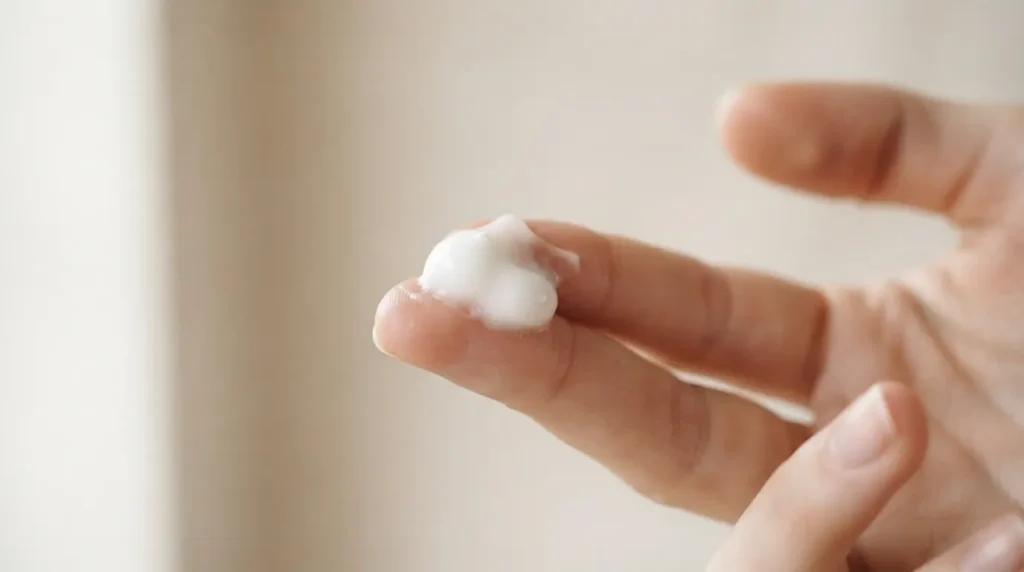
Application technique changes the outcome on fine hair more than on any other texture, because there’s so little margin for error before product starts to sit on top of the strand instead of absorbing into it.
- Start on soaking-wet hair, not damp hair. Fine hair absorbs product more evenly when the cuticle is fully saturated with water first. Squeeze out excess water with a microfiber towel or cotton T-shirt before applying anything.
- Use less than you think you need. A dime-size amount is a reasonable starting point for shoulder-length thin 2C hair. You can always add more; you can’t easily remove product that’s already weighing hair down.
- Apply mid-length to ends first. Skip the roots entirely on the first pass — this is where thin hair gets flat fastest.
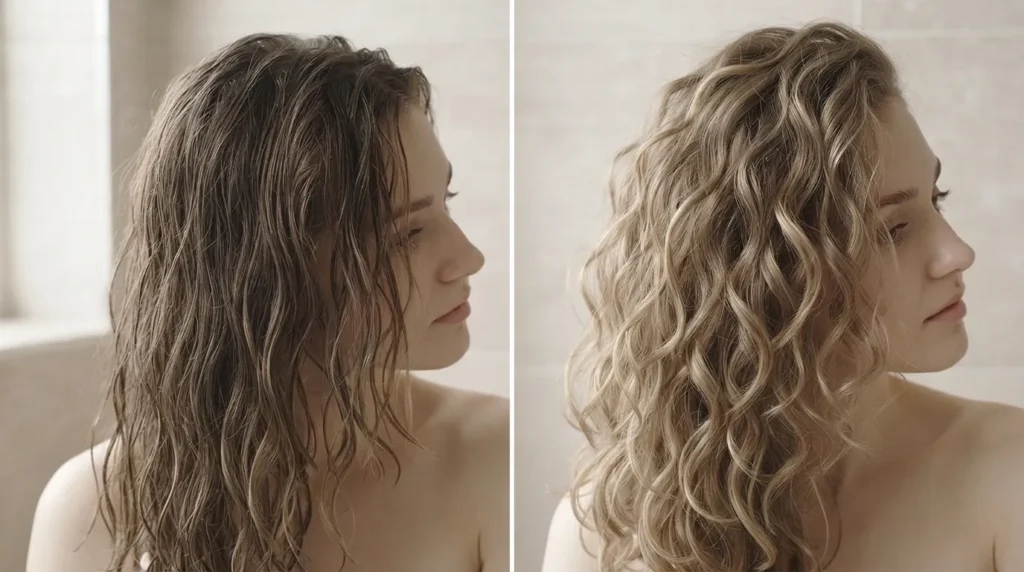
- Use a scrunching motion, not a smoothing one. Scrunching upward encourages the wave clumps to form instead of stretching them out, which is what gives 2C hair its definition.
- Let hair air-dry or diffuse on low heat. High heat on fine strands accelerates moisture loss and can undo the hydration the leave-in just provided.
- Avoid touching hair while it dries. Fine, wavy hair is especially prone to frizz from friction during the drying process — the “hands-off” rule matters more here than on thicker textures.
Worked example: Someone with thin 2C hair applies their usual amount of leave-in to towel-dried (not soaking) hair, rubbing it in with their palms rather than scrunching. The result: stretched-out, frizzy waves with visible product residue near the crown by evening. The fix isn’t a different product — it’s soaking the hair fully before application and switching to a scrunch instead of a rub.
Best Skala by Hair Concern

Not every thin 2C hair type has the same priority. Some people are chasing definition, others are fighting frizz, and some just need their hair to stop feeling dry by noon. Here’s how to match the concern to the approach.
Best Skala for Fine Hair
For fine hair specifically, the priority is buildup prevention. Choose the lightest formula available in whichever line you’re using, apply only to mid-lengths and ends, and consider clarifying every one to two weeks to prevent product from accumulating and causing the “second-day flat” effect that’s common with fine, wavy strands.
Best Skala for Dry or Damaged Hair
Dry or damaged thin 2C hair — often from color treatments, heat styling, or environmental exposure — benefits from products higher in D-Panthenol and vitamin E, which support strength and elasticity without necessarily adding heavy oils. A leave-in used consistently, rather than an occasional deep treatment, tends to produce more even results here.
Best Skala for Frizz Control
Frizz on thin 2C hair usually comes from two sources: humidity and friction. A leave-in with light sealing oils (sunflower or argan rather than coconut, which can be heavier on fine strands) helps smooth the cuticle. Pairing that with a satin pillowcase or protective style overnight addresses the friction half of the problem that no product alone can fix.
Best Skala for Curl Definition
Definition depends on product distribution as much as formula. Even application through soaking-wet hair, followed by scrunching rather than smoothing, produces more consistent clumping than any single “best” product choice. A curl cream with light hold works better than a heavy, high-hold formula, which can weigh down a fine 2C wave pattern instead of defining it.
Best Skala for Deep Hydration
Hydration needs on thin hair are real, but they’re best met through frequency rather than density. Applying a lighter leave-in more consistently — including on refresh days between washes — tends to outperform a single heavy application that the hair can’t fully absorb.
A Note on Transitioning and Coily Hair Textures
Not everyone reading a 2C-focused guide has fully wavy hair throughout — many people are transitioning between textures, have heat-damaged sections that behave differently from their natural growth, or have curl patterns that vary across the head (looser at the crown, tighter underneath). If that describes your hair, treat each section according to its own texture rather than applying one product uniformly. A lightweight, wavy-hair leave-in on the looser sections paired with a slightly richer curl cream on the coilier sections underneath is a reasonable middle ground, and it avoids the common mistake of picking one product and forcing it to work everywhere.
Skala for Wavy Hair vs. Curly Hair: What Changes for 2C Types
Wavy hair (2A–2C) and curly hair (3A–3C) have different structural needs, even within the same product line. Curlier patterns generally have more bends per strand, which means more surface area exposed to air and a higher natural need for moisture-sealing ingredients.
2C hair sits right at the boundary, which is part of why it’s confusing to shop for. It has enough definition to need a curl-specific product, but not enough density to handle a curl cream built for 3B or 4A textures.
Practical distinction: A curly-hair-focused Skala cream applied to 2C waves will often over-define, creating a slightly crunchy or “helmet” look that softens only after brushing out the cast — which then introduces frizz. A wavy-hair-focused formula, by contrast, tends to dry with more movement and a softer finish, which is usually the goal for 2C patterns.
If you have thin, fine 2C hair, defaulting to whichever Skala product is labeled for wavy hair — rather than curly or coily hair — will generally get you closer to the result you want on the first try.
Skala Curl Cream Comparison Chart
| Product Line | Best For | Texture/Weight | Ideal Use Frequency (Thin 2C Hair) | Key Focus |
|---|---|---|---|---|
| Lightweight Leave-In (wavy-hair formula) | Daily use, fine/thin 2C hair | Light, fluid | Every wash day, plus refresh days | Hydration without buildup |
| Skala Mais Cachos | Curl activation, definition | Medium | 2–3x per week | Curl clumping, frizz reduction |
| Skala Dona Skala | Intensive repair, dry ends | Rich, dense | Weekly, as a treatment step | Deep hydration, elasticity |
| Curl Cream (curly/coily-focused formula) | Thicker 3A+ curl patterns | Heavy | Avoid for thin 2C, or use sparingly on ends only | High hold, definition on denser hair |
Use this as a starting map, not a rulebook — hair porosity, climate, and how much product buildup you can tolerate before your next wash all shift where you land on this chart.
Tips for Maximizing Results on Thin 2C Hair
A few habits make a bigger difference on fine, wavy hair than switching products ever will:
- Clarify regularly. Fine hair shows buildup faster than thicker textures. A gentle clarifying wash every 1–2 weeks keeps leave-in products working as intended instead of layering on top of old residue.
- Layer light, not heavy. If you use more than one product (leave-in plus curl cream, for example), apply the thinnest-consistency product first and the thicker one only where you need extra definition — usually just the ends.
- Refresh instead of reapplying fully. On day two or three, a light mist of water plus a small amount of leave-in scrunched into just the ends often restores definition better than a full reapplication.
- Protect hair overnight. A silk or satin bonnet, or simply switching to a satin pillowcase, reduces the friction-based frizz that’s especially noticeable on fine 2C strands.
- Match product to season. Humid climates may call for a slightly stronger hold product; dry climates often need more frequent hydration and less hold.
- Consider a heat protectant on styling days. If you occasionally diffuse or use any heat tool, a light heat protector under your leave-in helps prevent the strength loss and breakage that heat causes on already-fine strands.
- Detangle before, not after, product application. Gently finger-detangling or wide-tooth-combing soaking-wet hair before adding leave-in reduces breakage and helps the product distribute evenly instead of catching on knots.
A simple way to think about a full wavy hair routine for thin 2C strands: cleanse (or co-wash), detangle wet, apply a light leave-in with a scrunch, add a small amount of curl cream only where extra definition is needed, then let hair dry undisturbed. Consistency in that sequence tends to matter more than any single product swap.
FAQ
Which Skala leave-in is best for thin 2C hair?
A lightweight, wavy-hair-specific leave-in generally works best, since it hydrates without adding the weight that heavier, curl-focused formulas bring to a fine strand.
Can I use Skala Mais Cachos on fine hair?
Yes, in smaller amounts applied to mid-lengths and ends rather than the roots — it’s more of a definition booster than a daily hydrator for fine textures.
Is Skala Dona Skala too heavy for 2C hair?
It can be, if used as a daily leave-in on thin hair. It tends to work better as an occasional deep-treatment step rather than a regular product.
How much Skala leave-in should I use on thin hair?
Start with a dime-size amount on soaking-wet hair and build up if needed. Overapplication is the most common reason fine 2C hair looks weighed down.
How often should I wash thin 2C hair using Skala products?
Most fine, wavy hair does well with washing or co-washing every 2–4 days, with a clarifying wash every 1–2 weeks to prevent product buildup.
Will a Skala curl cream make my fine hair greasy?
It can, if the formula is too rich for your strand thickness or if it’s overapplied. Choosing a lighter formula and applying only where needed usually solves this.
Conclusion
The best Skala leave-in for thin 2C hair isn’t about finding the single most hydrating product on the shelf — it’s about matching formula weight to strand thickness and applying it with a technique built for fine hair. Get those two things right, and almost any lightweight, wavy-hair-focused Skala product will deliver soft, defined, frizz-controlled waves without the flatness or buildup that heavier formulas can cause.
Read Next
Pingback: 2C Hair Type: Complete Guide to Care & Styling