
Table of Contents
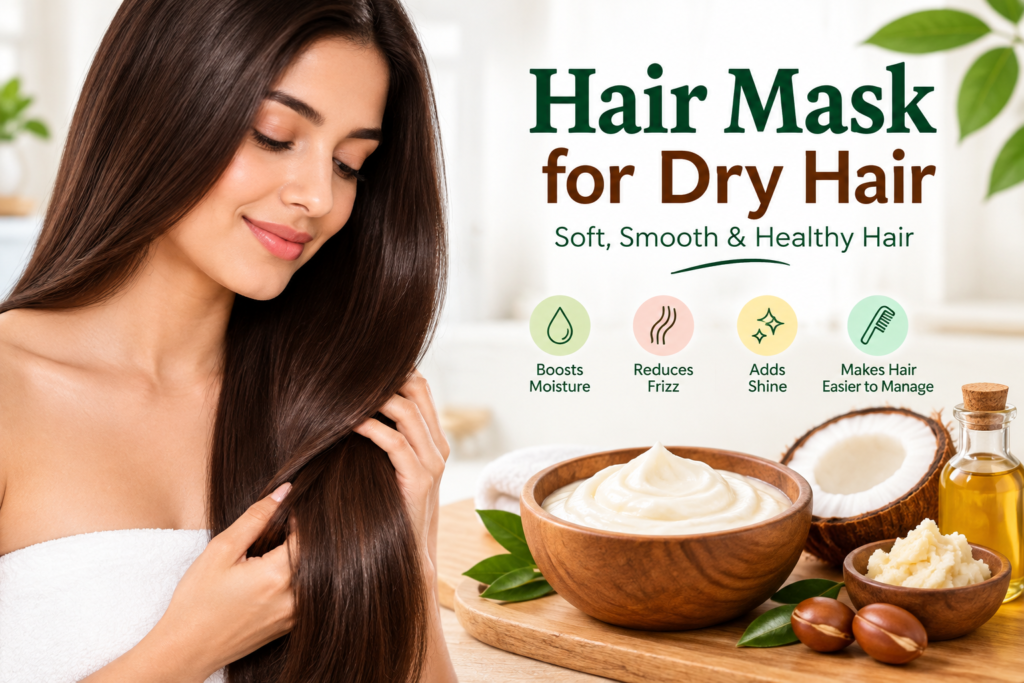
Dry hair can feel rough, look dull, become frizzy, and develop split ends even when you wash and style it regularly. Changes in weather, heat styling, chemical treatments, harsh shampoos, and a lack of conditioning can all contribute to dryness. Fortunately, using the right hair mask for dry hair can help improve softness, reduce frizz, and make your hair easier to manage.
A hair mask is a deep-conditioning treatment designed to provide more intensive care than a regular conditioner. Depending on its ingredients, it can help replenish moisture, smooth the hair surface, improve flexibility, and reduce breakage caused by dryness and tangling.
However, not every hair mask works for every hair type. Fine hair may become weighed down by heavy oils, while thick, curly, or wavy hair may benefit from richer formulas. Choosing the right product and applying it correctly can make a noticeable difference in your hair care routine.
In this guide, you will learn how to choose the best hair mask for dry hair, which ingredients to look for, how often to use one, and how to build a simple routine for softer, healthier-looking hair.
What Is a Hair Mask for Dry Hair?
A hair mask for dry hair is an intensive conditioning product that helps improve the feel, appearance, and manageability of hair that lacks moisture or feels rough. Hair masks are usually thicker than regular conditioners and may contain ingredients such as plant oils, fatty alcohols, conditioning agents, proteins, and humectants.
These ingredients work together in different ways. Some attract or retain water, some soften the hair, and others create a smoother surface that helps reduce friction between strands.
Unlike a regular conditioner, which is often designed for quick use after shampooing, many hair masks are left on for several minutes to provide additional conditioning.
Hair masks can be useful for different hair types, including:
- Dry, frizzy hair that feels rough.
- Wavy or curly hair that needs additional conditioning.
- Hair damaged by frequent heat styling.
- Color-treated hair that feels brittle.
- Thick hair that is difficult to detangle.
- Long hair with dry or tangled ends.
It is important to understand that a hair mask cannot permanently repair every type of hair damage. Hair is made of nonliving fibers, so conditioning products primarily improve its surface, flexibility, and manageability rather than restoring it to a completely undamaged state.
What Causes Dry Hair?
Before choosing a hair mask, it helps to understand why your hair becomes dry. The cause can influence which ingredients and hair care habits will be most helpful.
1. Frequent Heat Styling
Blow-dryers, curling irons, and flat irons can damage the hair’s protective outer layer when used excessively or at high temperatures. Over time, this may leave hair feeling rough, brittle, and difficult to style.
A moisturizing mask can improve softness and reduce friction, but reducing excessive heat is equally important.
2. Harsh Hair Products
Some shampoos remove too much of the hair’s natural surface oils, particularly when they are used frequently or are not suitable for your hair type. Clarifying shampoos can also leave hair feeling dry when overused.
A gentle shampoo and a suitable conditioning mask may help maintain a more comfortable balance.
3. Sun Exposure and Environmental Conditions
Sunlight, wind, dry air, and pollution can affect the appearance and condition of your hair. Swimming in chlorinated water may also leave hair feeling rough.
Protecting your hair from excessive sun exposure, rinsing it after swimming, and conditioning it regularly can help reduce these effects.
4. Chemical Treatments
Bleaching, coloring, relaxing, and perming can change the structure of hair. Chemically treated hair may become more porous, meaning it can absorb water readily but may also lose moisture more easily.
A mask designed for damaged or color-treated hair may help improve softness and reduce tangling.
5. Natural Hair Texture
Curly and wavy hair often experiences dryness along its lengths because natural scalp oils do not travel as easily down bends and curves in the hair shaft.
This does not mean every person with curly hair needs a heavy mask. Fine waves may need lightweight conditioning, while thick curls may respond better to richer formulas.
Benefits of Using a Hair Mask for Dry Hair
Adding a suitable hair mask to your routine can provide several benefits. Results depend on your hair’s condition, the formula, and how consistently you use it.
1. Improves Softness
Conditioning ingredients coat the hair surface and help reduce roughness. This can make dry hair feel smoother and more comfortable to touch.
Softness is often one of the first improvements people notice after using a well-formulated mask.
2. Helps Control Frizz
Frizz can become more noticeable when hair is dry, damaged, or exposed to humidity. Conditioning ingredients can smooth the hair surface and reduce friction, helping strands look more controlled.
For wavy and curly hair, a mask may also help curls and waves look more defined when followed by a suitable leave-in conditioner or styling product.
3. Makes Detangling Easier
Dry hair can tangle because individual strands rub against one another. A conditioning mask can improve slip, making it easier to comb through knots without pulling excessively.
Use a wide-tooth comb and start detangling from the ends, gradually moving upward.
4. Reduces Breakage From Grooming
When hair is easier to detangle, there may be less mechanical stress during brushing and styling. Some conditioning formulas can also improve flexibility and reduce friction.
A mask cannot guarantee that breakage will stop, but it can support gentler hair handling.
5. Enhances Shine
Rough hair surfaces scatter light, making hair appear dull. Smoothing conditioners can help hair reflect light more evenly, creating a shinier appearance.
The result is cosmetic rather than a sign that every underlying cause of dryness has been corrected.
6. Supports Chemically Treated Hair
Bleached, colored, and relaxed hair often benefits from regular conditioning. Masks made for damaged hair may help reduce roughness and improve manageability between salon treatments.
For severely damaged hair, avoiding additional chemical processing and excessive heat is also essential.
Best Ingredients to Look for in a Hair Mask for Dry Hair
Avantages du shampoing sans sulfate : qu’est-ce qui change réellement ?
Máscara 2 em 1 Capulana 1kg – fashionstoreoficial.com.br
7
The ingredient list can tell you a great deal about how a hair mask may perform. Rather than choosing a product based only on its packaging or fragrance, look for ingredients that match your hair’s needs.
1. Shea Butter
Shea butter is a rich emollient that helps soften the hair and reduce the feeling of roughness. It is often included in masks designed for thick, curly, coarse, or very dry hair.
Because it can feel heavy, people with fine hair may prefer formulas containing smaller amounts or lighter conditioning ingredients.
2. Coconut Oil
Coconut oil is widely used in hair care because it can penetrate the hair fiber to some extent. Research suggests that it may help reduce protein loss from hair under certain conditions.
It can be particularly useful for hair that feels dry or becomes fragile through grooming. However, some people find coconut oil too heavy, and it does not work equally well for everyone.
3. Argan Oil
Argan oil is an emollient commonly used to improve the feel and appearance of dry hair. It can help smooth the surface, add shine, and make strands easier to manage.
Look for a formula that combines oils with conditioning agents rather than relying on oil alone for all your hair care needs.
4. Glycerin
Glycerin is a humectant, meaning it attracts water. It is used in many conditioning products to help maintain hydration.
Its performance depends partly on the overall formula and environmental conditions. In very humid or very dry weather, the way a glycerin-containing product behaves can vary.
5. Aloe Vera
Aloe vera is used in some hair products for its water content and conditioning properties. It can contribute to a lightweight formula that does not feel as heavy as a butter-rich mask.
However, aloe vera alone should not be expected to repair damaged hair or treat scalp conditions.
6. Hydrolyzed Proteins
Ingredients such as hydrolyzed wheat, rice, or keratin proteins can help improve the feel and strength of the hair surface temporarily.
These ingredients may be useful for hair that has become weak through chemical treatments. Some hair types, however, may feel stiff or coated when protein-rich products are used too frequently.
7. Conditioning Agents
Ingredients such as cetearyl alcohol, behentrimonium chloride, and certain silicones can help smooth hair, improve detangling, and reduce friction.
Despite the name, fatty alcohols such as cetearyl alcohol are not the same as drying alcohols such as ethanol. They are commonly used to create creamy, conditioning formulas.
For many people, a combination of conditioning agents, humectants, and emollients provides better results than a single popular ingredient.
How to Choose the Best Hair Mask for Your Hair Type
The best hair mask for dry hair depends on your hair texture, thickness, porosity, and styling habits.
| Hair type | What to look for | What to avoid |
|---|---|---|
| Fine, dry hair | Lightweight conditioning mask | Excessively heavy butters and oils |
| Thick, coarse hair | Rich mask with emollients | Formulas that provide too little conditioning |
| Wavy hair | Balanced moisture and lightweight oils | Too much product that weighs down waves |
| Curly hair | Rich conditioning and good slip | Products that leave curls feeling coated |
| Bleached hair | Conditioning ingredients and optional proteins | Excessive heat and harsh processing |
| Color-treated hair | Mask designed for colored hair | Frequent harsh cleansing and unnecessary stripping |
Hair Masks for Fine Hair
Fine hair can become flat or greasy when exposed to too much product. Choose a lightweight mask and concentrate it on the middle lengths and ends rather than the roots.
Start with a small amount and follow the product’s instructions. If your hair feels coated or loses volume, use less product or choose a lighter formula.
Hair Masks for Thick and Coarse Hair
Thick or coarse hair may benefit from richer masks containing shea butter, plant oils, and conditioning agents. These formulas can help reduce roughness and make strands easier to detangle.
Apply the mask evenly in sections to ensure that the lengths and ends receive enough product.
Hair Masks for Wavy Hair
Wavy hair often needs enough conditioning to reduce frizz without losing its natural shape. A medium-weight mask may work well for many people with waves.
Avoid applying too much near the roots, as excess product can make waves appear limp. Follow the mask with a lightweight leave-in conditioner if necessary.
Hair Masks for Curly Hair
Curly hair can benefit from formulas that improve slip and help reduce tangling. Richer masks may work well for dense curls, while fine curls may need a lighter option.
After rinsing, gently squeeze out excess water and use a suitable curl cream or leave-in conditioner if your routine requires it.
Hair Masks for Bleached or Damaged Hair
Bleaching can increase porosity and weaken hair fibers. Look for products marketed for damaged or chemically treated hair, particularly those containing conditioning agents and ingredients that improve flexibility.
A bond-building treatment may be useful for certain types of chemical damage, but it is not the same as a conventional moisturizing mask. Follow each product’s specific instructions.
How to Use a Hair Mask for Dry Hair Correctly
4 Natural And Easy Tips to Moisturize Hair | Parachute Advansed
Är kallt eller varmt vatten bättre för ditt hår: Upptäck fördelarna med varje alternativ
8
Even a high-quality hair mask may disappoint if it is applied incorrectly. Follow these steps to make your treatment more effective.
Step 1: Shampoo Your Hair
Start by washing your hair with a shampoo suitable for your scalp and hair type. Focus on cleansing the scalp, allowing the shampoo to rinse through the lengths without unnecessary rubbing.
If your hair is extremely dry, you may not need to shampoo every day. Choose a washing schedule based on your scalp’s oiliness, activity level, and styling routine.
Step 2: Remove Excess Water
Gently squeeze excess water from your hair using your hands or a soft towel. Hair should generally be damp rather than dripping wet when you apply a rinse-out mask, unless the product instructions say otherwise.
Removing excess water helps prevent the product from becoming overly diluted.
Step 3: Divide Your Hair Into Sections
If your hair is thick, long, or curly, divide it into two to four sections. This makes it easier to distribute the mask evenly.
You do not need to section short or fine hair unless doing so helps you apply the product.
Step 4: Apply the Mask
Take an appropriate amount and spread it through the middle lengths and ends. Use your fingers to distribute the product gently.
Avoid applying a conventional hair mask directly to the scalp unless the label specifically says it is suitable for scalp use.
Step 5: Leave It on as Directed
Most rinse-out masks require several minutes, but the correct time depends on the product. Check the label and follow the recommended duration.
Leaving a mask on for much longer than directed does not necessarily provide better results and may lead to buildup or irritation with some formulas.
Step 6: Rinse Thoroughly
Rinse with lukewarm water until the product is removed and your hair feels comfortably conditioned.
If the product is designed to be left in, do not rinse it out. Always distinguish between rinse-out masks and leave-in treatments.
Step 7: Dry Your Hair Gently
Use a soft towel or cotton T-shirt to squeeze out excess water rather than rubbing vigorously. If you use a blow-dryer, consider a heat protectant and a moderate temperature.
Allowing your hair to air-dry when practical can also help reduce heat exposure.
How Often Should You Use a Hair Mask for Dry Hair?
The ideal frequency depends on your hair’s condition and the product’s directions.
- Very dry or coarse hair: A rich mask may be useful once or twice a week if the formula and your hair tolerate it.
- Fine hair: Start with once a week or less often if your hair becomes weighed down.
- Curly or wavy hair: Weekly conditioning may work well, depending on how often you wash your hair.
- Bleached or chemically treated hair: Follow a routine designed for damaged hair and alternate treatments according to their instructions.
- Hair that becomes oily quickly: Apply the mask mainly to the ends and reduce frequency if you notice buildup.
These are starting points, not strict rules. Some masks are designed for frequent use, while others are more concentrated.
If your hair begins to feel greasy, limp, sticky, or unusually stiff, adjust the amount or frequency. You may also need a different formula.
DIY Hair Mask for Dry Hair: Are Homemade Treatments Worth Trying?
Homemade hair treatments are popular because they use familiar ingredients. Some may temporarily soften hair, but they are not automatically safer or more effective than commercially formulated products.
If you prefer a simple homemade option, a small amount of plain coconut oil can be used as a pre-shampoo treatment on the lengths of some hair types.
Simple Coconut Oil Pre-Wash Treatment
Ingredients:
- A small amount of coconut oil.
- A clean container, if needed.
Instructions:
- Start with a small quantity of coconut oil.
- Warm it between your palms until it spreads easily.
- Apply a thin layer to the middle lengths and ends of dry hair.
- Leave it on for a short period, such as 20–30 minutes.
- Shampoo thoroughly and condition as usual.
This is an oil treatment rather than a traditional water-based hair mask. It may help reduce friction or protein loss in some circumstances, but it will not provide the same effect as every commercial conditioning formula.
Should You Use Egg, Lemon, or Baking Soda?
It is better to avoid experimenting with harsh or irritating household ingredients on your hair and scalp.
- Lemon juice can irritate the scalp and may increase sensitivity to sunlight.
- Baking soda is alkaline and can disrupt the hair’s surface condition.
- Raw egg creates hygiene concerns and may be difficult to remove from hair.
Honey and aloe vera are also common DIY ingredients, but they do not guarantee superior results. If you have a sensitive scalp, allergies, or damaged skin, choose a properly formulated product and patch-test new ingredients where appropriate.
Common Mistakes to Avoid When Using Hair Masks
A few simple changes can help you get better results from your hair care routine.
1. Applying Too Much Product
Using more mask than necessary can leave hair heavy, greasy, or difficult to rinse. Start with a modest amount and add more only if needed.
2. Applying Every Mask to the Scalp
Many masks are designed for the hair lengths, not the scalp. Applying them directly to the roots may make your hair greasy or contribute to buildup.
Scalp treatments are different from conventional conditioning masks, so check the product label.
3. Expecting Permanent Repair
A mask can improve softness, shine, and manageability, but it cannot permanently restore severely damaged hair to its original condition.
Split ends generally need to be trimmed, while preventing further damage requires gentler styling and appropriate hair care.
4. Using Too Many Treatments at Once
Combining several masks, oils, protein treatments, and leave-in products may cause buildup or make it difficult to identify which product is helping.
Introduce one new product at a time and observe how your hair responds.
5. Ignoring Heat Protection
A mask does not eliminate the risk of damage from a flat iron or curling wand. Use heat styling sparingly, choose an appropriate temperature, and apply a heat protectant designed for your styling method.
6. Choosing a Product Based Only on Marketing
Terms such as “miracle repair,” “deep hydration,” and “instant transformation” can sound attractive, but they do not guarantee results.
Consider the ingredients, intended hair type, product instructions, and your own experience instead.
How to Build a Hair Care Routine for Dry Hair
A good routine combines cleansing, conditioning, gentle handling, and protection from damage. A hair mask is only one part of that process.
Here is a simple routine you can adjust to your needs.
1. Cleanse gently
Use a shampoo suited to your scalp. Avoid unnecessarily harsh cleansing if your lengths are consistently dry.
2. Condition after washing
Use a regular conditioner to improve slip and manageability. A hair mask can supplement it when additional conditioning is needed.
3. Add a weekly treatment
Apply a suitable hair mask according to the label, adjusting the frequency to your hair’s response.
4. Protect while styling
Detangle gently, limit high heat, and use a suitable heat protectant when blow-drying or using hot tools.
You can also protect your hair by avoiding tight hairstyles that pull on the strands, minimizing unnecessary chemical processing, and trimming split ends when needed.
If your hair remains unusually dry despite consistent conditioning, consider whether frequent heat styling, harsh products, hard water, or a scalp condition could be contributing.
How to Tell Whether Your Hair Mask Is Working
Results vary, but you can look for several practical signs that a mask suits your hair.
Improved softness: Your hair feels less rough after washing and drying.
Easier detangling: Knots loosen more easily, and brushing requires less pulling.
Reduced frizz: Hair looks smoother and feels more manageable in your usual environment.
Better shine: The lengths appear less dull and have a smoother finish.
Less grooming-related breakage: You notice fewer broken strands during gentle detangling, although hair shedding from the root is a different issue.
Give a suitable product several uses before judging its overall performance, unless it causes irritation or an unpleasant reaction. You do not need to continue using a product that consistently leaves your hair heavy, stiff, or uncomfortable.
If dryness is accompanied by sudden hair loss, scalp inflammation, severe itching, or unusual breakage, seek advice from a qualified healthcare professional or dermatologist.
Frequently Asked Questions About Hair Masks for Dry Hair
1. Which hair mask is best for very dry hair?
A rich conditioning mask containing emollients, fatty alcohols, and conditioning agents may help very dry hair feel softer. Ingredients such as shea butter and certain plant oils can also be useful, particularly for thick or coarse hair. The best choice depends on your hair texture and how it responds to the formula.
2. Can I use a hair mask every day?
Some lightweight products are designed for frequent use, but many intensive masks are intended for weekly or occasional treatments. Follow the product instructions and reduce frequency if your hair becomes greasy, coated, or difficult to style.
3. Should I apply a hair mask before or after shampooing?
Most conventional rinse-out hair masks are applied after shampooing, usually to damp hair. Some oil treatments and pre-shampoo masks are designed for use before washing. Always follow the directions for your specific product.
4. Can a hair mask reduce frizz?
Yes, conditioning masks can help reduce the appearance of frizz by smoothing the hair surface and reducing friction. Results depend on the ingredients, humidity, hair texture, and how damaged the hair is.
5. Is coconut oil good for dry hair?
Coconut oil may help reduce protein loss and improve the feel of some hair types. However, it can feel heavy on fine hair and does not replace every benefit provided by a balanced conditioning mask.
6. Are hair masks suitable for curly and wavy hair?
Yes. Curly and wavy hair can benefit from masks that improve softness, reduce tangling, and support manageability. Fine waves may need lightweight formulas, while thicker curls may benefit from richer conditioning products.
7. Can a hair mask repair split ends?
A hair mask may temporarily smooth split ends and make them less noticeable, but it cannot permanently fuse them back together. Trimming split ends is the most reliable way to remove them.
8. How long should I leave a hair mask on?
The correct duration depends on the formula. Many rinse-out masks are designed to remain on the hair for several minutes. Check the label rather than assuming that leaving the product on longer will improve the result.
9. Can I use conditioner and a hair mask together?
Yes, depending on the products. A mask may replace your regular conditioner for that wash, or you may use both if their instructions support it. If your hair feels coated or heavy, simplify your routine.
10. Do hair masks help damaged hair?
Hair masks can improve softness, shine, flexibility, and detangling, which may help reduce further damage caused by grooming. They cannot reverse all structural damage, so limiting heat and chemical treatments remains important.
Conclusion
Choosing the right hair mask for dry hair can help transform a rough, frizzy, and difficult-to-manage routine into one that leaves your hair feeling softer and smoother. The most useful formula is not necessarily the most expensive one; it is the product that matches your hair type and provides the conditioning your strands need.
Look for suitable ingredients such as conditioning agents, glycerin, shea butter, coconut oil, or hydrolyzed proteins, depending on your hair’s needs. Apply the mask correctly, follow the recommended timing, and adjust how often you use it based on your results.
Most importantly, combine deep conditioning with gentle shampooing, careful detangling, and reduced heat exposure. With consistent care and realistic expectations, you can improve the appearance and manageability of dry hair and help protect it from additional damage.
Read Next