

Table of Contents
2C Hair Care Complete Routine & Styling Guide
2C hair sits between strong waves and loose curls, which makes it beautiful but sometimes challenging to manage. A good 2C hair care routine needs to provide enough moisture and definition without leaving the hair heavy, greasy, or flat.
The 2C pattern commonly forms noticeable S-shaped waves that can become curlier toward the ends. Some people have fine strands with high density, while others have thicker hair with less density. Because every head of hair behaves differently, the best routine is not simply about following a fixed list of products.
Instead, focus on a few fundamentals: gentle cleansing, effective conditioning, careful detangling, lightweight styling, controlled drying, and protection between wash days.
This complete guide explains how to build a practical routine for 2C wavy hair, how to reduce frizz, how to improve wave definition, how to refresh your hair, and how to avoid common mistakes.
What Is 2C Hair?
2C hair is a type of wavy hair with a stronger, more defined pattern than 2A and 2B hair. The waves often form clear S-shaped bends and may look almost curly, particularly when the hair is wet or styled.
Unlike tighter curl patterns, type 2C hair usually does not form consistent spirals throughout the entire head. Some sections may be strongly wavy while others are looser.
Hair texture, strand thickness, density, humidity, haircut, and styling technique can all affect how the pattern appears.
What Does 2C Hair Look Like?
Typical 2C waves are visibly defined and often begin relatively close to the roots. The pattern may become more pronounced toward the middle and ends of the hair.
2C hair can have:
- Strong S-shaped waves
- Loose curls in some sections
- Noticeable natural volume
- Frizz when humidity is high
- Dry ends
- Different wave patterns across the head
- More definition when styled while wet
The same person can also have a mixture of wave patterns. For example, the hair around the crown might behave like 2B while the underneath sections form stronger 2C waves.
Practical example: If your hair looks mostly straight when brushed but forms strong S-shaped waves after washing and air drying, you may have a stronger wavy pattern rather than naturally straight hair.
How to Identify a 2C Curl Pattern
Look at your hair after washing it without brushing it dry or weighing it down with heavy products.
If your natural texture creates strong S-shaped waves, has substantial movement, and occasionally forms loose curls, it may fall within the 2C range.
However, the hair typing system is only a general description. Your hair’s porosity, density, strand thickness, and condition are equally useful when creating a routine.
2C Hair vs 2A and 2B
The main difference is the strength of the wave pattern.
| Hair Type | Typical Pattern | Definition | Common Challenge |
|---|---|---|---|
| 2A | Very loose waves | Light | Waves can disappear easily |
| 2B | Defined S-waves | Moderate | Frizz and uneven definition |
| 2C | Strong S-waves/loose curls | Strong | Frizz, dryness, and heaviness |
| 3A | Loose spiral curls | Curly | Shrinkage and moisture needs |
These categories should not be treated as strict boxes. Hair can have multiple patterns at once.
2C Hair vs 3A Hair
The biggest visual difference is the shape of the pattern. 2C hair generally forms stronger waves, while 3A hair more consistently creates loose spiral curls.
Some people naturally have a combination of 2C and 3A sections. In that situation, use the needs of your actual hair rather than trying to force every section into one category.
Common 2C Hair Problems
2C hair often looks excellent when freshly styled but can become frizzy, puffy, dry, or undefined as the week progresses.
Understanding why these problems happen makes it easier to adjust your routine.
Why Does 2C Hair Get Frizzy?
Frizz can happen when individual strands separate from the main wave clumps. Humidity, friction, dryness, excessive brushing, rough towel drying, and unsuitable styling techniques can all contribute.
Frizz is not automatically a sign of unhealthy hair. Some natural texture and flyaways are completely normal.
A better goal is controlled definition rather than trying to eliminate every individual strand.
Practical example: If your waves look defined immediately after styling but become puffy after you repeatedly touch them while they dry, reducing manipulation may improve the final result.
Dry Ends and Lack of Moisture
The ends of the hair are older than the roots, so they may need more conditioning and protection.
Using a moisturizing conditioner, gentle detangling, and appropriate styling products can help improve softness and manageability.
However, adding more and more conditioner is not always the solution. Too much product can make 2C waves limp.
Puffy or Undefined Waves
Puffiness can come from several factors:
- Brushing dry waves
- Too little hold
- Too much manipulation
- Excessive product
- Humidity
- Damaged or dry hair
- Inconsistent styling technique
The solution depends on the cause.
Practical example: If your hair is soft but loses its pattern quickly, adding a small amount of lightweight hold may be more useful than applying another layer of rich conditioner.
Product Buildup and Heavy Hair
Product buildup can make waves feel coated, dull, or unusually heavy. Hair may also stop responding to styling products as expected.
If you regularly use leave-in products, creams, oils, or gels, occasional clarification can help remove accumulated residue.
2C Wavy Hair Routine Step-by-Step
A simple routine is usually easier to maintain than a complicated one. Start with the basics and adjust only when you identify a specific problem.
Step 1: Cleanse Your Scalp
Start wash day by thoroughly wetting your hair. Apply shampoo primarily to the scalp rather than aggressively scrubbing the lengths.
A gentle cleanser or sulfate-free shampoo can work well for people who find stronger cleansing formulas drying. However, the right cleanser depends on your scalp and styling habits.
Massage the scalp with your fingertips and allow the lather to travel through the lengths as you rinse.
Practical example: If your roots become oily after a few days but your ends remain dry, concentrate cleansing on your scalp instead of repeatedly scrubbing your ends.
Step 2: Condition and Detangle
Apply conditioner mainly through the mid-lengths and ends.
Allow the conditioner to provide enough slip for detangling. Use your fingers or a wide-tooth comb and work from the ends upward.
Avoid pulling aggressively through knots.
Detangling while the hair is conditioned and wet can help minimize unnecessary friction.
Step 3: Apply Leave-In and Styling Products
After rinsing, gently remove excess water without rough towel drying.
Apply a small amount of leave-in conditioner if your hair needs additional moisture. Follow with a curl cream or gel depending on the amount of definition and hold you want.
Start with less product than you think you need.
You can always add more, but removing excess product requires another wash.
Step 4: Scrunch for Wave Clumping
Scrunching encourages individual strands to group together into larger wave clumps.
With your head tilted forward or to the side, gently cup sections of wet hair and squeeze upward toward the scalp.
Do not repeatedly squeeze the hair after the styling product has been distributed.
Practical example: If your hair forms many tiny, separated waves, try applying styling product to wetter hair and scrunching gently. Larger clumps may produce a smoother appearance.
Step 5: Air Dry or Diffuse
Air drying requires minimal equipment but may take longer.
Diffusing can speed up drying and help preserve volume when done gently.
If using a hair diffuser, choose a moderate temperature and avoid excessive heat. Hold the diffuser around sections of hair rather than constantly moving it through the strands.
Step 6: Finish Without Creating Frizz
Once your hair is completely dry, avoid unnecessary touching.
If gel creates a temporary firm cast, gently scrunch the dry hair to soften it.
The final result should feel comfortable and flexible rather than sticky or overloaded with product.
2C Hair Wash Day Routine
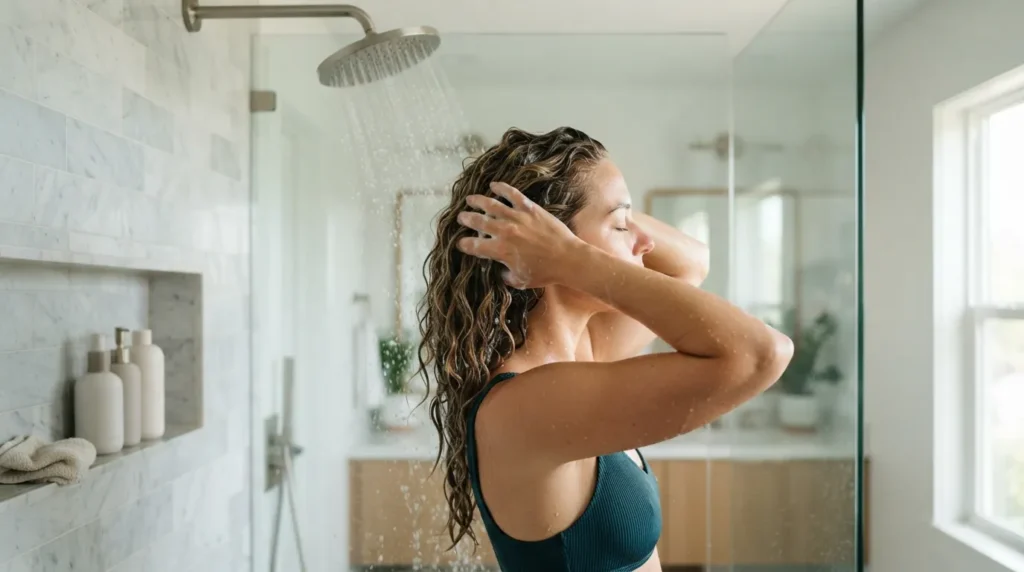
Wash day is where much of your weekly hair routine begins. The goal is to clean the scalp, restore moisture, detangle carefully, and create a good foundation for styling.
How Often Should You Wash 2C Hair?
There is no universal number of days that works for every person.
Some people wash every few days because their scalp becomes oily, while others can comfortably go longer between washes.
Consider:
- Scalp oiliness
- Exercise and sweating
- Product use
- Hair dryness
- Environmental conditions
- Personal comfort
Practical example: If your scalp feels oily and uncomfortable after three days, waiting a full week simply because someone else does may not suit you.
How to Shampoo 2C Hair
Use enough shampoo to clean the scalp without aggressively scrubbing the hair lengths.
If you have substantial styling buildup, a more thorough cleansing session may occasionally be necessary.
Rinse thoroughly so cleanser does not remain around the scalp or hairline.
How to Condition 2C Hair
Conditioner helps improve slip, softness, and manageability.
Focus on areas that become tangled or dry, particularly the lengths and ends.
Do not assume that the richest conditioner is automatically the best conditioner. Fine or easily weighed-down 2C hair may respond better to a lighter formula.
When to Use a Clarifying Wash
Clarifying can be useful when hair begins feeling coated or when regular products stop working as expected.
Possible signs include:
- Dull appearance
- Heavy roots
- Waxy feeling
- Poor styling response
- Excess product residue
Clarification should be balanced with your normal conditioning routine rather than replacing it.
Best Products for 2C Hair
There is no single best product for every 2C head of hair. Product choice should depend on strand thickness, density, scalp behavior, dryness, and desired styling result.
Shampoo and Cleansers
Look for a cleanser that effectively cleans your scalp without leaving your lengths excessively dry.
A sulfate-free shampoo may be useful if you prefer gentler cleansing, while other people may need stronger cleansing occasionally because of buildup.
Conditioners and Leave-In Conditioners
Choose a moisturizing conditioner that provides slip without making your waves heavy.
A leave-in conditioner can be useful when the hair needs extra softness, but use a small amount if your hair becomes flat easily.
Curl Creams
Curl cream can improve softness and help wave clumping.
For 2C hair, lightweight formulas can be particularly useful when heavy creams make the hair lose volume.
Gels and Styling Products
Gel provides hold that can help waves maintain their shape as the hair dries.
A lightweight gel may work well for soft definition, while stronger-hold styling gel can be useful when humidity causes your waves to fall apart quickly.
Hair Masks and Deep Conditioners
Deep conditioning can provide extra conditioning when hair feels particularly dry.
You do not necessarily need a heavy mask every wash day.
Practical example: If your hair feels normal after regular conditioner, adding a rich mask every week may simply add unnecessary weight. Use deeper conditioning when your hair actually benefits from it.
Ingredients to Look For
Useful ingredients vary by formula, but people with wavy hair often look for ingredients associated with conditioning, moisture, slip, and flexible hold.
These can include:
- Humectants
- Conditioning agents
- Lightweight oils
- Film-forming ingredients
- Protein ingredients when appropriate
- Hydrating ingredients
The complete ingredient list and formula matter more than one highlighted ingredient.
Ingredients to Use Carefully
No ingredient is automatically bad for every person.
Some people may find heavy oils, rich butters, excessive protein, or large amounts of styling product make their waves feel coated or stiff.
The practical test is how your hair behaves over several wash cycles.
How to Define 2C Waves and Reduce Frizz
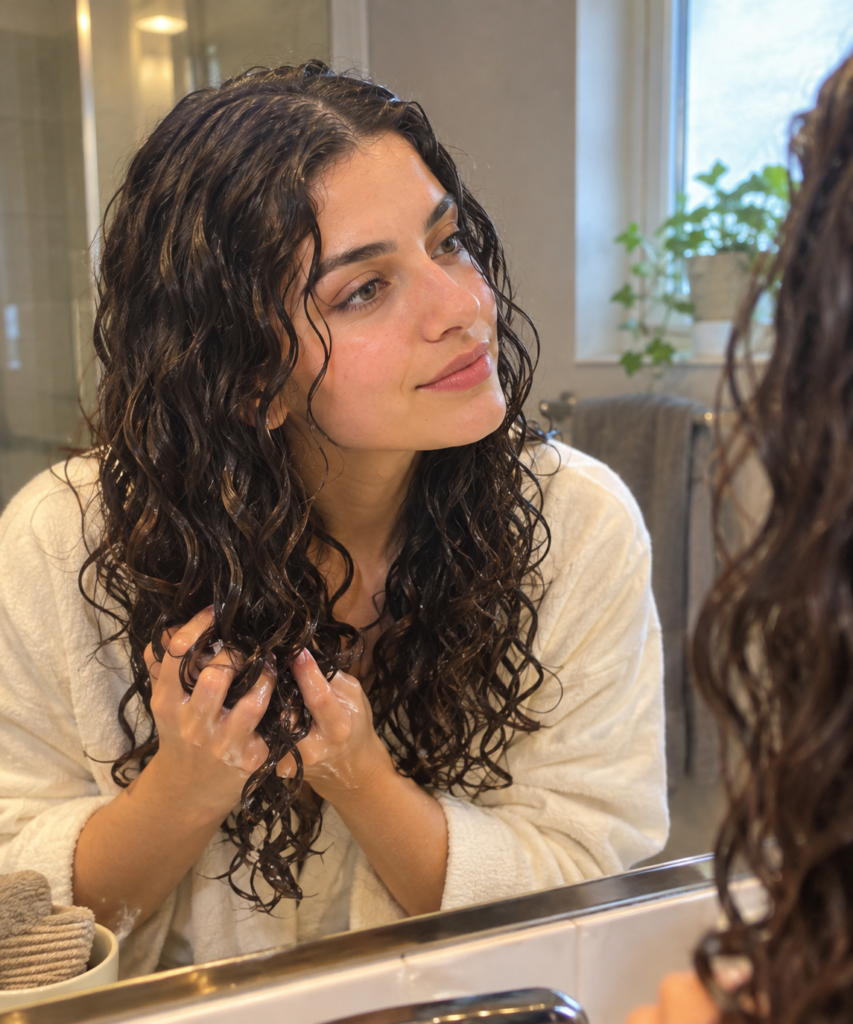
Definition comes from the combination of water, product, technique, and drying method.
Use the Right Amount of Product
Start small.
Apply product evenly rather than placing a large amount in one area. If your waves still lose their shape after drying, gradually increase the amount of hold.
This approach helps you find the minimum amount necessary for your hair.
Encourage Curl and Wave Clumping
Wet styling can make it easier for waves to group together.
Apply styling products while the hair is sufficiently wet, smooth them through the sections, and gently scrunch.
Avoid aggressively separating clumps afterward.
Control Humidity and Frizz
Humidity can cause styled waves to expand and lose definition.
A suitable styling product can create some humidity resistance by forming a flexible layer around the hair.
You can also reduce frizz by minimizing friction and unnecessary touching.
Practical example: If your waves look excellent indoors but become puffy outside on humid days, focus on stronger hold and avoid repeatedly touching the hair during the day.
Protect Hair From Heat Damage
Frequent high heat can make hair feel dry and brittle.
When using a diffuser or another heat tool, use heat protection and avoid unnecessarily high temperatures.
The goal is to dry or style the hair efficiently without excessive heat exposure.
2C Hair Refresh Routine Between Wash Days

Refreshing should restore the shape of your waves without completely restyling your hair.
Morning Refresh
Start by assessing your hair instead of immediately adding more product.
If the waves are only slightly flattened, lightly mist them with water and scrunch.
If additional hold is needed, use a very small amount of diluted or lightweight styling product.
Practical example: If the top layer looks flat after sleeping but the ends still have definition, refresh only the flattened areas instead of soaking the entire head.
Mid-Week Refresh
By the middle of the week, some sections may need more help.
Mist the hair lightly, reshape individual waves with your fingers, and allow them to dry without excessive manipulation.
If your roots are oily, adding more styling product may make the problem worse.
When to Add More Product
Only add product when the existing styling layer is no longer providing enough hold or definition.
Repeatedly layering cream and gel every morning can eventually create buildup.
If your hair feels coated, limp, or dull, your next wash may need more thorough cleansing.
How to Protect 2C Hair Overnight
Night protection can help reduce friction and preserve wave definition.
Pineapple Method
The pineapple method involves loosely gathering the hair toward the top of the head before sleeping.
The tie should not create uncomfortable tension.
The purpose is to keep the waves from being compressed against the pillow.
Silk or Satin Pillowcase
A silk or satin pillowcase can reduce some friction compared with rougher fabrics.
It is not a replacement for good hair care, but it can be a useful part of an overnight routine.
Simple Night Routine
Before bed:
- Make sure the hair is fully dry.
- Loosely gather longer waves if needed.
- Avoid tight elastics.
- Use a smooth pillow surface.
- Leave the hair alone overnight.
Practical example: If your hair looks good at night but becomes flattened on one side every morning, changing your sleeping setup may help preserve more of the existing wave pattern.
Moisture, Protein, and Hair Health
Healthy-looking hair requires balance. More moisture is not always better, and more protein is not always better.
Moisture Balance
Hair that feels dry, rough, or difficult to manage may benefit from more conditioning.
But hair that becomes limp, overly soft, or difficult to style may need less heavy conditioning.
Your routine should respond to your hair rather than following a rigid weekly schedule.
When Protein Treatments May Help
Protein treatments are sometimes used to support the feel and structure of damaged or weakened hair.
Signs that a protein-focused product may be worth considering can include hair that feels unusually weak or lacks resilience.
However, frequent protein treatments are unnecessary for everyone.
Practical example: If your hair already feels strong and behaves well, adding frequent protein treatments simply because they are popular may not improve your routine.
Signs Your Routine Needs Adjusting
Watch for changes such as:
| Hair Behavior | Possible Adjustment |
|---|---|
| Dry, rough ends | Increase conditioning |
| Flat, heavy waves | Reduce heavy products |
| Oily roots | Cleanse scalp more effectively |
| Puffy waves | Improve hold and reduce touching |
| Coated hair | Consider clarification |
| Weak-feeling hair | Review heat and chemical exposure |
| Stiff styling | Reduce or change hold product |
These are starting points, not diagnoses. Test one change at a time so you can identify what actually works.
Common 2C Hair Mistakes to Avoid
Small habits can have a major effect on wave definition.
Overwashing
Washing too frequently can make some people’s lengths feel dry, while washing too infrequently can leave the scalp uncomfortable or create buildup.
Find the frequency that suits your scalp and lifestyle.
Using Too Much Product
More product does not automatically mean more definition.
Excess cream can weigh down waves, while too much gel can create stiffness or residue.
Start small and build gradually.
Brushing Dry Waves
Dry brushing often separates wave clumps and increases puffiness.
If you need to detangle, doing it while the hair is wet and conditioned is usually more compatible with maintaining the natural pattern.
Skipping Clarification
If you use multiple styling products, ignoring buildup can eventually affect how your hair feels and behaves.
Occasional clarification may help restore a cleaner starting point.
Applying Excessive Heat
High temperatures and frequent heat styling can contribute to dryness and damage.
Use heat protection, moderate settings, and the lowest effective heat whenever possible.
2C Hair Weekly Maintenance Chart
Use this as a flexible starting point rather than a strict schedule.
| Day | Suggested Routine |
|---|---|
| Wash Day | Cleanse, condition, detangle, style and dry |
| Day 2 | Minimal touching; protect the waves |
| Day 3 | Light morning refresh if needed |
| Day 4 | Refresh selected areas rather than the whole head |
| Day 5 | Check scalp and product buildup |
| Day 6 | Refresh or wash depending on scalp needs |
| Day 7 | Wash or continue routine according to hair condition |
Practical example: Someone with an oily scalp may wash earlier than this schedule, while someone with a comfortable, balanced scalp may extend the period between washes.
The chart is a framework, not a rule.
2C Hair Care FAQs
How often should you wash 2C hair?
Wash 2C hair according to your scalp’s needs rather than a fixed number of days. Oily scalps, frequent exercise, and heavy product use may require more frequent cleansing.
How do you define 2C waves?
Apply lightweight styling products to sufficiently wet hair, encourage clumping with scrunching, and allow the hair to dry with minimal manipulation. A suitable gel can provide additional hold.
How do you reduce frizz in 2C hair?
Focus on hydration, gentle detangling, controlled styling, reduced friction, and adequate hold. Avoid repeatedly touching or brushing dry waves.
What products are best for 2C hair?
A useful basic combination can include a gentle cleanser, conditioner, optional leave-in conditioner, lightweight curl cream, and gel. The ideal products depend on your hair’s density, strand thickness, scalp behavior, and desired finish.
How do you refresh 2C hair?
Lightly mist flattened areas with water, reshape the waves, and scrunch gently. Add only a small amount of styling product if the hair needs more hold.
How should you sleep with 2C hair?
Make sure your hair is completely dry, loosely gather longer hair using the pineapple method if useful, and consider a silk or satin pillowcase to reduce friction.
Does 2C hair need protein?
Not necessarily. Protein treatments may be useful for some hair that feels weakened, but they are not automatically required as part of every 2C routine.
How do you prevent 2C hair from getting puffy?
Use enough styling hold, avoid dry brushing, minimize touching while the hair dries, reduce friction, and adjust your routine for humid conditions.
Can 2C hair be both dry and oily?
Yes. The scalp can produce natural oils while the lengths and ends still feel dry. A balanced routine can focus cleansing on the scalp while providing conditioning to the lengths.
Should you air dry or diffuse 2C hair?
Either method can work. Air drying uses less heat, while diffusing can speed up drying and help maintain volume. If diffusing, use appropriate heat protection and avoid excessive heat.
How can you keep 2C waves defined throughout the week?
Use adequate hold on wash day, allow the hair to dry fully, protect it overnight, and refresh only the sections that need attention. Avoid repeatedly adding layers of product.
Conclusion
Good 2C hair care is less about having a complicated shelf of products and more about understanding how your hair responds. Cleanse the scalp effectively, condition without weighing down the waves, style on wet hair, encourage clumping, control friction, and protect your natural texture between wash days.
Start with a simple routine, change one thing at a time, and let your own hair’s response guide the next adjustment.
REad Next