
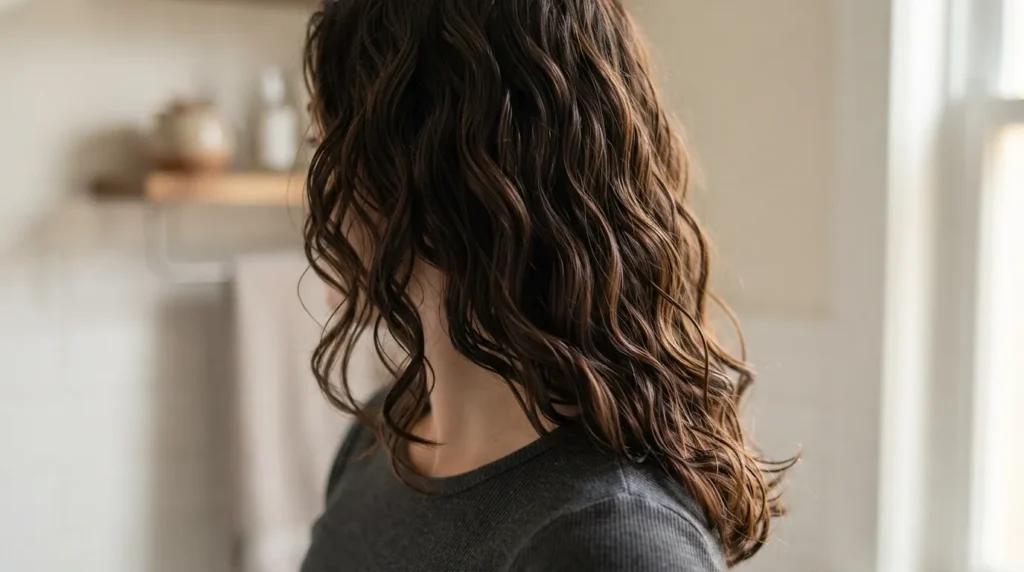
What Is 2C Hair?
The best way to blow dry 2C hair is to use a diffuser with low to medium heat 2C hair sits at the wavy end of the curl spectrum. It forms defined, S-shaped waves that start closer to the roots than other wave types, often with some looser curl clumping toward the ends. Type 2C hair typically has more volume and texture than 2A or 2B waves, and it can look and behave like a hybrid between wavy and curly hair depending on humidity, product, and hair density.
Unlike straight or barely-wavy hair, natural 2C hair has a visible wave pattern along the entire strand rather than just at the tips. It’s also more prone to frizz because the wave pattern makes the hair cuticle sit slightly raised, which lets moisture escape and humidity creep in.
How to Identify Type 2C Hair
If you’re not sure whether you have 2C hair, look at your strands right after a wash, before you touch or manipulate them. Type 2C hair generally shows:
- Clearly defined S-shaped waves from mid-shaft to ends
- Some sections that clump into loose curls
- A textured, slightly coarse feel compared to 2A or 2B
- Noticeable volume at the crown, with a tendency toward flat roots
- Frizz that appears quickly without the right styling products
Hair density and hair porosity vary a lot within the 2C category, so two people with 2C hair can still need very different routines.
2C Hair vs Other Wave and Curl Types
Wave and curl typing runs on a scale, and 2C sits right at the edge before curls begin. Knowing where your hair falls helps you choose products and techniques that actually match your curl pattern instead of guessing.
2A vs 2B vs 2C Hair
| Type | Wave Pattern | Volume | Frizz Tendency | Best Suited Products |
|---|---|---|---|---|
| 2A | Loose, barely-there S-bends | Low | Low | Lightweight mousse, light hold gel |
| 2B | More defined waves, some curl at ends | Medium | Medium | Curl cream, light gel |
| 2C | Strong S-shaped waves, some curl clumping | Medium-high | High | Curl cream + gel combo, anti-frizz serum |
2C vs 3A Hair
The line between 2C wavy hair and 3A curly hair is often blurry. 2C hair tends to have wave patterns that loosen when stretched, while 3A hair holds a springy, defined curl even when pulled straight. If your hair reverts to a wave rather than a ring-shaped curl after stretching, you’re almost certainly working with 2C hair rather than 3A.
Understanding Your 2C Hair Porosity Density and Texture
Two people can both have 2C hair and need completely different routines. The difference usually comes down to porosity, density, and strand thickness.
2C Hair Porosity
Porosity describes how easily your hair strands absorb and hold moisture, and it changes how you should approach hydration and product buildup.
- Low porosity 2C hair: The cuticle lies flat, so moisture struggles to get in. Products often sit on top of the hair instead of absorbing, leading to product buildup and flat roots. Lightweight, water-based leave-in conditioners and gentle heat (like a hooded dryer) help products penetrate.
- Medium porosity 2C hair: This is the easiest to manage. Hair absorbs and retains moisture well with a standard routine of conditioner, leave-in, and curl cream.
- High porosity 2C hair: The cuticle is raised or damaged, so moisture gets in fast but escapes just as quickly, causing dryness and frizz. Richer leave-ins, hair oils, and occasional protein treatments help seal the cuticle and improve hair elasticity.
Quick porosity test: Drop a clean strand of hair into a glass of water. If it sinks fast, you likely have high porosity. If it floats for several minutes, you likely have low porosity.
Density and Coarse vs Fine 2C Hair
Density refers to how many strands you have per square inch of scalp, while thickness describes the width of each individual strand. Coarse hair holds styling products well but can feel dry faster, while fine hair is more prone to weight-down and oily roots if you overload it with heavy cream or oil.
How to Care for 2C Hair: Building Your Routine
A solid 2C hair care routine balances cleansing, moisture, and styling without overloading the hair or stripping its natural texture. Getting this right prevents the two most common complaints: frizz and lost curl definition.
How to Wash 2C Hair
Start with a sulfate-free shampoo to cleanse the scalp without stripping the natural oils that help define your wave pattern. Focus shampoo on the scalp and let the lather rinse through the lengths, since scrubbing the ends causes unnecessary frizz and breakage.
Follow with a conditioner or deep conditioner, applying it mid-shaft to ends where hair strands are driest. Detangle here, while the hair is coated in slip, using a wide-tooth comb or your fingers working from ends to roots.
Worked example: If your 2C hair feels dry and dull by day three, try alternating a sulfate-free shampoo wash with a co-wash session in between. This keeps the scalp clean without fully stripping moisture twice a week.
How Often to Wash 2C Hair
Most people with 2C hair do best washing two to three times a week. Washing too often can strip natural oils and worsen dryness; washing too rarely can lead to product buildup, oily roots, and flat volume at the crown. If your hair leans oily, a light co-wash between full washes can extend the gap without buildup.
Clarifying: When and Why
A clarifying shampoo once every two to four weeks removes product buildup, hard water minerals, and residue that a regular sulfate-free shampoo won’t fully clear. Signs you need to clarify include waves that look weighed down, reduced curl clumping, and product that no longer activates the way it used to.
Best Products for 2C Hair
The right products for 2C hair depend heavily on porosity and density, but a few categories form the backbone of most routines.
Cleansing and Conditioning
- Sulfate-free shampoo: Cleans the scalp gently without disrupting the wave pattern.
- Conditioner: A daily, lightweight formula for medium porosity hair; a richer formula for high porosity or coarse hair.
- Deep conditioner or hair mask: Used weekly to restore moisture and strengthen hair elasticity.
- Leave-in conditioner: Applied on wet hair to lock in hydration before styling.
Styling Products
- Curl cream: Adds moisture and light hold, ideal as a base layer for defining waves.
- Curl gel: Locks in the wave pattern and controls frizz, especially in humidity.
- Mousse: Great for fine or low-density 2C hair that needs volume without heaviness.
- Anti-frizz serum: A small amount smoothed over dry hair tames flyaways without weighing down waves.
- Curl refresher spray: Revives second-day hair without a full restyle.
Products by Porosity
| Porosity | Recommended Product Types | Avoid |
|---|---|---|
| Low | Lightweight, water-based leave-ins and gels; apply with gentle heat | Heavy butters and oils that sit on the cuticle |
| Medium | Standard curl cream + gel combo | Overly rich protein-heavy products |
| High | Rich leave-ins, hair oils, occasional protein treatment | Skipping moisture between washes |
How to Style 2C Hair for Definition
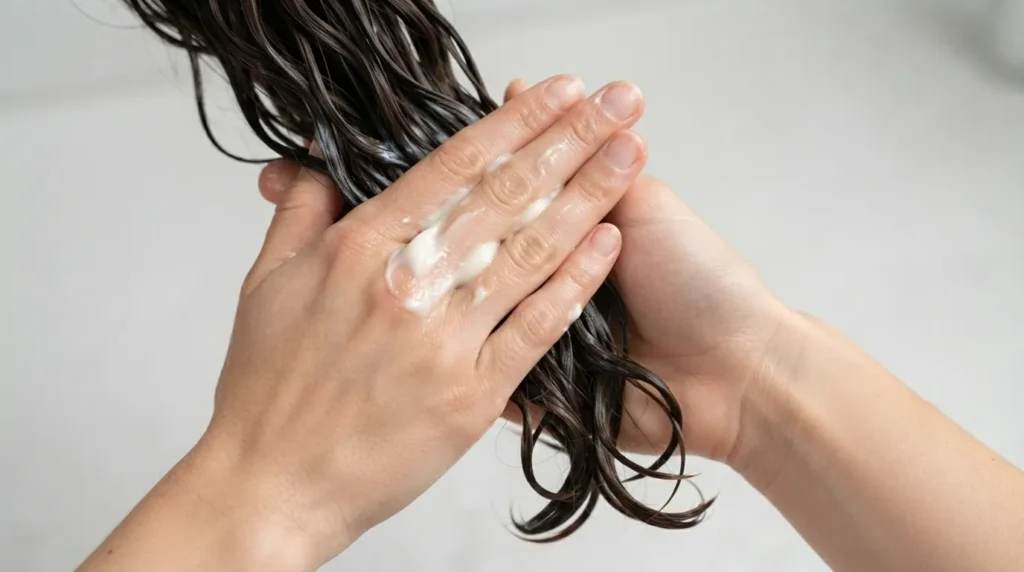
Styling wet hair is where most of your curl and wave definition gets locked in, so technique matters as much as product choice.
Detangling
Detangle in the shower with conditioner still in the hair, using a wide-tooth comb or your fingers. Work in small sections from the ends upward to avoid unnecessary breakage.
Applying Product with the Praying Hands Technique
Apply leave-in conditioner, then curl cream, then gel, using the praying hands technique: smooth palms together with product, then glide them down sections of hair from root to tip. This distributes product evenly and encourages wave clumping instead of a fuzzy, undefined finish.
Scrunching and Finger Coiling
Once product is distributed, scrunch upward from the ends toward the scalp to encourage the wave pattern to clump. For extra definition in looser sections, finger coil individual pieces around your finger before releasing.
Plopping
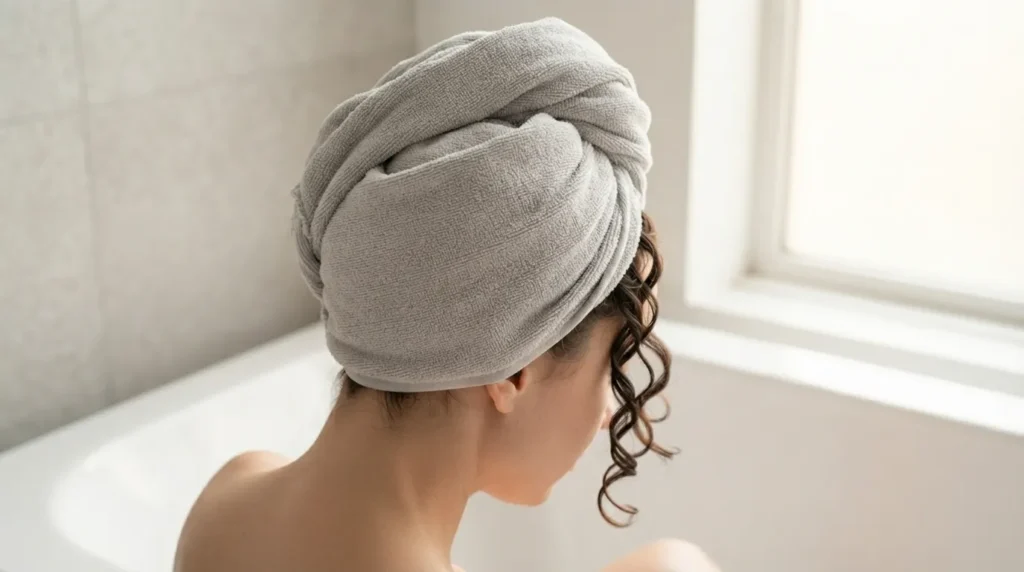
Plopping involves wrapping product-covered hair in a microfiber towel or cotton T-shirt for 10–20 minutes to absorb excess water without disturbing curl clumping. This step is especially useful for high porosity or fine 2C hair that tends to lose shape under its own weight when wet.
Diffusing vs Air Drying
- Diffusing: Speeds up drying, adds volume, and helps set the wave pattern before frizz-causing humidity can affect it. Use a low, cool-to-medium heat setting and cup sections in the diffuser bowl rather than rubbing.
- Air drying: Gentler on hair strands and reduces heat damage risk, but takes longer and can flatten waves at the roots if you’re active during the drying window.
Worked example: For flat roots with strong wave definition mid-length, try diffusing upside down for the first 5–10 minutes to lift the roots, then flip right-side up to finish drying and preserve shape.
How to Prevent and Control Frizz in 2C Hair
Frizz happens when the hair cuticle is raised and moisture moves in and out unevenly — a common issue for 2C hair because of its wave structure. Controlling it comes down to sealing moisture in and minimizing manipulation once hair is drying.
- Apply product to soaking wet hair, not damp hair, so there’s enough slip to smooth the cuticle down.
- Use a microfiber towel instead of a regular towel, which roughs up the cuticle and causes frizz.
- Avoid touching or restyling hair while it’s still drying; this is the single most common cause of frizz in wavy hair.
- In humid weather, seal styles with a light anti-frizz serum or a few drops of hair oil on dry ends.
- Trim regularly to remove split ends, which fray and contribute to a frizzy overall look even when the rest of the hair is well-defined.
How Humidity Affects 2C Hair
Humidity is one of the biggest triggers for frizz in wavy and curly hair types, and 2C hair is especially sensitive because its raised cuticle structure lets moisture move in and out easily. On humid days, excess water vapor in the air swells the hair shaft unevenly, which disrupts smooth wave clumping and puffs up the surface into visible frizz.
The fix isn’t to avoid moisture — it’s to seal it in before the air can add more on its own terms. A light anti-frizz serum, a small amount of hair oil on the ends, or a stronger-hold gel on humid days all create a barrier that slows moisture exchange. Some people also find that switching to a heavier leave-in conditioner during summer months, then lightening up in drier seasons, keeps 2C hair balanced year-round.
Worked example: If your waves look perfect after styling but frizz out within an hour on a humid afternoon, try adding a gel top-coat over your usual curl cream. The extra hold slows moisture absorption long enough for the cast to set and protect the wave pattern underneath.
Daily and Weekly 2C Hair Routine
A predictable rhythm keeps 2C hair balanced between moisture, definition, and scalp health.
| Day | Routine Step |
|---|---|
| Wash day | Sulfate-free shampoo, conditioner, detangle, style wet with cream + gel, diffuse or air dry |
| Day 2 | Refresh with water and curl refresher spray; scrunch out excess frizz |
| Day 3 | Light co-wash if roots feel oily, or refresh again; re-apply small amount of gel to frizzy sections |
| Weekly | Deep condition or hair mask once; clarify every 2–4 weeks to prevent buildup |
Second-day 2C hair often looks better than day-one hair once the cuticle settles, so avoid the urge to fully rewash unless the scalp genuinely needs it.
How to Protect 2C Waves Overnight
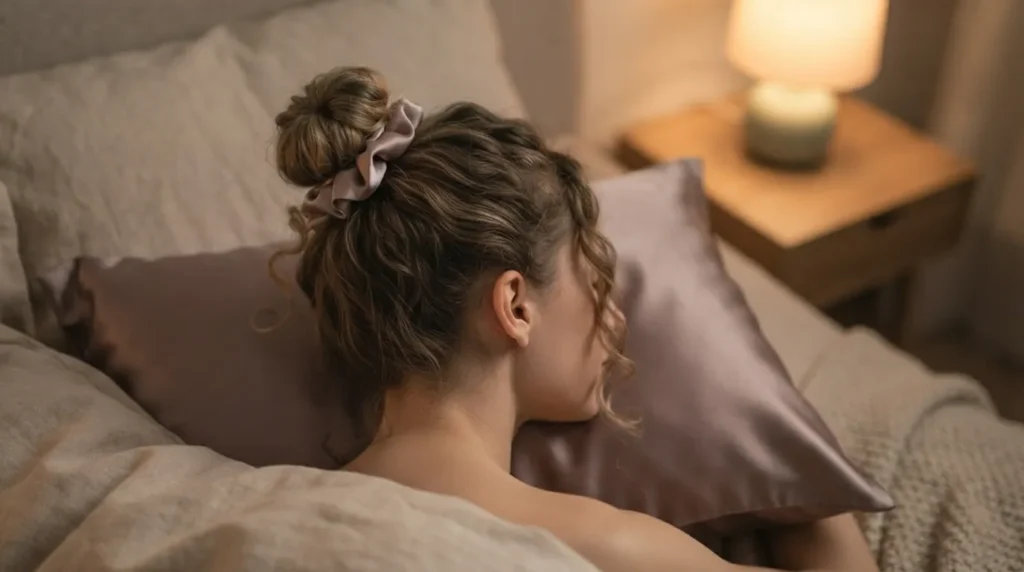
Cotton pillowcases absorb moisture and create friction that leads to frizz and flattened waves by morning. Switching to a satin pillowcase or silk pillowcase lets hair glide instead of catching, which preserves both moisture and shape.
For extra protection, especially on second or third-day hair, use a satin bonnet or loosely gather hair into a high pineapple at the crown before bed. This keeps the roots from getting crushed while letting the waves fall naturally.
Worked example: If you wake up with flat crown volume but the ends still look defined, switch from sleeping with hair down to a loose, high pineapple secured with a scrunchie — it protects shape without creating a crease.
Common 2C Hair Problems and Fixes
| Problem | Likely Cause | Fix |
|---|---|---|
| Frizzy 2C hair | Raised cuticle, low humidity protection, cotton pillowcase | Seal with serum, switch to satin, avoid touching hair while drying |
| Dry 2C hair | High porosity, over-washing, lack of leave-in | Add leave-in conditioner and a weekly deep conditioner |
| Flat roots | Product buildup, heavy styling cream, no root lift | Diffuse upside down, use mousse instead of heavy cream at the roots |
| Losing curl pattern | Product buildup, heat damage, over-manipulation | Clarify monthly, limit heat styling, avoid restyling dry hair |
| Oily roots, dry ends | Infrequent washing, product applied too close to scalp | Wash on schedule, keep styling product off the scalp |
Common Mistakes and Dos and Don’ts
Do:
- Apply product to soaking wet hair for maximum definition
- Detangle with conditioner in the hair, not on dry strands
- Sleep on satin or silk to protect your wave pattern
- Clarify periodically to prevent product buildup
Don’t:
- Rub hair dry with a regular towel
- Touch or scrunch hair while it’s actively drying
- Use heavy, oil-based products on low porosity or fine 2C hair
- Skip trims, which lets split ends fray into visible frizz
FAQ
Why is my 2C hair frizzy?
Frizz usually comes from a raised hair cuticle combined with humidity, rough towel-drying, or touching hair while it dries. Switching to a microfiber towel, sealing with serum, and leaving hair alone while it dries solves most cases.
Why is my 2C hair dry?
Dryness is common with high porosity hair, which loses moisture as fast as it absorbs it. A weekly deep conditioner, a good leave-in, and lighter wash frequency usually help.
Why is my 2C hair flat at the roots?
Heavy styling cream, infrequent washing, or product buildup at the scalp can weigh roots down. Try a lighter product at the roots and diffuse upside down for lift.
Why is my 2C hair losing its curl pattern?
This is often a sign of product buildup, heat damage, or excessive manipulation. A clarifying wash and a break from heat styling can help waves bounce back.
How often should I wash 2C hair?
Two to three times a week works for most people, with co-washing or refresh sprays filling the gaps depending on scalp oil production and activity level.
Can I use gel on 2C hair without it looking crunchy? Yes. Once the gel dries completely, scrunch out the cast with dry hands or a small amount of oil to break it into soft, defined waves rather than a stiff hold.
Final Thoughts
2C hair rewards a routine built around its specific texture rather than generic curly-hair advice. Once you match your products to your porosity, style on soaking wet hair, and protect your waves overnight, frizz drops and definition holds for days — not just on wash day.
Read Next.
Pingback: Best Skala Leave-In for Thin 2C Hair: Full Guide