

2C Hair The Complete Care and Styling Guide
haHow to care for 2C hair depends on your natural wave pattern, hair density, porosity, and moisture needs2c hair sits at the border between wavy and curly. It forms defined S-shaped waves starting close to the root, with more body and bend than 2A or 2B patterns. If you’ve struggled to find a routine that defines your waves without leaving them flat, greasy, or frizzy, you’re dealing with a texture that’s genuinely more particular than most guides admit.
This guide covers everything from identifying your pattern to building a wash-day routine, picking products, and fixing the most common 2C hair problems: frizz, flat roots, and waves that fall apart by midday.
What Is 2C Hair?
2C hair is the most defined subtype in the wavy hair family. Unlike 2A’s subtle bend or 2B’s looser waves, 2C hair forms tighter, more consistent S-shaped waves that often start right at the scalp. It has more visible curl pattern than other wave types and can sometimes include a few looser curls mixed in near the crown or ends.
This texture tends to be thicker in overall density, even if individual strands are fine, which is why 2C hair often looks voluminous but can also frizz easily in humidity.
2C Hair vs. 2A and 2B Hair
The wavy hair family (type 2) breaks into three subtypes based on wave definition and root pattern:
| Type | Wave Shape | Root Volume | Frizz Tendency |
|---|---|---|---|
| 2A | Subtle, loose bends | Flatter at root | Low |
| 2B | Defined S-waves from mid-length | Moderate | Medium |
| 2C | Tight, consistent S-waves, sometimes from root | Higher, denser | High |
Worked example: Two sisters with wavy hair often get confused about their type. One has waves that only show up after a curling wand; that’s likely 2A. The other has natural, camera-ready S-bends from the crown down, but her hair frizzes the moment she touches it, that’s a strong signal of type 2C hair.
How to Identify 2C Hair (Characteristics)
To confirm you have 2C hair, look at your hair on a wash day with no product, right after it air dries. Key 2C hair characteristics include:
- Visible S-shaped waves starting near the root, not just at the ends
- A mix of wave and loose curl in some sections
- Medium-density hair or coarse hair (fine 2C hair exists too, but it’s less common)
- A natural wave pattern that clumps easily when wet
- Frizz that appears almost immediately once hair starts to dry
Hair porosity also plays a big role in how 2C hair behaves. High-porosity 2C hair absorbs moisture fast but loses it just as quickly, which is part of why frizz control is such a recurring theme for this texture. Low-porosity 2C hair, by contrast, resists moisture and needs lighter, water-based products applied to soaking wet hair for better absorption.
Common 2C Hair Problems
Most complaints about this texture fall into a short list of repeat offenders:
- Frizz — especially in humidity or when hair is touched while drying
- Flat roots paired with voluminous ends, an oddly common combination for 2C hair
- Product buildup from heavy creams and oils that weigh down fine or medium-density strands
- Tangles and knots, since dense waves catch on each other easily
- Dryness and moisture loss, particularly with high-porosity strands
- Second-day frizz, where waves that looked great on wash day fall apart by the next morning
Worked example: Someone with oily roots and dry ends is a textbook 2C hair problem. how to care for 2C hair The scalp overproduces oil because it’s compensating for how slowly natural oils travel down dense, wavy strands, leaving the roots slick while the ends stay dehydrated and prone to split ends.
2C Hair Care Routine
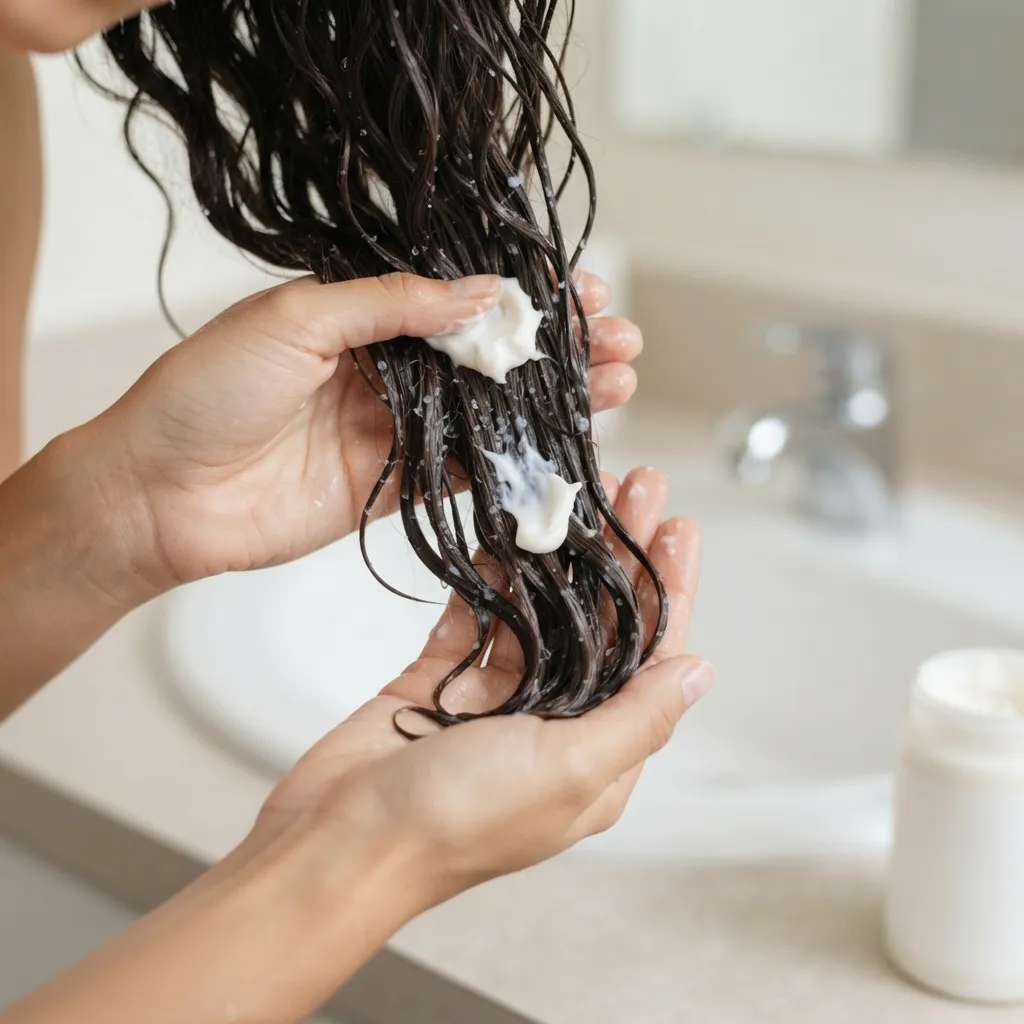
A working 2C hair care routine balances moisture, defines the wave pattern, and avoids weighing hair down. Here’s the order that consistently works.
How to Wash 2C Hair
Washing frequency matters more for 2C hair than people expect. Washing too often strips natural oils and causes dryness; washing too rarely leads to product buildup and flat, oily roots.
- 2–3 times per week works for most medium-density or coarse 2C hair
- Fine 2C hair may need washing every other day to avoid weighed-down waves
- Use a clarifying shampoo once every 2–3 weeks to reset the scalp and remove buildup from creams, gels, and oils
Best Shampoo and Conditioner for 2C Hair
A sulfate-free shampoo is the safer everyday choice since it cleanses without stripping moisture the way harsher sulfates do. Follow with a lightweight conditioner that detangles without flattening the wave pattern — heavy, butter-based conditioners tend to loosen 2C waves too much.
How to Moisturize 2C Hair
how to care for 2C hair Apply a leave-in conditioner to soaking wet hair immediately after the shower. This is the single most impactful step for wave definition, since 2C hair loses moisture fast once it starts drying.
Follow with a weekly or biweekly deep conditioner or hair mask. High-porosity 2C hair benefits from a protein treatment once a month to reinforce strand strength and reduce breakage.
How to Prevent Product Buildup
how to care for 2C hair Buildup is the top reason 2C waves go flat over time. To prevent it:
- Rinse leave-in products fully into the hair rather than layering on top of old product
- Avoid heavy oils on the scalp; apply oil only to mid-lengths and ends
- Clarify every 2–3 weeks, more often if you use gels or foams daily
Best Products for 2C Hair
The right product stack for 2C hair is lightweight, moisture-focused, and layered in a specific order: leave-in, then curl cream, then gel.
Curl Cream vs. Gel
| Feature | Curl Cream | Gel |
|---|---|---|
| Best for | Moisture, softness, definition | Hold, frizz control, longevity |
| Texture after drying | Soft, touchable | Firm, may form a gel cast |
| Ideal use | Fine to medium-density 2C hair | Coarse or frizz-prone 2C hair |
| Layering | Apply first | Apply over curl cream |
Most people with 2C hair get the best results combining both: curl cream for moisture and softness, gel on top for hold and frizz control.
Best Curl Creams for 2C Hair
how to care for 2C hair Look for a curl-defining cream with glycerin, shea butter, or flaxseed extract, ingredients that add moisture without excess weight. Fine 2C hair should stick to lighter, water-based creams; coarse 2C hair can handle richer, butter-based formulas.
Best Gels for 2C Hair
how to care for 2C hair A medium-hold gel suits most 2C hair, enough to lock in the wave pattern without stiffness. A strong-hold gel is better for high-humidity climates or all-day frizz control, especially for coarse or high-porosity strands.
How to Style 2C Hair

Styling technique matters as much as product choice for 2C waves. The goal is to encourage curl clumping while hair is wet, then disturb it as little as possible while it dries.
How to Scrunch 2C Hair
- Apply leave-in conditioner to soaking wet hair, working from ends to roots
- Add curl cream in sections, scrunching upward toward the scalp
- Follow with gel, scrunching again to encourage clumping
- Optionally use plopping with a microfiber towel or cotton t-shirt for 10–20 minutes to boost root volume and speed drying
How to Diffuse 2C Hair
- Flip hair upside down and cup sections into the diffuser bowl
- Use low heat and medium airflow to avoid disrupting the wave pattern
- Hold each section for 10–15 seconds before moving to the next
- Stop diffusing at about 80% dry, then air dry the rest to prevent overheating and frizz
Worked example: Someone diffusing on high heat for speed often ends up with frizzy, less defined waves. Dropping to medium heat and doing shorter, repeated bursts almost always produces tighter, cleaner curl clumping.
Air Drying vs. Diffusing
Air drying is gentler and lower-maintenance but takes longer and can lead to flatter roots. Diffusing adds volume and speeds up drying time but requires more hands-on technique to avoid frizz. Many people alternate: diffuse on days they want more volume, air dry on rest days to reduce heat exposure.
How to Reduce Frizz in 2C Hair
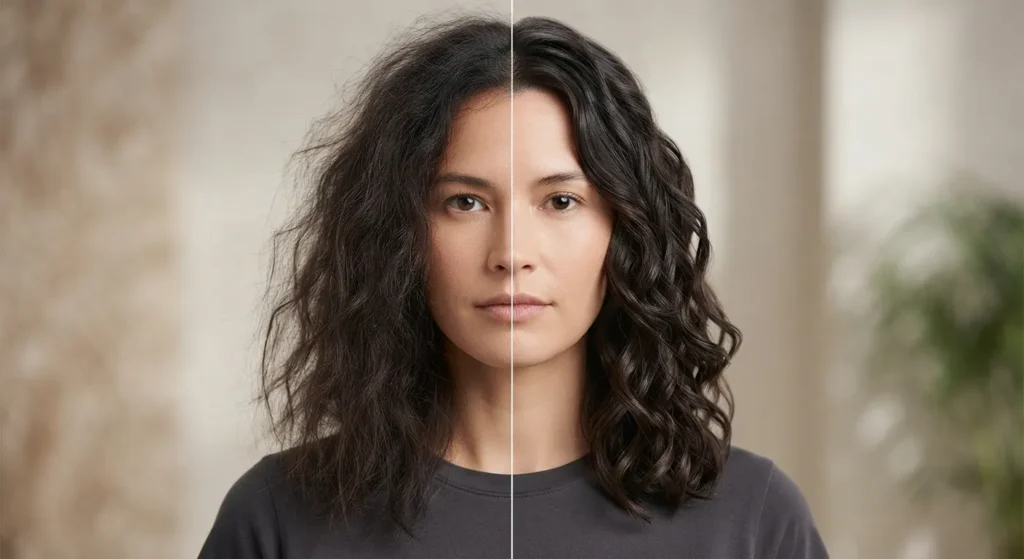
Frizz control for wavy hair comes down to three factors: moisture, technique, and product hold.
- Apply products to soaking wet hair, not damp or dry hair
- Avoid touching hair while it dries, this is the single biggest frizz trigger
- Once fully dry, scrunch out the crunch from the gel cast using dry hands or a small amount of oil
- Use a heat protectant any time you diffuse or use hot tools
- Swap cotton pillowcases for a satin pillowcase or silk pillowcase to reduce nighttime friction
How to Add Volume to 2C Hair
how to care for 2C hairFlat roots paired with wavy ends is one of the most common complaints for this texture. To build root volume:
- Apply products focusing on mid-lengths and ends, keeping the roots lighter
- Clip roots up while hair dries for extra lift
- Use a lightweight mousse at the roots before diffusing
- Avoid heavy oils directly on the scalp, which flatten roots quickly
Worked example: Someone who applies curl cream starting at the scalp usually ends up with flat, oily-looking roots by midday. Starting product application two inches away from the roots and working downward solves this almost immediately.
How to Refresh 2C Waves Between Washes
Second-day hair doesn’t have to mean frizzy hair. To refresh:
- Lightly mist hair with water or a diluted leave-in spray
- Scrunch gently to reactivate curl clumping
- Add a small amount of gel or curl cream only to flat or frizzy sections
- Diffuse briefly on low heat if roots need extra lift
How to Protect 2C Hair While Sleeping
Nighttime friction undoes a lot of wash-day work. Protect waves by:
- Sleeping on a satin or silk pillowcase to reduce frizz and tangles
- Loosely pineapple-clipping hair at the crown to preserve root volume
- Avoiding tight ponytails or buns that can create dents or breakage
2C Hair Dos and Don’ts
Do:
- Apply products to soaking wet hair for better absorption
- Get regular trims every 8–12 weeks to prevent split ends from traveling up the shaft
- Ask your stylist for a wavy haircut with layers to reduce bulk and enhance wave movement
Don’t:
- Brush dry 2C hair, this breaks up wave clumps and causes frizz
- Overuse heavy oils at the roots
- Skip clarifying washes, buildup is one of the fastest ways to flatten a wave pattern
FAQ
How often should I wash 2C hair?
Most people do well washing 2–3 times a week, with fine 2C hair sometimes needing more frequent washing to avoid weighed-down waves.
What’s the best product for defining 2C waves?
A combination of a lightweight leave-in conditioner, a curl-defining cream, and a medium-hold gel applied to soaking wet hair gives the most consistent wave definition.
Why does my 2C hair go flat by midday?
Flat roots usually come from product applied too close to the scalp, heavy oils, or buildup. Keeping product on mid-lengths and ends, and clarifying regularly, helps maintain volume.
Should I use a curl cream or gel for 2C hair?
Use both. Curl cream adds moisture and softness; gel adds hold and frizz control. Layering cream first, then gel, gives the best of both.
How do I stop my 2C hair from frizzing?
Apply products to soaking wet hair, avoid touching hair while it dries, use a heat protectant when diffusing, and switch to a satin or silk pillowcase at night.
2C hair rewards a specific, moisture-first routine more than any single product. Get the technique right, soaking wet application, gentle scrunching, minimal touching while drying, and the waves largely take care of themselves.
REad Next.
Pingback: Blow Dry 2C Hair Without Frizz: Complete Guide