
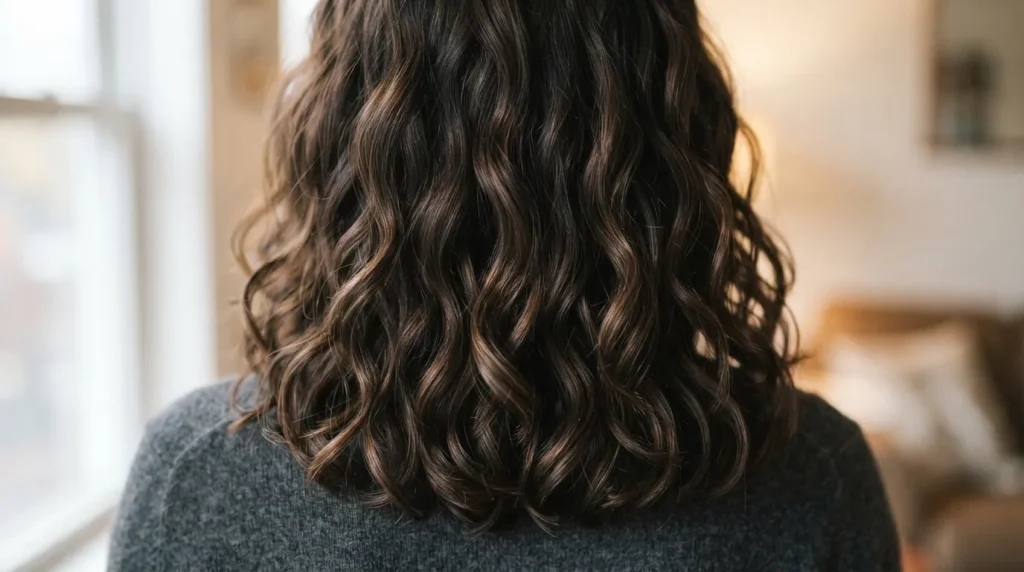
2C Hair Care The Complete Guide to Waves Products, and Styling
If your hair falls somewhere between “wavy” and “almost curly,” forms loose S-shaped bends, and puffs up the second humidity hits, you’re likely dealing with 2C hair. 2C hair care requires a different approach than straight or fully curly routines — it’s a texture that rewards precision and punishes guesswork.
This guide covers everything from understanding your wave pattern to building a wash-day routine, picking products that won’t weigh your waves down, and styling techniques that bring out definition instead of frizz.
What Is 2C Hair?
Type 2C hair sits at the curlier end of the wavy hair spectrum on the Andre Walker hair typing chart. It forms defined, S-shaped waves starting closer to the root than 2A or 2B hair, and it often has more visible texture and a coarser feel.
Unlike looser waves, 2C hair has enough curl pattern to clump and hold shape, but not quite enough spiral to be classified as curly. This in-between nature is exactly why so many people struggle to find a routine that works — curly products can feel too heavy, while wavy products often aren’t strong enough to define the wave.https://www.healthline.com/health/beauty-skin-care/hair-type-chart
2C Hair Texture and Density
Hair texture and hair density are two different things, and both matter for a 2C routine.
Texture refers to the thickness of an individual strand — fine, medium, or coarse. Many people with 2C waves have thick, coarse strands, which means the hair can handle richer, more moisturizing products without getting weighed down.
Density refers to how many strands grow per square inch of scalp. Someone can have coarse texture but low density, or fine texture with high density — and that combination changes how much product the hair actually needs.
Practical scenario: Two people both have 2C hair. One has coarse, high-density strands and needs a heavier leave-in plus a curl cream to fully define her waves. The other has coarse but low-density hair, and the same product routine leaves her waves looking greasy at the roots. Density, not just curl pattern, dictates product amount.https://www.aad.org/public/everyday-care/hair-scalp-care/hair/how-to-select-shampoo
2C vs. 2B vs. 3A Hair — What’s the Difference?
- 2B hair has looser, more S-shaped waves that typically start at eye level rather than the root, with less overall volume.
- 2C hair has more defined waves that start closer to the scalp, often with some spiral pattern near the ends, and generally more frizz-prone density.
- 3A hair has looser, well-defined curls (think loose spiral, not wave), and usually more shrinkage and more consistent curl formation than 2C.
Many people find their hair is a blend — 2C at the crown, 3A underneath, or 2B on top with coarser 2C pieces near the nape. That’s normal; wavy-to-curly hair transitions rarely follow one clean category.
How to Care for 2C Hair
A solid 2C hair care routine is built around one core idea: hydration without heaviness. Because 2C strands are often coarse and prone to dryness, moisture is non-negotiable — but too much richness flattens the wave pattern.
Moisture and Hydration Basics
Dry hair is the enemy of wave definition. When 2C strands lack moisture, the cuticle lifts, light doesn’t reflect off the hair evenly, and frizz takes over. Hair porosity — how easily your hair absorbs and retains moisture — determines exactly how you should hydrate.
- Low porosity 2C hair resists moisture and needs lightweight, water-based leave-ins applied to damp hair, plus occasional heat (like a warm towel) to help products absorb.
- High porosity 2C hair absorbs moisture quickly but loses it just as fast, so it benefits from heavier creams and oils that seal the cuticle after hydrating.
Practical scenario: If you apply a leave-in conditioner and your hair feels coated or greasy within an hour, you likely have low porosity hair and used a product too heavy for your strands. Switching to a water-based, lightweight formula usually solves it.
Detangling Without Disrupting Your Waves
Detangling dry 2C hair with a brush breaks up clumps and creates frizz. Instead:
- Detangle in the shower with conditioner still in the hair, using fingers or a wide-tooth comb.
- Work in sections, starting at the ends and moving upward to avoid pulling through knots.
- Avoid detangling once your styling products are applied and the wave pattern is set — this disrupts clumping and creates flyaways.
2C Hair Wash Routine
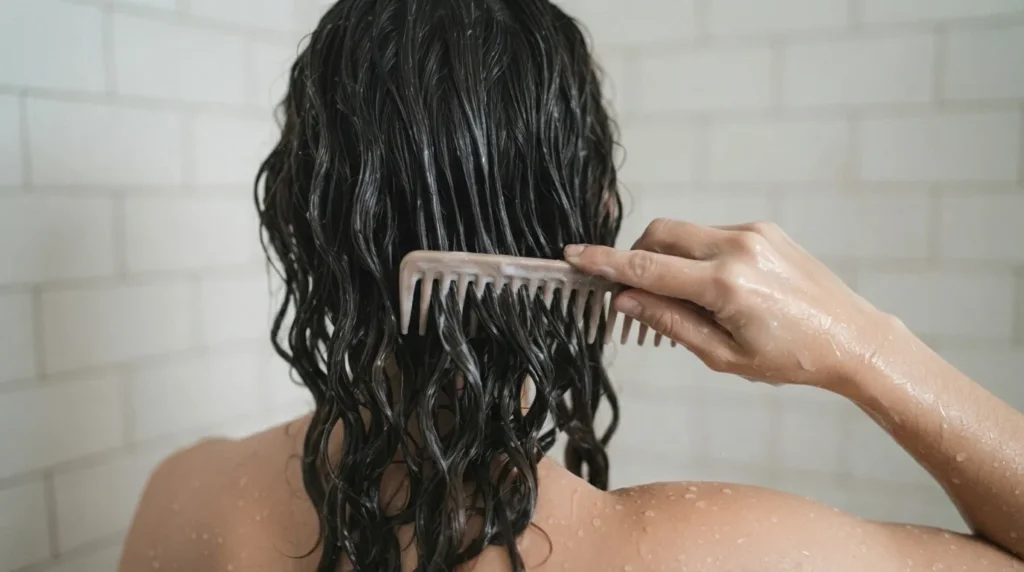
A consistent 2C hair wash routine prevents the two most common 2C complaints: flat roots and frizzy, undefined ends.
Choosing the Right Shampoo and Conditioner
A moisturizing shampoo is the default choice for most 2C hair, since coarse, wavy strands tend to run dry. Look for sulfate-free formulas that cleanse without stripping natural oils.
A smoothing shampoo can help on weeks when frizz is more of a concern than dryness, particularly in humid climates, though it should be alternated rather than used every wash to avoid buildup on the scalp.
Conditioner is where most of the moisture work happens. A rich, silicone-free conditioner detangles, softens, and preps the hair for styling products — apply generously from mid-length to ends, where hair is oldest and driest.https://www.aad.org/public/everyday-care/hair-scalp-care/hair/healthy-hair-tips
How Often Should You Wash 2C Hair?
Most 2C hair does best washed two to three times a week. Washing too frequently strips natural oils and increases frizz; washing too rarely lets oil build up at the roots and weighs down the wave pattern.
A clarifying shampoo once every two to four weeks removes product buildup that regular shampoo can’t fully clear, especially if you use styling creams or gels regularly. Skipping this step is one of the most common reasons 2C waves stop responding to products over time.
Best Products for 2C Hair
Choosing the right products for 2C hair comes down to weight — everything you use should hydrate and define without flattening the wave.
Leave-In Conditioners and Curl Creams
A lightweight leave-in conditioner is the foundation of most 2C routines. Applied to soaking-wet hair, it locks in moisture before any styling product goes on.
Curl cream (or wave cream) is applied on top of the leave-in to define clumps and control frizz. For 2C hair specifically, look for lighter cream formulas rather than the thicker butters marketed toward tighter curl patterns — those can be too heavy and cause the wave to fall.
Hair Oils, Masks, and Heat Protectants
A hair oil applied sparingly to the ends after styling adds shine and seals moisture without disrupting clumps. Lightweight oils like argan or grapeseed work well for coarse 2C hair; heavier oils like castor are better reserved for a pre-wash treatment.
A weekly hair mask deep-conditions strands that shampoo and daily conditioner can’t fully repair, particularly for color-treated or heat-styled 2C hair.
Any time heat tools are used — diffusers included — a heat protectant should go on first. It’s an easy step to skip, but repeated heat exposure without protection is one of the fastest ways to damage a wave pattern permanently.
How to Style 2C Hair
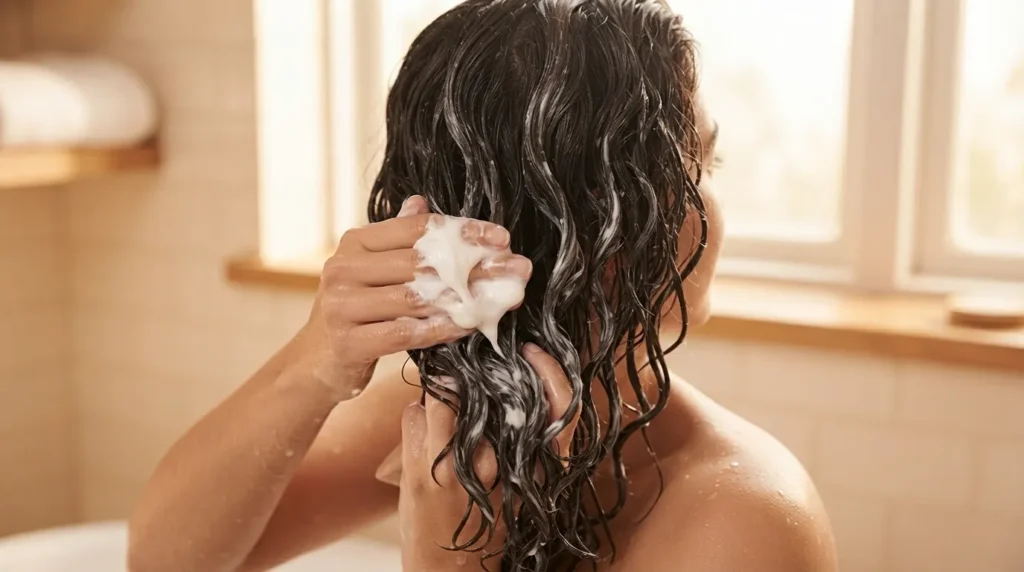
Styling 2C hair is about encouraging the natural wave pattern to clump, rather than fighting it into a different shape.
Scrunching and Plopping Techniques
Scrunching — gently squeezing sections of wet hair upward toward the scalp — is the single most effective technique for wave definition. Do this immediately after applying leave-in and curl cream, while the hair is still soaking wet.
Hair plopping (wrapping soaking-wet, product-coated hair in a microfiber towel or cotton T-shirt) removes excess water without disrupting clumps, and sets the wave pattern before it starts to dry. Leave it plopped for 10–20 minutes.
Practical scenario: Someone scrunches their product in but skips plopping, then air dries lying on a regular towel — the weight and friction from lying down often flattens one side of the head. Ten minutes of plopping before any other activity noticeably improves symmetry and definition.
Diffusing vs. Air Drying
Air drying is the lowest-maintenance option and works well for 2C hair with good natural clumping, though it can take one to three hours depending on thickness and climate.
A diffuser attached to a blow dryer speeds up drying time and adds volume at the root, which is especially useful for anyone whose 2C waves tend to fall flat on top. Use a low heat, low airflow setting and cup sections of hair into the diffuser bowl rather than moving it around, which disrupts clumps.
Adding Root Volume Without Weighing Down Waves
Root volume is a common challenge for 2C hair, especially with thicker or denser strands that pull the wave pattern down under its own weight. Clipping sections up at the root while drying, or flipping the head upside down for the first few minutes of diffusing, adds lift without extra product.
How to Manage Frizz in 2C Hair
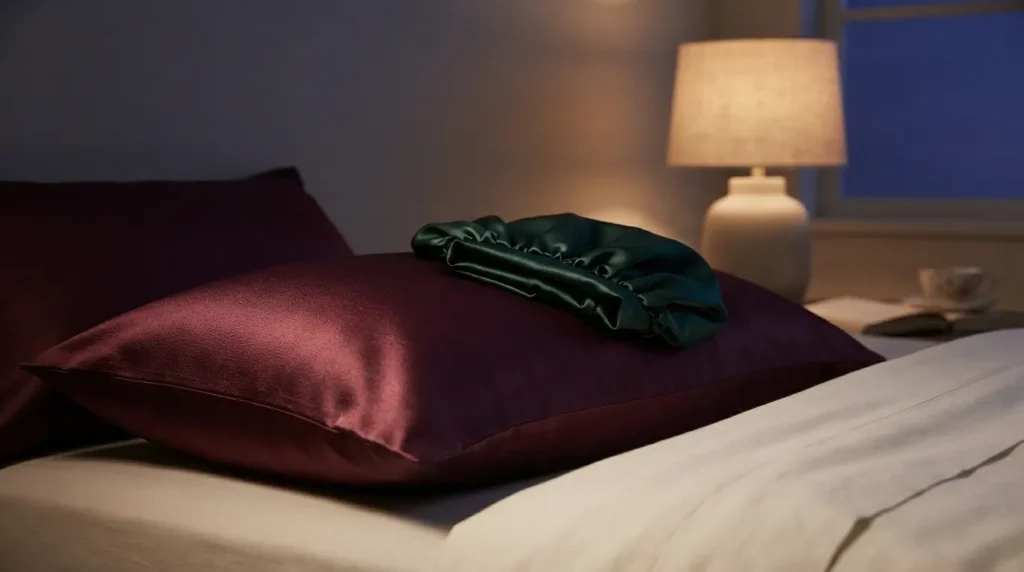
Frizz control is arguably the top concern searched alongside 2C hair, and it usually comes down to three factors: moisture, product weight, and friction.
Moisture-starved hair frizzes because the cuticle lifts to seek out humidity from the air. A consistent moisturizing routine — the shampoo, conditioner, and leave-in steps above — addresses this at the source rather than covering it up.
Smoothing the hair down with a lightweight gel or cream over the curl cream can lock the cuticle flat and reduce flyaways, particularly around the hairline and part.
Nighttime Frizz Prevention
Cotton pillowcases pull moisture out of hair and create friction overnight, undoing an entire day’s styling work. A satin bonnet or a silk pillowcase reduces that friction significantly and helps waves stay defined into day two or three.
Practical scenario: Someone with great wave definition on wash day wakes up the next morning with flattened, frizzy hair despite doing nothing differently — the culprit is almost always a cotton pillowcase. Switching to silk or satin, or sleeping in a loose pineapple with a scrunchie, usually solves it within a few nights.
2C Hair Care Products Quick-Reference Chart
| Step | Product Type | Purpose | Frequency |
|---|---|---|---|
| Cleanse | Moisturizing shampoo | Cleans without stripping oils | 2–3x/week |
| Cleanse (occasional) | Clarifying shampoo | Removes product buildup | Every 2–4 weeks |
| Condition | Rich, silicone-free conditioner | Softens and detangles | Every wash |
| Deep treat | Hair mask | Repairs and deeply hydrates | 1x/week |
| Prep | Leave-in conditioner | Locks in moisture pre-styling | Every wash day |
| Define | Curl/wave cream | Defines clumps, controls frizz | Every wash day |
| Seal | Lightweight hair oil | Adds shine, seals ends | Every wash day |
| Protect | Heat protectant | Shields hair from diffuser heat | Before heat styling |
| Overnight | Satin bonnet or silk pillowcase | Prevents friction and frizz | Nightly |
Frequently Asked Questions
How do I know if I have 2C hair?
2C hair forms visible S-shaped waves starting near the root, tends to be thick or coarse, and clumps into defined sections when wet with product, unlike looser 2A or 2B waves.
How often should I wash 2C hair?
Two to three times a week works for most people, with a clarifying wash every two to four weeks to clear product buildup.
What’s the best product for 2C hair frizz?
A combination of a moisturizing leave-in, a lightweight curl cream, and a silk pillowcase or satin bonnet addresses frizz from both the product and friction side.
Can 2C hair use curly girl method products?
Yes, but lighter formulas within that product category tend to work better, since heavier curl-specific products can be too rich for a looser wave pattern.
Should I diffuse or air dry 2C hair?
Both work — diffusing adds volume and speeds up drying, while air drying is lower maintenance. Many people alternate depending on their schedule and how flat their roots look that day.
Why does my 2C hair look great on wash day but frizzy the next?
This is almost always friction from a cotton pillowcase or lack of a protective overnight routine like pineappling or a bonnet.
Conclusion
2C hair rewards a routine built on balance — enough moisture to prevent frizz, light enough products to keep the wave pattern from collapsing under its own weight. Get the wash routine, product weight, and overnight protection right, and the waves you’re already growing will start doing most of the work themselves.
REad Next.
Pingback: Best Leave-In Conditioner for 2C Hair: Complete Guide
Pingback: How to Care for 2C Hair: Complete Guide