

2C Hair The Complete Care and Styling Guide
2C hair sits at the border between wavy and curly. It forms defined S-shaped waves that start further up the strand than 2A or 2B hair, giving it more body and a coarser texture even though it’s still technically a wave pattern rather than a curl.
If you’ve ever felt like your hair is “too wavy for straight-hair products but not curly enough for curl products,” that’s the 2C dilemma. This guide breaks down exactly how to identify, wash, style, and maintain 2C hair so your natural waves stay defined, hydrated, and frizz-free.
Whether you’re a DIYer building a wash-day routine at home or a stylist looking for a quick-reference resource for wavy-haired clients, this guide covers the full picture — from curl pattern basics to a weekly maintenance schedule.
What Is 2C Hair?
2C hair is the coarsest and most defined subtype in the “Type 2” wavy hair category, developed by Andre Walker’s hair typing system.
https://en.wikipedia.org/wiki/Hair_typing It forms tight, S-shaped waves that begin close to the root, often with some looser ringlets mixed in, especially near the ends.
Compared to 2A and 2B, 2C hair has more volume, more texture, and a higher tendency toward frizz. It behaves more like a curl pattern in terms of care needs, even though it doesn’t spiral into a full curl.
Signs You Have 2C Hair
You likely have 2C hair if:
- Your waves form a visible S-shape starting near the scalp, not just at the mid-lengths.
- Your hair has noticeable volume and body, even when damp.
- You get frizz easily, especially in humidity.
- Your strands feel thicker or coarser than typical “beachy wave” hair.
- Your hair tangles more than straight hair but doesn’t form true curls or ringlets.
A simple test: scrunch a damp section of hair and let it air dry without touching it. If it dries into a clear zig-zag or S-pattern with some frizz around the edges, you’re most likely a 2C.
2C Hair vs. 2B Hair vs. 3A Hair
Because wave and curl patterns exist on a spectrum, it helps to see 2C next to its closest neighbors.
| Type | Wave/Curl Shape | Root Volume | Frizz Tendency | Best For |
|---|---|---|---|---|
| 2B | Loose S-waves starting mid-shaft | Low to moderate | Moderate | Lightweight styling products |
| 2C | Defined S-waves starting near the root | Moderate to high | High | Curl creams and mousses |
| 3A | Loose, springy ringlets | High | High | Curl-specific routines with more moisture |
The key distinction between 2B and 2C is where the wave pattern starts: 2C waves begin higher up, closer to the scalp. The distinction between 2C and 3A is shape — 3A hair coils into a loop around itself, while 2C hair forms an S without a full loop. If you’re not sure which side of the line you fall on, our 2B hair care guide and 3A curly hair guide can help you confirm which routine fits best.
Common Problems With 2C Hair
2C hair sits in an awkward middle zone, which creates a few recurring issues:
- Frizz and flyaways, especially in humid weather or after brushing when dry.
- Weighed-down waves from products formulated for straight or fine hair.
- Undefined patches where waves flatten out, usually from friction or sleeping without protection.
- Dryness at the ends paired with an oilier scalp, since natural oils struggle to travel down a wavy strand.
- Product buildup from heavy creams, gels, or dry shampoo that isn’t rinsed out often enough.
Most of these problems trace back to one root cause: mismatched products. 2C hair needs enough moisture and hold to define the wave without the heaviness that collapses it.
Best Hair Care Routine for 2C Hair

A solid 2C hair care routine balances hydration, gentle cleansing, and lightweight styling. The goal is to clean the scalp without stripping the mid-lengths and ends, then lock in moisture before the hair dries.
Worked example: Sarah has medium-density 2C hair that looks great on wash day but goes flat and frizzy by day two. Her issue isn’t her wash routine — it’s that she’s skipping a leave-in conditioner and applying styling product to fully dry hair instead of soaking-wet hair, so nothing has a chance to lock in wave definition.
How Often Should You Wash 2C Hair?
Most people with 2C hair do best washing two to three times a week. Washing daily strips natural oils and increases frizz, while going too long between washes leads to product buildup and flattened waves.
Between washes, a light refresh with water or a diluted leave-in conditioner can revive waves without a full reset.
Best Shampoo for 2C Hair
Look for a sulfate-free shampoo that cleanses without stripping moisture.https://wwwhttps://www.aad.org/public/everyday-care/hair-scalp-care.aad.org/public/everyday-care/hair-scalp-care Sulfates can leave 2C hair dry, frizzy, and prone to breakage over time. For a shortlist of formulas that work well on wavy hair, see our best sulfate-free shampoos for wavy hair.
Once every few weeks, a clarifying shampoo helps remove buildup from styling products, especially gels and mousses that contain heavier polymers.
Best Conditioner for 2C Hair
A moisturizing conditioner should be a non-negotiable step. Look for ingredients like glycerin, shea butter, or fatty alcohols that add slip and hydration without weighing down the wave pattern.
Deep conditioning once a week, or every wash if hair feels dry, helps maintain elasticity and reduce breakage. Our deep conditioning guide walks through timing and technique in more detail.
Is Co-Washing Good for 2C Hair?
Co-washing — cleansing with conditioner instead of shampoo — works well for 2C hair that leans dry, since it avoids stripping oils. It’s not a full replacement for shampoo, though.
A good approach: co-wash between full shampoo sessions, and use a clarifying shampoo periodically to prevent buildup from accumulating.
How to Prevent Product Buildup
- Rotate in a clarifying shampoo every two to four weeks.
- Avoid layering too many heavy products in one wash-day routine.
- Rinse conditioner thoroughly — residue is a common, overlooked cause of buildup.
- Skip products with silicones that don’t wash out with water alone unless you’re already using a sulfate-free shampoo consistently.
Best Products and Ingredients for 2C Hair
The right products for 2C hair strike a balance: enough hold to define the S-wave, enough moisture to prevent frizz, and light enough weight that they don’t flatten the roots.
Choosing the Right Hair Products
| Product | Purpose | Look For |
|---|---|---|
| Leave-in conditioner | Daily hydration and detangling | Lightweight, water-based formulas |
| Curl cream | Wave definition and frizz control | Shea butter, glycerin |
| Styling mousse | Volume with light hold | Alcohol-free, lightweight |
| Hair gel | Stronger hold, cast for scrunching out | Flexible hold, non-flaking |
| Anti-frizz serum | Smooths flyaways | Lightweight silicones or plant oils |
| Heat protectant | Shields hair from diffuser or blow-dryer heat | Applied before any heat styling |
Layering a leave-in conditioner, then a curl cream, then a light gel — known as the “LOC” or “LCG” method — tends to work well for 2C hair because each layer adds a different kind of hold without excess weight.
Should You Use Hair Oil?
Hair oil can help 2C hair, but application matters more than the oil itself. Applying oil to soaking-wet hair before other products can seal in moisture. Applying it to dry hair, or using too much, often just weighs down the wave pattern.
Lightweight oils like argan or jojoba tend to work better for 2C hair than heavier oils like coconut, which can be more suited to coarser curl types.
How to Style 2C Hair
Description:
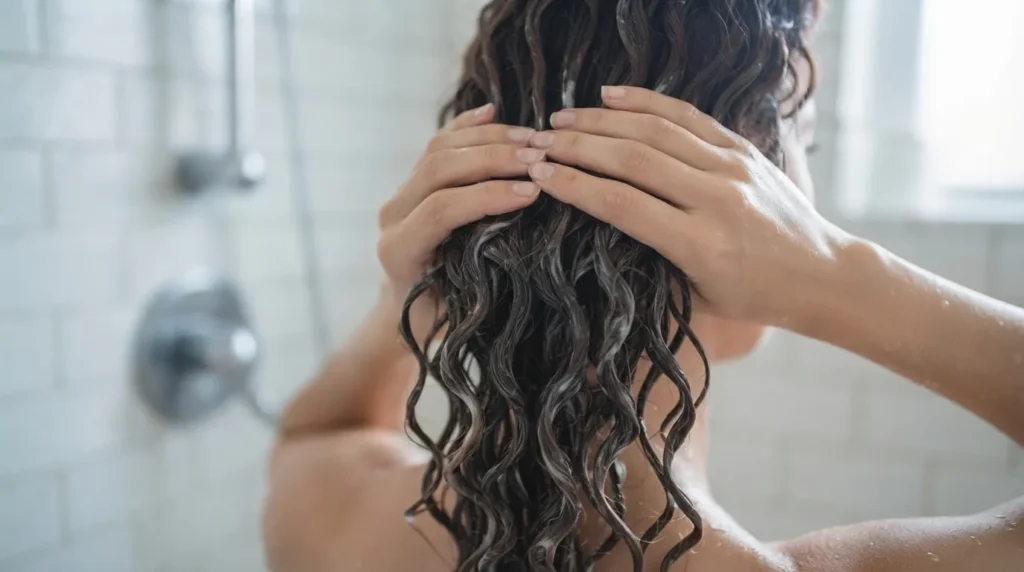
Styling 2C hair is about locking in the wave pattern while it’s wet and disturbing it as little as possible while it dries.
How to Apply Hair Products Correctly
Apply products to hair that’s still dripping wet, not just damp. Excess water helps distribute product evenly and activates the wave pattern rather than sitting on top of dry strands.
Work from the ends toward the roots in small sections, using a raking motion to distribute product without disrupting the natural S-shape.
How to Scrunch 2C Hair
Cup damp, product-covered sections of hair in your palm and gently push upward toward the scalp. This encourages the wave to clump and define rather than fall straight.
Repeat around the whole head, focusing extra attention on areas that tend to fall flat, like the crown.
How to Plop 2C Hair
Plopping means wrapping wet, product-covered hair in a microfiber towel or cotton T-shirt to encourage wave clumping while reducing frizz from regular towel friction.
Worked example: After applying leave-in conditioner and curl cream, flip your head forward, lay the hair into the center of a microfiber towel, and wrap the ends up and over to secure it. Leave it for 10–20 minutes before removing gently.
Air Dry vs. Diffuse 2C Hair
Air drying is gentler and better for hair prone to heat damage, but it takes longer and can lead to looser definition if the hair moves during drying. Diffusing speeds up dry time and can boost volume and hold, but requires a heat protectant to avoid dryness or frizz.
A middle-ground approach many 2C-haired people use: air dry to 70–80% dry, then finish with a diffuser on low heat to set the wave pattern without over-drying.
How to Reduce Frizz in 2C Hair
- Use an anti-frizz serum on dry hair for touch-ups.
- Swap cotton towels for a microfiber towel or T-shirt.
- Avoid touching hair while it dries — this is the single biggest frizz trigger.
- Keep products lightweight; heavy, drying formulas often increase frizz rather than reduce it.
How to Keep Waves Defined All Day
Once dry, avoid running fingers or brushes through the hair. If waves need a boost midday, rub a small amount of anti-frizz serum between palms and smooth over the surface without disturbing the clumped sections underneath.
Night Routine and Refresh Tips for 2C Hair
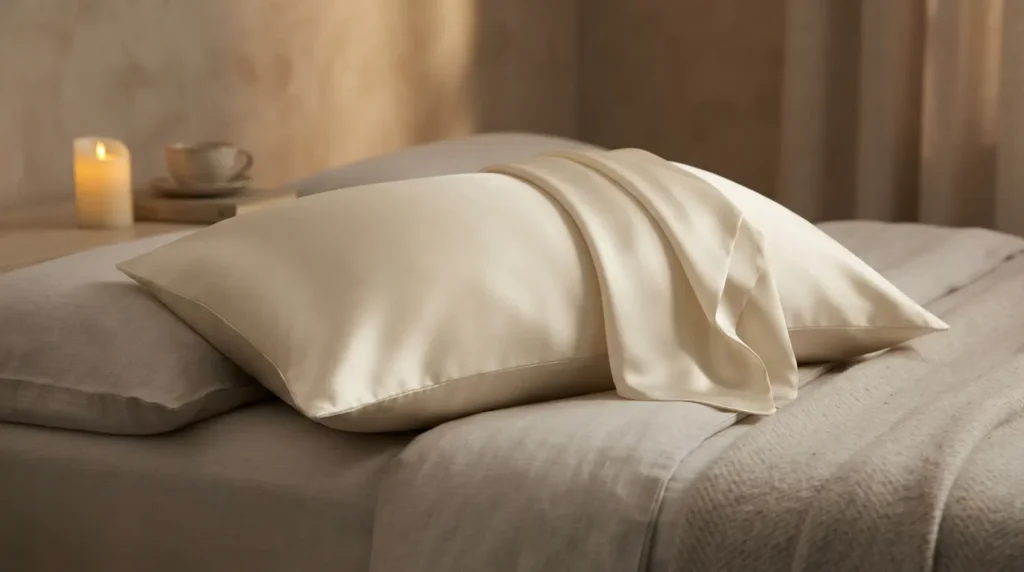
What happens overnight has a direct impact on how waves look the next day. Friction is the enemy of wave definition.
Best Sleeping Tips for 2C Hair
Sleep on a satin pillowcase, or wrap hair in a satin or silk scarf/bonnet. Cotton pillowcases absorb moisture and create friction that flattens waves and increases frizz overnight.
Loosely gathering hair into a “pineapple” — a high, loose bun at the crown — helps preserve root volume and wave shape while sleeping.
How to Refresh 2C Hair Between Wash Days
Lightly mist hair with water or a diluted leave-in conditioner, then scrunch gently to reactivate the wave pattern. Adding a small amount of curl cream or gel to particularly flat sections can restore definition without a full rewash.
Signs Your Hair Needs Moisture vs. Protein
2C hair damage often comes down to one of two imbalances, and treating the wrong one can make things worse.
| Signs of Moisture Deficiency | Signs of Protein Deficiency |
|---|---|
| Hair feels dry, straw-like, or rough | Hair feels mushy or overly stretchy when wet |
| Frizz increases even with styling product | Hair snaps rather than stretches when pulled gently |
| Waves look dull and lack bounce | Excessive shedding or breakage |
| Hair absorbs water quickly but dries out fast | Hair feels weak, even after conditioning |
If unsure, start with a deep conditioning treatment focused on moisture. Reach for a protein treatment only if breakage continues after moisture has been addressed — overusing protein on hair that doesn’t need it can leave 2C strands feeling stiff and brittle. Our protein vs. moisture guide has a full troubleshooting checklist if you’re still not sure which one your hair needs.
How Hair Porosity and Density Affect Your 2C Routine
Not all 2C hair behaves the same way, even within the same curl pattern. Hair porosity — how easily hair absorbs and retains moisture — and hair density both change how a routine should be built.https://www.healthline.com/health/protein-treatment-for-hair
Low porosity hair has tightly packed cuticles that resist moisture absorption. Products tend to sit on top of the strand rather than sink in, so lighter, water-based leave-ins applied to soaking-wet hair work better than heavy creams.
High porosity hair absorbs moisture quickly but loses it just as fast. This type benefits from richer leave-ins, regular deep conditioning, and a lightweight oil sealed over the top to slow moisture loss.
Density matters too. Fine hair with a 2C wave pattern can get weighed down easily, so mousse or gel in small amounts, applied mainly to the mid-lengths and ends, usually gives better root lift and volume than heavier curl creams. Thick, medium-density hair can typically handle more product and benefits from working in sections to make sure every strand gets coated evenly.
Worked example: Two people both have 2C hair, but one has fine, low-porosity strands and the other has thick, high-porosity strands. The first person gets the best results from a light mousse applied sparingly with a focus on root lift; the second needs a richer leave-in, a deep conditioning treatment weekly, and a sealing oil to prevent the moisture from evaporating as quickly. Not sure which category you fall into? Try the hair porosity float test before adjusting your routine.https://www.healthline.com/health/hair-porosity
Weekly Routine for Healthy 2C Hair
| Day | Routine Step |
|---|---|
| Day 1 | Shampoo (sulfate-free) + deep conditioning treatment |
| Day 2 | Refresh with water/leave-in, light scrunch |
| Day 3 | Co-wash or refresh, reapply light styling product |
| Day 4 | Refresh only, satin protection overnight |
| Day 5 | Shampoo + conditioner, standard styling routine |
| Day 6–7 | Refresh as needed, clarify if buildup appears |
Adjust frequency based on scalp oiliness, activity level, and climate — drier climates often allow for longer stretches between full washes.
Mistakes to Avoid With 2C Hair
Should You Brush 2C Hair?
Avoid brushing 2C hair when it’s dry — this breaks up wave clumps and creates frizz. Detangle instead with fingers or a wide-tooth comb on soaking-wet hair with conditioner applied, working from the ends up.
Common Styling Mistakes
- Applying product to hair that’s too dry, which prevents even distribution.
- Using heavy, oil-based products meant for coarser curl types, which weigh down 2C waves.
- Touching or “scrunching out the crunch” too early, before hair is fully dry.
- Skipping heat protectant before diffusing.
- Over-washing, which strips the moisture 2C hair depends on for definition.
FAQs About 2C Hair
What is 2C hair?
2C hair is a wavy hair type with defined S-shaped waves that start close to the root, sitting between looser 2B waves and springier 3A curls.
How often should you wash 2C hair?
Two to three times a week is typical, with light refreshes on non-wash days to maintain wave definition.
Can you wash 2C hair every day?
Daily washing usually strips natural oils and increases frizz. It’s better reserved for very oily scalps, and even then, a gentler co-wash is often a better fit.
Is co-washing good for 2C hair?
Yes, especially for drier 2C hair, though a clarifying shampoo should still be used periodically to prevent product buildup.
Should you use hair oil on 2C hair?
Lightweight oils applied to wet hair before styling products can help seal moisture, but heavier oils or dry-hair application often weigh waves down.
What’s the difference between 2B and 2C hair?
2C waves start higher up the strand, closer to the root, and tend to have more volume and frizz potential than 2B waves.
Key Takeaways for 2C Hair
2C hair thrives on a routine built around hydration, lightweight products, and minimal disruption while drying. Wash two to three times a week, apply products to soaking-wet hair, and protect waves overnight with satin and a loose pineapple.
Get the moisture-to-protein balance right, avoid brushing dry hair, and give your wave pattern time to set undisturbed — and frizz-free, well-defined 2C waves become a lot easier to maintain, wash after wash.
Read Next.
Pingback: How to Blow Dry 2C Hair Without Frizz: Complete Guide