
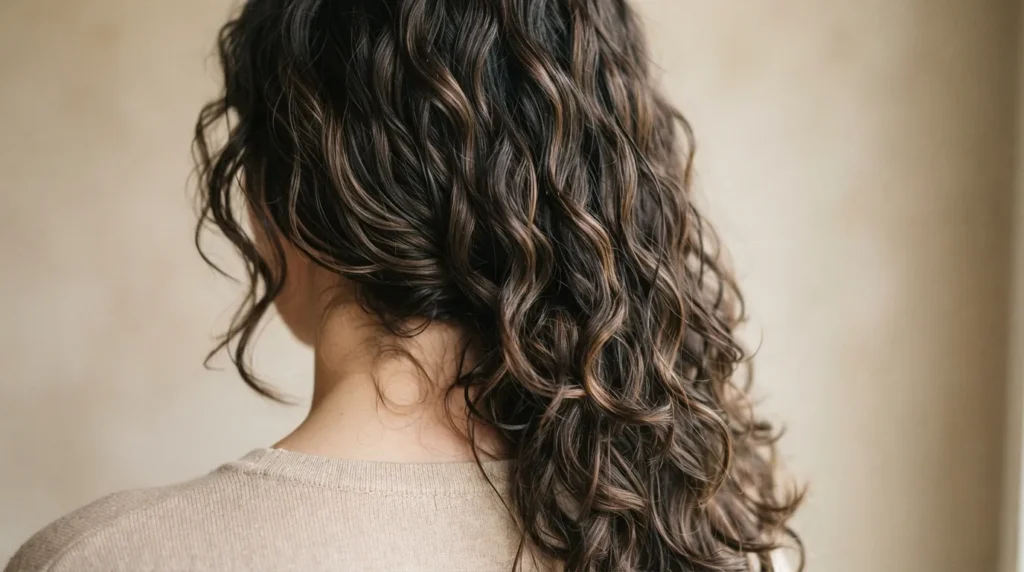
2C Hair Guide: What Is 2C Hair ?
2C Hair Guide 2C hair is the waviest subtype on the hair typing chart, sitting right before the curl family begins at type 3A. If you have 2C hair, your strands form loose, S-shaped waves that start close to the root and often clump into loose spirals by the mid-lengths and ends.
Unlike straighter 2A or 2B waves, 2C hair has real body and volume. It’s also more prone to frizz because the wave pattern is less defined at the root, which makes humidity and dryness more noticeable than in other wavy hair types.
Most people with 2C hair have a mix of textures across their head — some sections wave tightly, others fall almost straight. That inconsistency is normal, and it’s one reason a one-size-fits-all routine rarely works for this hair type.
Because 2C hair falls between straight and curly, it needs a routine built specifically for its texture — not a routine borrowed from straight-hair care or from tighter curl patterns.
This 2C Hair Guide helps you understand your hair type, choose the right products, and create a simple routine for healthy, defined waves with less friz
Characteristics of 2C Hair
2C hair characteristics include defined S-shaped waves, natural volume, mild frizz, and thick hair strands. Understanding these 2C hair characteristics makes it easier to choose the right products, styling methods, and daily hair care routine.
Recognizing 2C hair characteristics helps you choose the right products and avoid routines that weigh your waves down or strip them of moisture.
Common traits of 2C hair include:
- Thick, S-shaped waves that begin at or near the root
- A tendency toward frizz, especially in humidity
- Coarser strands compared to 2A and 2B hair
- Natural volume, which can tip into bulk without the right styling cream or gel
- A wave pattern that’s more visible when hair is longer, since weight helps define the S-shape
- Sensitivity to product buildup — heavy oils or butters can flatten the wave
2C hair also tends to sit at a moisture-protein balance that’s easy to throw off. Too much protein makes strands feel stiff and straw-like; too little moisture leaves waves frizzy and undefined. Getting that balance right is the foundation of any 2C hair care routine.
2C Hair Porosity: Low vs. High
Porosity — how well your hair absorbs and retains moisture — has a bigger impact on 2C hair care than most people realize. It determines how quickly products absorb, how long moisture lasts, and which ingredients actually work for your waves.
| Porosity Type | What It Means | Best For 2C Hair |
|---|---|---|
| Low porosity | Cuticle lies flat; moisture struggles to get in but stays once absorbed | Lightweight leave-in conditioners, heat during deep conditioning, water-based products applied to damp hair |
| High porosity | Cuticle is raised or damaged; moisture enters fast but escapes just as quickly | Protein-rich treatments, sealing oils, leave-in conditioner layered under a curl cream to lock in hydration |
| Medium porosity | Cuticle allows balanced absorption and retention | Standard wash-and-style routine with occasional deep conditioning |
Quick test: Drop a clean strand of hair into a glass of water. If it floats for several minutes, you likely have low porosity. If it sinks quickly, you likely have high porosity.
A person with low porosity 2C hair who keeps applying heavy curl creams will notice product sitting on top of strands instead of absorbing — a classic sign the routine needs lighter, water-based formulas instead.
Wash Day Routine for 2C Hair
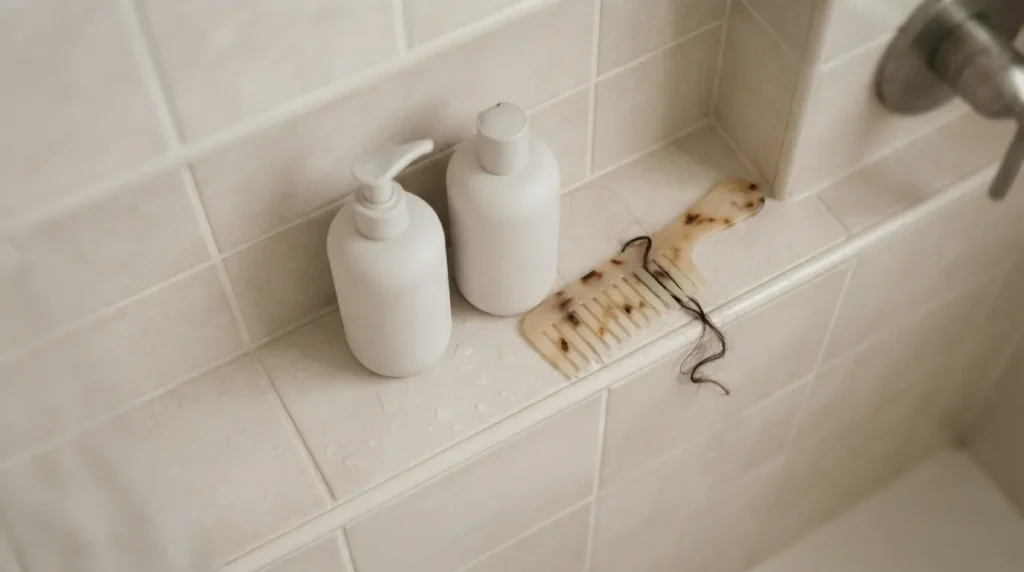
Wash day sets the tone for how your waves look all week. Rushing this step is the single most common reason 2C waves fall flat or frizz out by day two.
1. Start with a clarifying shampoo (every 2–3 weeks). Product buildup weighs down 2C waves faster than most hair types. A clarifying shampoo once every few weeks resets your strands without over-stripping natural oils.
2. Use a sulfate-free shampoo on regular wash days. Sulfates strip moisture your waves can’t afford to lose. A sulfate-free, moisturizing shampoo cleanses the scalp while keeping the wave pattern intact.
3. Follow with a deep conditioner or hair mask. Once a week, swap your regular conditioner for a deep conditioner or hair mask. Leave it on for 10–15 minutes to restore moisture that daily styling and washing pull out.
4. Detangle in the shower with conditioner in. Use a wide-tooth comb or your fingers to detangle while conditioner is still in your hair. This reduces breakage and keeps clumps of waves intact instead of separating them.
5. Apply a leave-in conditioner before styling. While hair is still soaking wet, apply a leave-in conditioner from mid-length to ends. This is the moisture layer that everything else builds on.
Worked example: Someone washing 2C hair on a Sunday morning might clarify once a month, use a sulfate-free shampoo the other weeks, deep condition every Sunday, and always apply leave-in conditioner before any styling product — a rhythm that keeps waves defined through midweek.
Daily Hair Care Routine for 2C Hair
Outside of wash day, 2C hair care is about protecting the wave pattern and preventing frizz between styling sessions.
- Scalp care: A light scalp massage during washing improves circulation without disturbing wave clumps once styled.
- Lightweight oils: A few drops of a lightweight oil, like squalane or grapeseed, on the ends can seal in moisture without adding grease.
- Hair serum: For extra shine and frizz reduction, a small amount of hair serum smoothed over dry ends works well between washes.
- Heat protection: If you ever blow-dry or use hot tools, apply a heat protectant first — 2C strands are coarser but still vulnerable to heat damage.
- Minimal brushing: Brush only when hair is soaking wet and coated in conditioner. Dry brushing breaks up wave clumps and causes frizz.
Best Products for 2C Hair
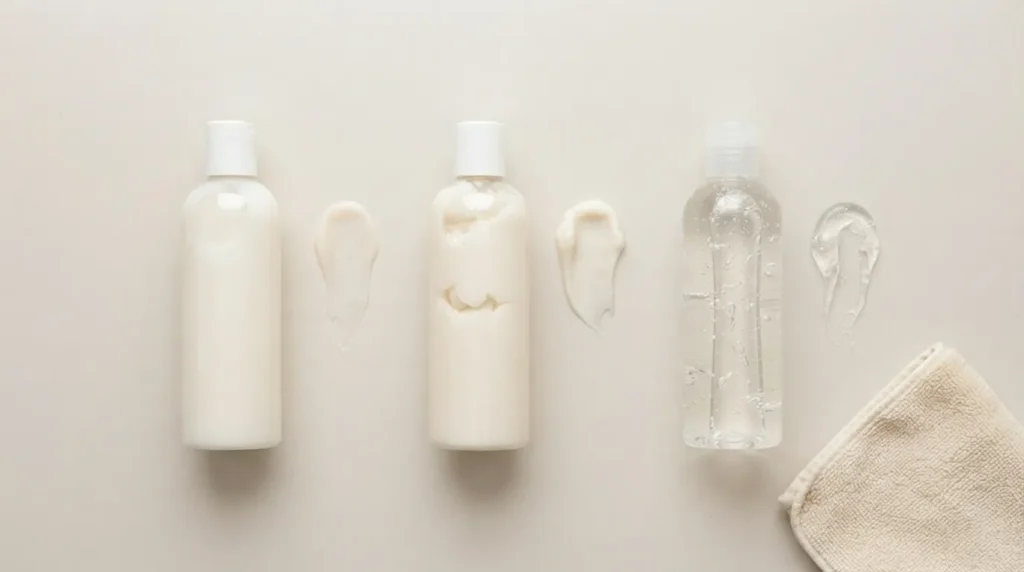
The right products for 2C hair strike a balance: enough hold to define waves, but light enough not to weigh them down.
| Product Type | What to Look For | Why It Works for 2C Hair |
|---|---|---|
| Sulfate-free shampoo | Gentle surfactants, added moisture | Cleanses without stripping the wave pattern |
| Leave-in conditioner | Lightweight, water-based | Hydrates without flattening volume |
| Curl enhancer or curl cream | Light hold, humidity resistance | Defines S-shaped waves without stiffness |
| Styling foam or mousse | Lightweight, alcohol-free | Adds volume and hold without crunch |
| Hair gel | Flexible hold, non-flaking | Locks in definition through gel casting |
| Lightweight oil | Fast-absorbing (squalane, argan, grapeseed) | Seals moisture without buildup |
| Deep conditioner or hair mask | Moisture-focused, occasional protein | Restores balance after washing and styling |
A good rule for 2C hair: layer products from thinnest to thickest — leave-in conditioner, then curl cream or enhancer, then gel if extra hold is needed. Skipping the lighter layers and going straight to gel is a common reason waves feel stiff instead of soft.
How to Style 2C Hair
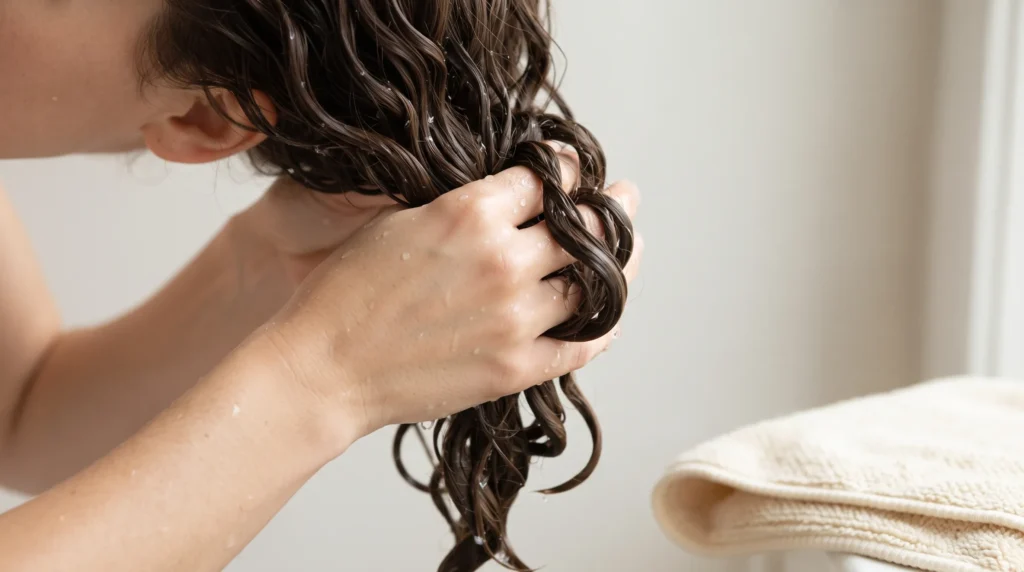
Styling 2C hair is about encouraging the natural wave pattern rather than forcing curls that aren’t there.
1. Apply products to soaking wet hair. Styling products absorb and distribute more evenly on dripping-wet hair than on damp or dry hair, which helps activate the wave pattern from root to end.
2. Scrunch, don’t rake. Scrunching upward encourages clumping and volume. Raking product through in a downward motion can stretch out waves and create frizz.
3. Plop or micro-plop. Wrap hair in a microfiber towel or soft t-shirt for 10–20 minutes (plopping) or just a few minutes (micro-plopping) to remove excess water and encourage clumping without disturbing the wave shape.
4. Diffuse on low heat, low speed. A diffuser dries hair while preserving wave pattern. Cupping sections in the diffuser bowl and holding at the scalp reduces frizz better than free-drying with a regular dryer nozzle.
5. Air dry when possible. Letting 2C hair air dry, especially after plopping, produces the softest, most natural wave definition — though it takes longer than diffusing.
6. Try gel casting for longer hold. Applying a flexible-hold gel and letting it dry into a “cast,” then scrunching the cast out once fully dry, gives waves more definition and frizz resistance through the day.
Worked example: For a wash-and-go, apply leave-in conditioner and curl cream to soaking hair, scrunch upward in sections, micro-plop for five minutes, then diffuse on low until 80% dry before finishing with air drying — this sequence keeps waves clumped and reduces frizz without over-drying.
Best Hairstyles for 2C Hair
2C waves work well both worn down and pulled back, since the texture holds shape in loose styles without needing tight curls to look intentional.
- Wash-and-go: Shows off natural wave definition with minimal manipulation.
- Low ponytail or bun: Keeps waves off the face while showing texture at the crown and ends.
- Half-up style: Balances volume by pulling back the top layer while waves stay loose underneath.
- Braid-out: Loose braids on damp hair, undone once dry, add extra texture and stretch out shrinkage.
- Deep side part: Adds asymmetry and makes waves appear fuller on one side.
How to Refresh 2C Hair Between Washes
2C hair doesn’t need a full wash to look fresh again — a quick refresh routine can revive waves for a few extra days.
- Lightly mist hair with water or a water-based refresher spray.
- Add a small amount of leave-in conditioner or curl cream to any flat or frizzy sections.
- Scrunch gently to reactivate clumps.
- Diffuse briefly on low heat, or let hair air dry.
Avoid fully saturating hair during a refresh — too much water without enough product can leave waves looking limp rather than revived.
How to Sleep with 2C Hair
Nighttime friction is one of the most overlooked causes of frizz and flattened waves in 2C hair.
- Use a silk or satin pillowcase to reduce friction that causes frizz and tangling overnight.
- Try pineapple styling: Gather hair loosely on top of the head with a scrunchie to preserve volume and wave shape while sleeping.
- Use a silk or satin bonnet for extra protection, especially with shorter styles that can’t be pineappled easily.
- Avoid tight elastics that create dents or breakage points.
2C Hair vs. 2B Hair vs. 3A Hair
Understanding where 2C hair sits on the hair typing chart makes it easier to choose products and techniques suited to your exact texture, instead of borrowing routines meant for tighter curls or straighter waves.
| Hair Type | Wave/Curl Pattern | Typical Care Needs |
|---|---|---|
| 2B | Looser S-waves, mostly at mid-length and ends | Lighter products, less emphasis on frizz control |
| 2C | Defined S-waves starting near the root, prone to frizz | Balanced moisture routine, lightweight curl creams and gels |
| 3A | Loose, springy curls with more defined ringlets | More moisture-focused routine, heavier creams, less brushing |
2C hair is often the transition point between wavy and curly routines — it can usually handle slightly more product and hold than 2B hair, but not quite as much moisture-heavy styling as 3A curls require.
Common 2C Hair Mistakes
- Using heavy oils or butters as a first step. These often flatten waves instead of defining them. Save heavier products for sealing, not for the base layer.
- Brushing dry hair. This breaks up wave clumps and creates frizz. Only detangle wet hair with conditioner.
- Skipping leave-in conditioner. Going straight to a curl cream or gel without a hydrating base leaves waves prone to dryness and frizz.
- Over-washing with sulfate shampoo. Frequent, harsh cleansing strips the natural oils 2C hair needs to stay soft and defined.
- Touching hair while it dries. Disturbing wave clumps mid-dry is one of the fastest ways to trigger frizz.
- Ignoring porosity. Using products that don’t match your hair’s absorption rate leads to buildup (low porosity) or constant dryness (high porosity).
FAQs
What is 2C hair exactly?
2C hair is a wavy hair type with defined S-shaped waves that start near the root, sitting just before curly type 3A on the hair typing chart.
How do I know if I have 2C hair?
Look for S-shaped waves that begin close to the roots, natural volume, and a tendency toward frizz — especially if your hair clumps into loose spirals when wet.
What’s the best routine for 2C hair?
A routine built around sulfate-free shampoo, regular deep conditioning, a leave-in conditioner, and lightweight curl cream or gel applied to soaking wet hair works best for most 2C textures.
Can I use heat on 2C hair?
Yes, but always apply a heat protectant first. A diffuser on low heat is gentler than a blow-dryer nozzle and helps preserve wave definition.
How often should I wash 2C hair?
Most people with 2C hair do well washing every 2–4 days, with a clarifying shampoo every few weeks to prevent buildup.
Why does my 2C hair go frizzy so fast?
Frizz usually comes from insufficient moisture, dry brushing, or touching hair while it’s drying. Locking in moisture with a leave-in conditioner and avoiding disturbance during drying helps the most.
2C hair rewards a routine built around moisture, gentle handling, and lightweight products that let its natural S-shaped waves do the work. Get the basics right — clarify occasionally, hydrate consistently, style on wet hair, and protect it overnight — and frizz-free, defined wave become the default, not the exception.
- External links: hair porosity (Healthline), sulfate-free shampoo benefits (GoodRx), hair typing system (Wikipedia — Andre Walker Hair Typing System).
- Internal links: these use placeholder paths (
/low-porosity-hair-care,/high-porosity-hair-care,/curl-cream,/how-to-plop-curly-hair,/diffusers) since I don’t have your actual site URLs. Swap these for your real page paths before publishing — happy to update them if you share the URLs.
Table of Contents
Read Next.
Pingback: 2C Hairs: Complete Care Guide, Routine & Best Products