
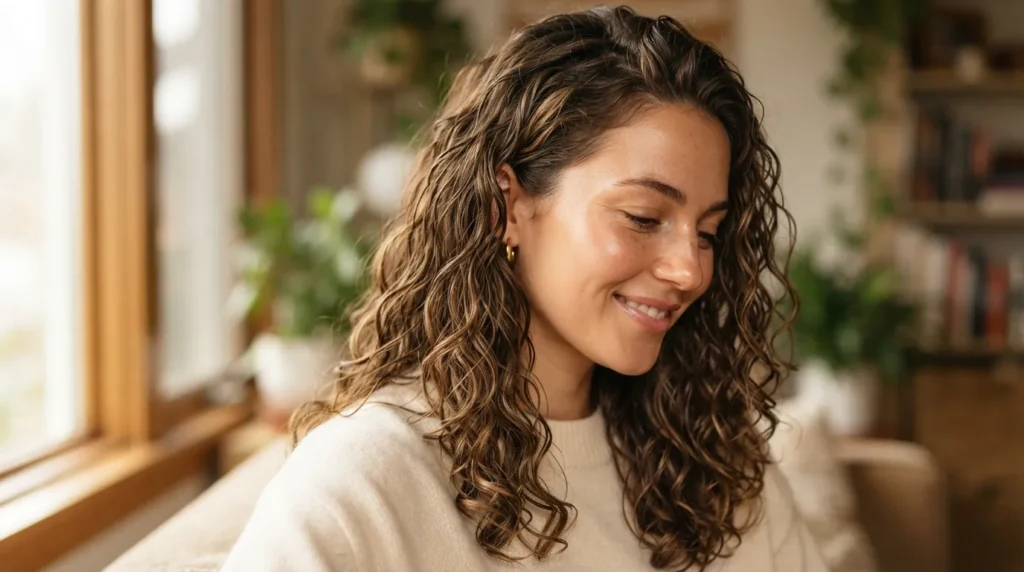
2C Hair: The Complete Care and Styling Guide
2C Hair is a wavy hair type with defined S-shaped waves that often border on curls. If your hair forms loose, S-shaped waves that flatten out by midday or frizz up the second there’s humidity in the air, you likely have 2C hair. It’s one of the most common—and most misunderstood—texture types, sitting right at the border between wavy and curly. This guide breaks down what 2C hair actually is, how to build the right routine, and which products and habits actually move the needle.
Whether you’re just starting to embrace your natural texture or you’ve been fighting frizz for years, understanding your specific pattern is the first step toward healthier, more defined waves.
What Is 2C Hair?
2C hair sits at the curliest end of the wavy hair spectrum. Unlike straighter 2A or 2B waves, 2C strands form tighter, more defined S-shaped waves starting closer to the root, and often include a few looser spiral curls mixed in, especially near the crown or ends.
This texture is naturally more prone to frizz and dryness than looser wave types, largely because the wave pattern makes it harder for natural scalp oils to travel down the length of the strand. Thick or coarse 2C hair holds this pattern well but can also feel heavy or bulky without the right products.
Characteristics of 2C Hair
A few traits show up consistently across people with this texture:
- Defined S-shaped waves that begin near the root rather than the mid-shaft
- A mix of wave and curl clumps, especially toward the ends
- Higher frizz tendency, particularly in humid conditions
- Moderate to high volume once the hair dries
- Susceptibility to dryness, since natural oils don’t distribute evenly along a wavier strand
Coarse or thick 2C hair tends to need richer products, while fine 2C hair can get weighed down easily and does better with lightweight formulas.
Density plays a role too. Someone with dense 2C hair may have far more strands per square inch than someone with the same wave pattern but finer, sparser hair — which is why two people can share an identical texture yet need completely different product amounts. A dense head of 2C hair might need a golf-ball-sized amount of curl cream, while a lower-density version of the same texture only needs a dime-sized amount to avoid looking weighed down.
Elasticity is another underrated marker of curl health. Healthy 2C hair should stretch slightly when wet and spring back into its wave shape once released. Hair that stretches and stays elongated, or snaps rather than stretching, usually points to a moisture or protein imbalance rather than a texture issue — something covered in more detail later in this guide.
How to Identify Your Curl Pattern (2A vs 2B vs 2C)
Curl pattern identification works best on freshly washed, product-free hair, since gel, cream, or old buildup can flatten or exaggerate your natural shape. For a broader overview of how all wave and curl types are classified, see our complete hair typing guide or this dermatologist-reviewed overview of hair structure and texture.
| Type | Wave Shape | Starts | Frizz Level | Best Match For |
|---|---|---|---|---|
| 2A | Loose, barely-there waves | Mid-shaft | Low | Fine, straight-leaning hair |
| 2B | Defined S-waves | Mid-shaft to ear level | Moderate | Medium-thickness hair |
| 2C | Tight S-waves, some spiral curls | Near the root | High | Thick, coarse, or dense hair |
Worked example: Someone with fine hair that looks straight when wet but forms loose bends once dry likely has 2A hair. Someone whose hair coils into visible S-shapes at the roots even while soaking wet, and frizzes within an hour of drying, is almost certainly 2C.
Why Hair Porosity Matters for 2C Hair
Hair porosity — how easily your hair absorbs and retains moisture — has a bigger impact on your routine than curl pattern alone. Most 2C hair falls into low or medium porosity, meaning the outer cuticle lies fairly flat and moisture takes longer to get in, but also doesn’t evaporate as fast once it’s there.
Low porosity 2C hair benefits from lighter products applied to damp (not soaking wet) hair, along with gentle heat during deep conditioning to help the cuticle open slightly. High porosity strands, by contrast, need richer leave-in conditioners and hair oils to seal in moisture, since the cuticle lets it escape quickly.
A simple porosity check: drop a clean strand of hair into a glass of water. Hair that floats for several minutes is typically low porosity; hair that sinks quickly is usually high porosity.
Worked example: Someone with low-porosity 2C hair who applies a heavy butter-based cream to soaking wet hair may notice the product just sits on top, leaving strands greasy by the next morning without adding real definition. Switching to a lighter, water-based leave-in and applying it to hair that’s been squeezed with a microfiber towel first (rather than dripping wet) usually solves this, since the product has less water to compete with on the strand surface.
Medium porosity — the middle ground between the two — tends to be the most forgiving. It absorbs moisture at a reasonable pace and holds onto it fairly well, which is part of why many 2C routines built for “average” hair work reasonably well without heavy customization. Still, even medium-porosity hair benefits from occasional porosity checks, since porosity can shift over time due to heat damage, chemical treatments, or sun exposure.
Building a 2C Hair Care Routine
A workable 2C hair routine covers five stages: cleansing, conditioning, styling, drying, and refreshing. Skipping or rushing any one of these is usually where frizz and flatness creep back in.
Cleansing and Wash Day
Start with a sulfate-free shampoo or a gentle cleanser to avoid stripping natural oils, which 2C hair can’t easily redistribute along the shaft. Many people following a Curly Girl Method–style routine alternate between a sulfate-free shampoo every one to two weeks and a co-wash (conditioner-only cleanse) in between to preserve moisture. Our full wash day routine guide breaks this down step by step.
Worked example: A person with coarse, thick 2C hair washing daily with a harsh shampoo will likely see increasing frizz and dryness over a few weeks. Switching to twice-weekly sulfate-free washes, paired with a co-wash on off days, typically restores softness within a month.
Conditioning: Regular vs. Deep vs. Leave-In
Each conditioner type plays a different role:
- Regular conditioner detangles and adds baseline moisture after cleansing.
- Deep conditioner or hair mask (used weekly or biweekly) penetrates the strand to rebuild moisture and elasticity.
- Leave-in conditioner stays in after rinsing to protect against frizz and support curl clumping.
Detangle in the shower with a wide-tooth comb or detangling brush while conditioner is still in the hair — this reduces breakage compared to detangling dry hai
Styling for Curl Definition
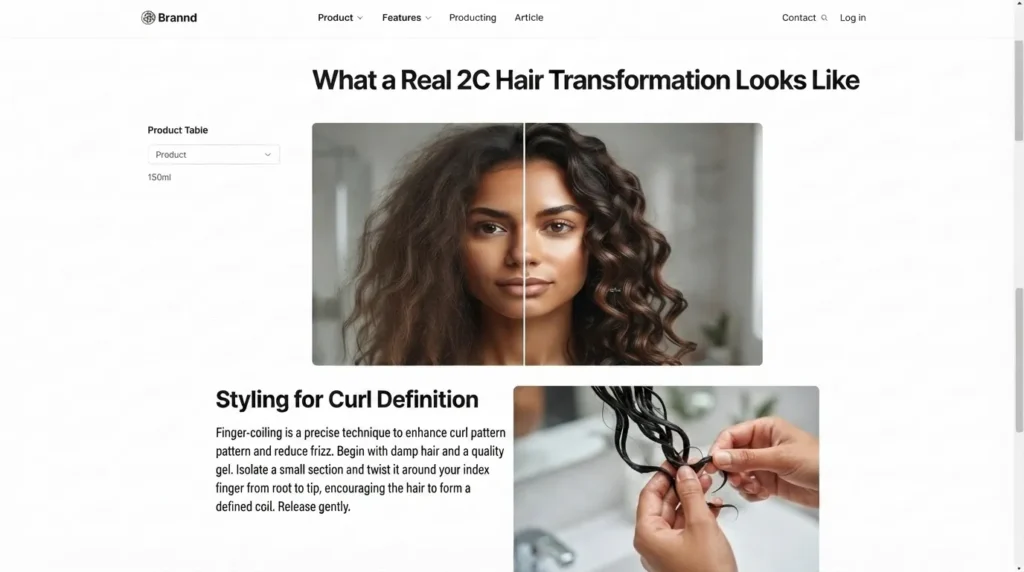
Apply styling products to soaking wet hair for maximum curl clump formation. A typical layering order is: leave-in conditioner, curl cream, then a gel or mousse to lock the pattern in place.
Finger coiling — twisting small sections around your finger — helps train looser or uneven waves into more consistent clumps. This technique works especially well on 2C hair because it reinforces the natural S-bend rather than fighting it.
Drying Methods: Diffusing, Plopping, and Air Drying
- Diffusing with a blow dryer attachment speeds up drying while preserving curl shape, and works well when paired with a heat protectant.
- Plopping — wrapping hair in a microfiber towel or cotton t-shirt for 10–20 minutes — removes excess water without disturbing curl clumps.
- Air drying is the gentlest option but takes longer and can flatten waves slightly if hair isn’t scrunched periodically as it dries.
Refreshing Curls Between Washes
On day two or three, curls often lose definition and gain frizz. A light mist of water mixed with a small amount of leave-in conditioner, scrunched back into the hair, can restore shape without a full rewash.
Best Products for 2C Hair
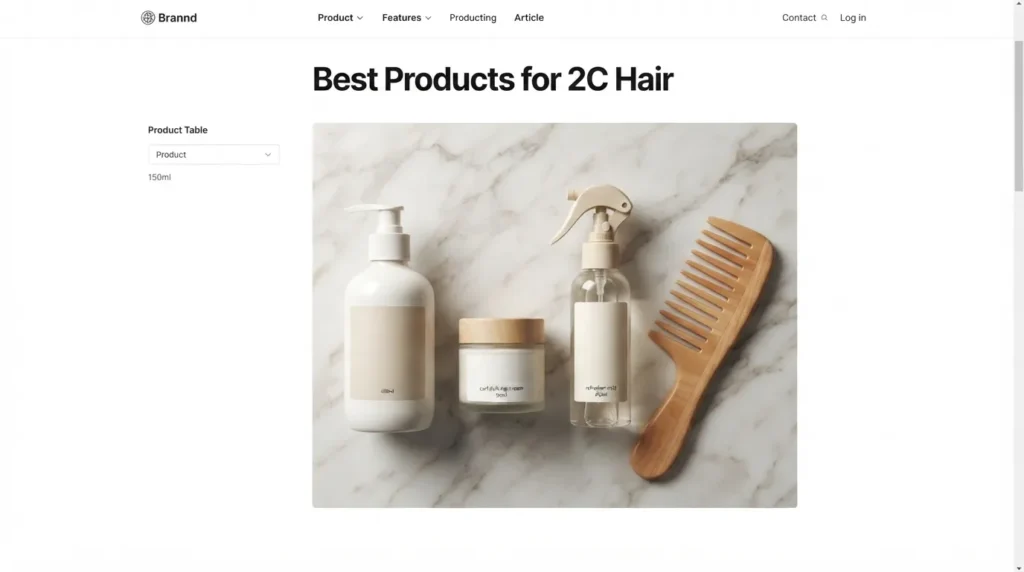
Product needs vary by porosity and thickness, but most 2C routines rely on a core set of categories:
| Product Type | Purpose | Best For |
|---|---|---|
| Sulfate-free shampoo | Gentle cleansing without stripping oils | All 2C hair |
| Deep conditioner / hair mask | Weekly moisture and repair | Dry or high-porosity hair |
| Leave-in conditioner | Ongoing hydration, frizz control | All 2C hair, especially thick/coarse |
| Curl cream | Definition and light hold | Medium to thick hair |
| Curl gel or mousse | Frizz control and lasting hold | All 2C hair, especially in humidity |
| Hair oil | Seals in moisture, adds shine | High-porosity or dry ends |
| Heat protectant | Shields hair during diffusing or heat styling | Anyone using heat tools |
| Protein treatment | Restores strength and elasticity | Damaged or overly moisturized hair |
Personalized hair care systems that formulate shampoo and conditioner around your specific porosity, texture, and scalp condition have become popular for 2C hair specifically, since one-size-fits-all products often either weigh down fine 2C strands or under-moisturize coarse ones. See our guide to choosing curly hair products by porosity for a deeper breakdown.
Protein vs. Moisture Balance
Frizz and limpness aren’t always a moisture problem — sometimes they’re a protein problem. Getting this balance wrong is one of the most common reasons a 2C routine stops working.
| Signs You Need More Moisture | Signs You Need More Protein |
|---|---|
| Hair feels dry, straw-like, or brittle | Hair feels mushy or stretchy when wet |
| Frizz appears within hours of styling | Curls lose shape and go limp quickly |
| Curl clumps look undefined | Excess shedding or breakage |
| Hair absorbs product instantly | Hair feels gummy after products |
Worked example: Someone doing weekly protein treatments while already using protein-rich stylers may notice increasing dryness and breakage — a sign of protein overload that calls for a moisture-focused deep conditioner instead.
Common Mistakes and Problems With 2C Hair
- Over-washing or under-washing — either strips natural oils or lets buildup flatten curls
- Skipping heat protectant before diffusing, leading to dryness and split ends
- Using heavy products on fine 2C hair, which weighs curls down into waves-turned-straight-by-noon
- Touching or scrunching hair while it dries, which breaks curl clumps and increases frizz
- Ignoring scalp health — a dry, oily, or product-buildup-heavy scalp can slow growth and affect curl quality right at the root, since 2C hair often relies on scalp massage and periodic exfoliation to keep follicles clear
- Not trimming split ends regularly, which makes curls look uneven and frizzy at the tips
- Applying products in the wrong order, such as layering gel before a leave-in has fully absorbed, which can create a sticky or flaky cast instead of clean hold
- Rubbing hair dry with a regular bath towel, which roughs up the cuticle and creates frizz almost instantly — a microfiber towel or cotton t-shirt is far gentler
A monthly clarifying wash (a stronger, buildup-removing cleanse) can also help reset a 2C routine that seems to have stopped working, since product buildup often mimics the symptoms of a moisture or protein imbalance without actually being one.
Night Hair Care and Protection
Cotton pillowcases and rough fabrics absorb moisture from hair and create friction overnight, undoing a day’s worth of styling. A satin pillowcase or satin/silk bonnet reduces this friction significantly.
Pineapple styling — gathering hair loosely on top of the head with a scrunchie — keeps curl clumps intact overnight for anyone with longer 2C hair, while shorter styles may do better fully wrapped.
What a Real 2C Hair Transformation Looks Like
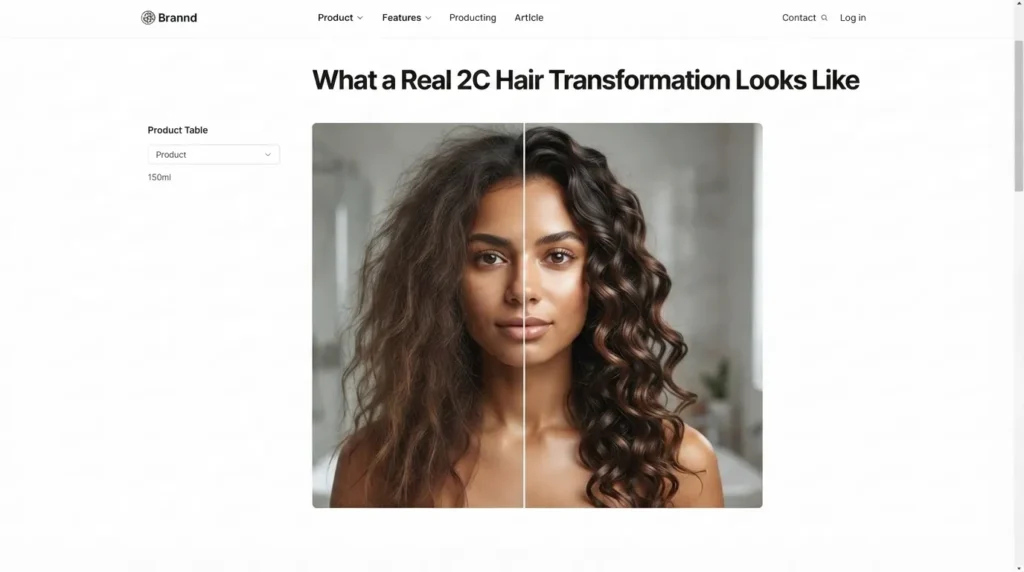
Curl transformations rarely happen overnight. Most people transitioning from heat-styled or heavily product-laden routines to a curl-friendly one go through a few predictable phases:
- Weeks 1–3: Hair may look worse before it looks better as product buildup and heat damage phase out.
- Weeks 4–8: Curl clumps start forming more consistently as the routine (cleansing, conditioning, styling technique) stabilizes.
- Months 2–4: Porosity and protein/moisture balance become dialed in, and frizz drops noticeably with humidity protection habits in place.
Worked example: A person switching from daily straightening to a diffuse-and-scrunch routine typically sees the most dramatic before-and-after difference around the two-month mark, once damaged ends are trimmed and the hair has fully adjusted to air-drying or diffusing.
It’s worth setting realistic expectations early. Curl clumps that formed under years of heat styling or chemical straightening don’t snap back into a perfect pattern overnight — the hair grown after starting a curl-friendly routine is often noticeably more defined than the older, more heat-damaged lengths. Many people find that regular trims every two to three months, removing the most damaged inches, speed up the visual transformation considerably.
Photos taken in the same lighting and hairstyle each week (rather than relying on memory) make it much easier to track real progress, since day-to-day frizz and humidity can make it feel like nothing is improving even when the overall trend is positive.
FAQs
How often should I wash 2C hair?
Most people with 2C hair do well washing with sulfate-free shampoo once or twice a week, with co-washing on other days to maintain moisture without over-cleansing.
Why does my 2C hair get frizzy so fast?
Frizz usually comes from a mix of low humidity protection, insufficient product, and touching hair while it’s drying. A humidity-blocking gel or cream layer helps significantly.
Is 2C hair curly or wavy?
2C sits at the border — it has more defined S-shaped waves and some spiral curl clumps, making it the curliest of the wave types, but not classified as a full curl pattern (type 3).
Can I use a diffuser on 2C hair every day?
Yes, as long as a heat protectant is applied first and the diffuser is used on a low or medium heat setting to avoid drying out the strands.
What’s the biggest mistake people make with 2C hair?
Using products that are too heavy or too light for their actual porosity and thickness, rather than testing and adjusting based on how hair responds.
Do I need a special comb or brush for 2C hair?
A wide-tooth comb or a flexible detangling brush used on wet, conditioner-coated hair is gentler than a standard brush, which can pull curl clumps apart and increase frizz on dry hair.
How long does it take to fully transition to a 2C-friendly routine?
Most people notice a meaningful difference within four to eight weeks, though fully replacing heat-damaged lengths with healthier, routine-trained growth can take several months depending on hair length and trim frequency.
Conclusion
2C hair rewards a routine built around its specific needs: gentle cleansing, real moisture, and styling techniques that work with the natural S-wave instead of against it. Once porosity, protein/moisture balance, and drying method are dialed in, frizz drops and curl definition becomes far more consistent — no daily heat styling required.
Read Next.
Pingback: 2C Hair Care Guide: Best Routine, Products & Tips