
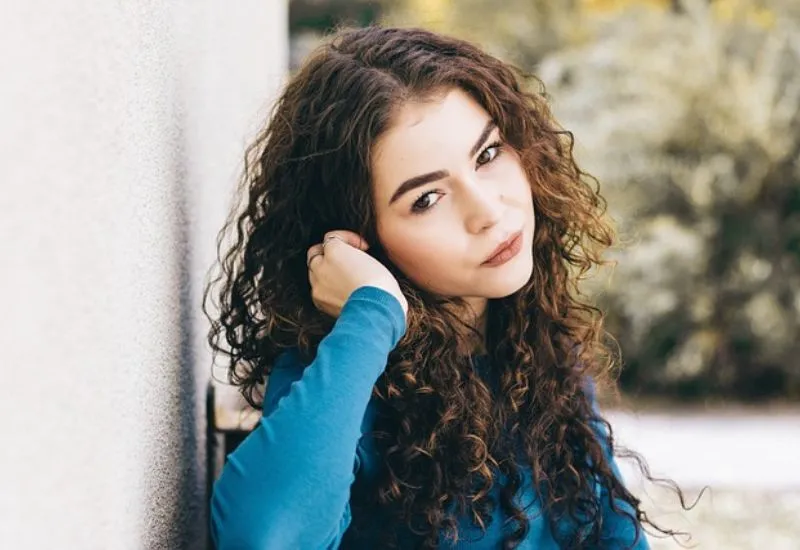
2C hair is the curliest subtype in the wavy hair category under the André Walker hair typing system, the classification chart most stylists and brands use to describe hair texture. It sits at the edge between wavy and curly, forming defined S-shaped waves that start close to the root rather than farther down the shaft.
Unlike straighter wave patterns, 2C hair has visible texture even when damp, and it often gets mistaken for loose curls. If you’ve ever wondered “is 2C hair curly or wavy?” — the honest answer is both. It shares traits with each category, which is exactly what makes it tricky to style.
Genetics determine your natural hair pattern, but factors like hair porosity, humidity, and product choice all affect how those waves show up day to day.
Table of Contents
2C Hair Characteristics and Texture
2C hair typically comes with a specific combination of traits that set it apart from 2A and 2B waves.
Core characteristics:
- Defined S-shaped waves, root-to-tip
- Medium to coarse strand diameter
- High density and noticeable volume
- Frizz-prone, especially in humidity
- Prone to dryness due to natural oils struggling to travel down the thicker shaft
- Some shrinkage when drying
Because the hair shaft is thicker, 2C hair often has more body but less shine than finer wave patterns. The hair cuticle sits slightly raised along the wave bends, which is part of why frizz control matters so much for this type.
Example scenario: Someone with fine 2B hair can often air-dry with minimal product. A person with 2C hair trying the same routine usually ends up with flat roots and frizzy ends — the extra density and coarseness need more structure and moisture to hold a clump.
How to Identify 2C Hair (Signs You Have 2C Hair)
To identify 2C hair, look at your strand pattern when it’s clean and product-free.
Signs you have 2C hair:
- Waves form an “S” shape starting near the scalp
- Hair feels thick or coarse to the touch
- You get frizz rather than smooth definition without product
- Hair looks wavy when wet, but can appear frizzier and less defined once fully dry
- Strands clump together somewhat, but not into full curls
If your waves only appear in the bottom half of your hair, you likely have 2A or 2B. If your pattern coils into a spiral rather than an S-bend, you’re probably closer to 3A.
2C Hair vs Other Hair Types
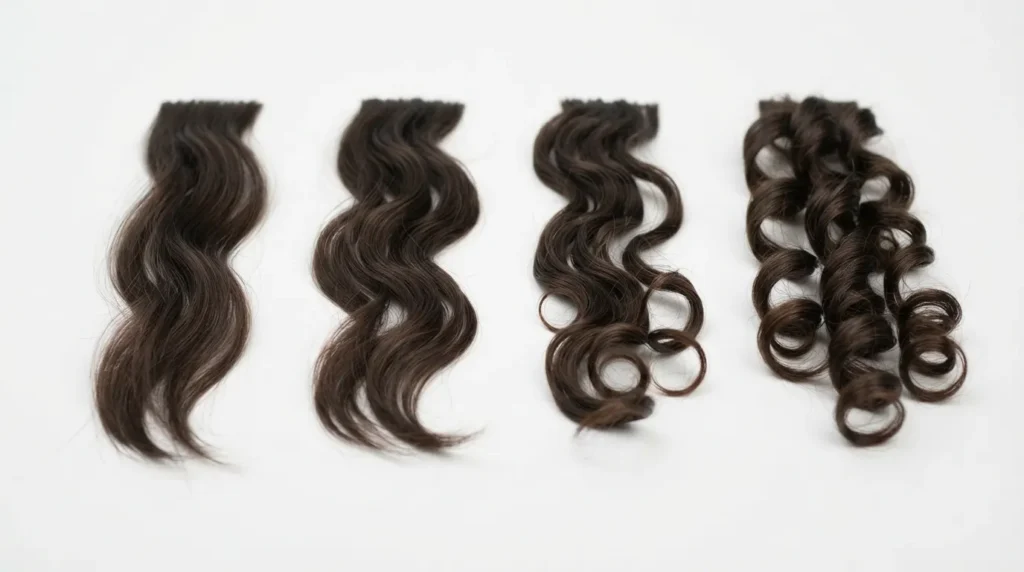
Comparing hair types side by side makes classification much easier.
| Hair Type | Wave/Curl Shape | Root Pattern | Frizz Level | Density |
|---|---|---|---|---|
| 2A | Slight S-bend | Straight at root | Low | Fine |
| 2B | Defined S-waves | Straight at root | Medium | Fine-medium |
| 2C | Strong S-waves | Wavy at root | High | Medium-coarse |
| 3A | Loose spiral curls | Curls at root | Medium-high | Medium |
2A vs 2C Hair
2A hair is fine and only slightly wavy, often falling flat without help. 2C hair is thicker, more textured, and holds its pattern from the root.
2B vs 2C Hair
2B waves are defined but usually start midway down the hair shaft. 2C hair’s waves begin right at the root, giving it more consistent texture throughout.
2C vs 3A Hair
2C hair forms waves; 3A hair forms actual ringlet curls. The dividing line is whether the strand makes a full loop (curl) or just a bend (wave).
Common Problems With 2C Hair
2C hair is rewarding but comes with recurring challenges:
- Frizz — the most common complaint, caused by raised cuticles and humidity
- Dry ends — natural oils rarely reach past the mid-shaft on thicker hair
- Flat roots — the weight of the wave pattern can pull roots down
- Tangles — density plus texture means strands catch on each other easily
- Loss of definition — waves can loosen or “fall” by midday
- Product buildup — heavier products sit on the cuticle instead of absorbing
Example scenario: A 2C-haired person using a heavy, silicone-rich conditioner may notice their waves look sleek on wash day but increasingly flat and greasy-looking by day two — a classic sign of buildup rather than actual oil production.
Best Hair Care Routine for 2C Hair
A consistent wash day routine is the foundation for defined, healthy waves.
Step-by-step routine:
- Clarify every 2–3 weeks to remove buildup
- Shampoo with a sulfate-free formula 2–3 times per week
- Condition every wash; deep condition weekly
- Detangle with a wide-tooth comb on soaked, conditioner-coated hair
- Apply leave-in conditioner while hair is still dripping
- Layer styling products (see next section) before any drying method
- Dry using diffusing or plopping, not rough towel-drying
Moisture Balance
2C hair generally needs more moisture than protein. Overusing protein treatments can leave waves feeling stiff and brittle — reserve protein treatments for hair showing signs of damage or high porosity.
Best Products for 2C Hair
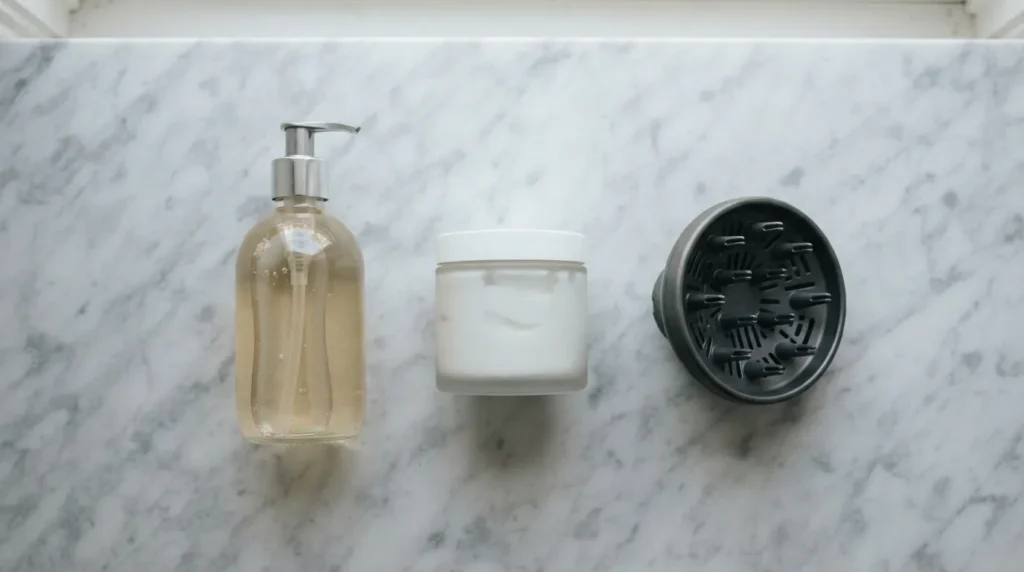
| Product | Purpose | Look For |
|---|---|---|
| Sulfate-free shampoo | Cleanses without stripping | Gentle surfactants |
| Leave-in conditioner | Daily moisture | Lightweight, water-based |
| Curl cream | Definition + frizz control | Glycerin, aloe vera |
| Styling gel | Hold + clump control | Flexible, non-flaking hold |
| Mousse | Volume + light hold | Alcohol-free formulas |
| Hair oil | Seals moisture | Argan, jojoba (light oils) |
| Heat protectant | Shields from diffuser heat | Silicone-light formulas |
Avoid heavy butters and thick oils applied at the root — they weigh down 2C’s natural volume and contribute to flat roots.
Ingredients That Work Best
Beneficial ingredients:
- Aloe vera — lightweight hydration
- Glycerin — humectant that draws in moisture (best in low-humidity climates)
- Argan oil / jojoba oil — lightweight sealants
- Shea butter — in small amounts, for very dry ends
- Hydrolyzed protein / keratin — occasional strengthening, not daily use
Ingredients to limit:
- Heavy oils (coconut oil in large amounts can weigh hair down pre-wash)
- Sulfates — overly stripping for wavy textures
- Drying alcohols (like isopropyl alcohol) in gels and mousses
- Silicones — fine occasionally, but buildup-prone with frequent use
How to Style 2C Hair
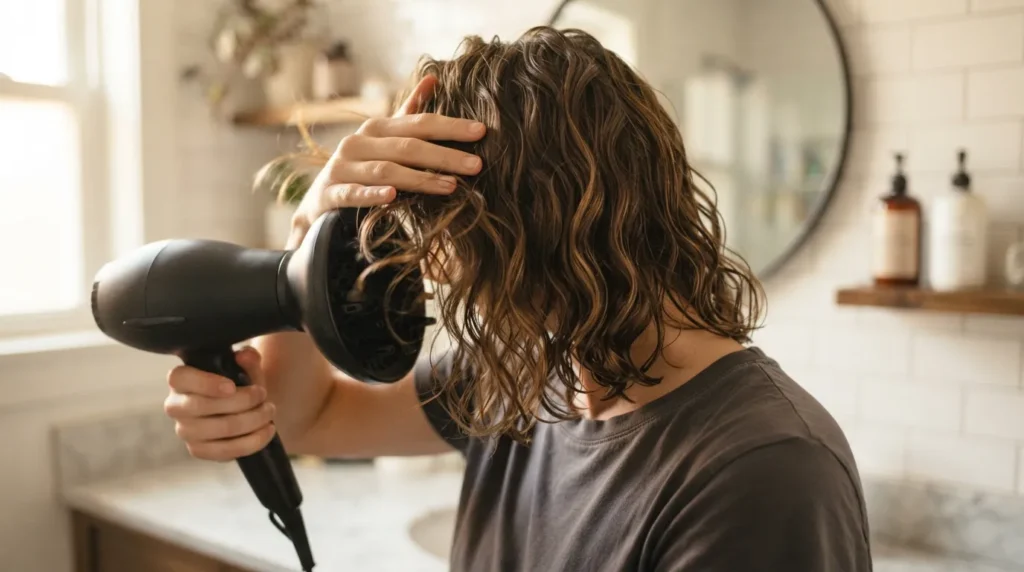
Styling technique matters as much as product choice for 2C waves.
Air Drying: Apply product to soaking-wet hair, scrunch upward, and let waves form naturally. Slowest method but lowest frizz risk.
Diffusing: Use low heat and a diffuser attachment, cupping sections toward the scalp to encourage root lift and curl clumping.
Plopping: Wrap product-coated hair in a microfiber towel or cotton t-shirt for 10–20 minutes to enhance wave definition before diffusing or air drying.
Scrunching: Use an upward motion with product to encourage clumping and reduce frizz.
Finger Coiling: Twist small sections around a finger while wet for extra defined pieces, especially around the face.
Example scenario: Someone rushing out the door with wet 2C hair and no product will likely end up with frizzy, undefined strands by the time it dries. Ten extra minutes applying leave-in and gel before diffusing produces dramatically better wave clumping.
How to Reduce Frizz and Boost Definition
- Apply products to soaking-wet hair, not damp hair
- Use the “praying hands” method to smooth product through sections
- Sleep on a silk pillowcase or use a satin bonnet
- Refresh waves with a water-and-leave-in mix instead of re-wetting fully
- Avoid touching or restyling hair once it’s drying — this breaks up clumps and causes frizz
Best Haircuts for 2C Hair
| Haircut | Why It Works |
|---|---|
| Long layers | Removes bulk without cutting wave pattern |
| Butterfly cut | Adds movement while keeping length |
| Wolf cut | Textured layers enhance natural wave shape |
| Curtain bangs | Blend naturally into face-framing waves |
| Face-framing layers | Prevent triangle-shaped silhouette |
Avoid one-length blunt cuts — they can make thick 2C hair look heavier and less defined.
Best Hairstyles for 2C Hair
- Wash and go — showcases natural texture with minimal manipulation
- Half-up style — reduces frizz from hair rubbing against clothing
- Beach waves — enhances the natural S-pattern with minimal heat
- Low bun or loose bun — protective option for humid days
- Braids — great for overnight wave setting or protective styling
Do’s and Don’ts
Do’s:
- Apply product to dripping-wet hair
- Clarify regularly to prevent buildup
- Use a diffuser on low heat
- Sleep on silk or satin
Don’ts:
- Don’t brush dry 2C hair — it destroys clumping
- Don’t skip leave-in conditioner
- Don’t overuse heavy oils at the roots
- Don’t over-process with frequent protein treatments
Frequently Asked Questions
Can 2C hair become curly?
Hair pattern is largely genetic, but with the right technique — like finger coiling and diffusing — 2C waves can look more clumped and curl-like, even if the underlying pattern doesn’t change.
How often should you wash 2C hair?
Most people with 2C hair do best washing 2–3 times per week, using co-washing or refresh sprays between full washes.
Is 2C hair high porosity?
Not necessarily — porosity varies by individual and depends more on cuticle condition than hair type. Many with 2C hair have medium porosity, but heat or chemical damage can raise it.
Can 2C hair be straightened?
Yes, with a heat protectant and moderate heat settings, though frequent straightening can loosen the natural wave pattern over time.
Is 2C hair rare?
It’s less common than straighter wave types like 2A, largely because it requires a specific combination of density and wave shape.
Why is my 2C hair frizzy?
Frizz usually comes from dryness, product applied to hair that’s too dry, or disrupting the wave pattern by touching hair while it dries.
Why does my hair lose its waves?
Waves loosen from lack of moisture, product buildup, or using products too heavy or too light for your specific density.
Conclusion
2C hair rewards a routine built around moisture, gentle handling, and the right lightweight products. Get the basics right — proper cleansing, wet styling, and low-heat drying — and those root-to-tip waves will show up consistently, not just on good hair
Pingback: How to Care for 2C Hair: Complete Guide