
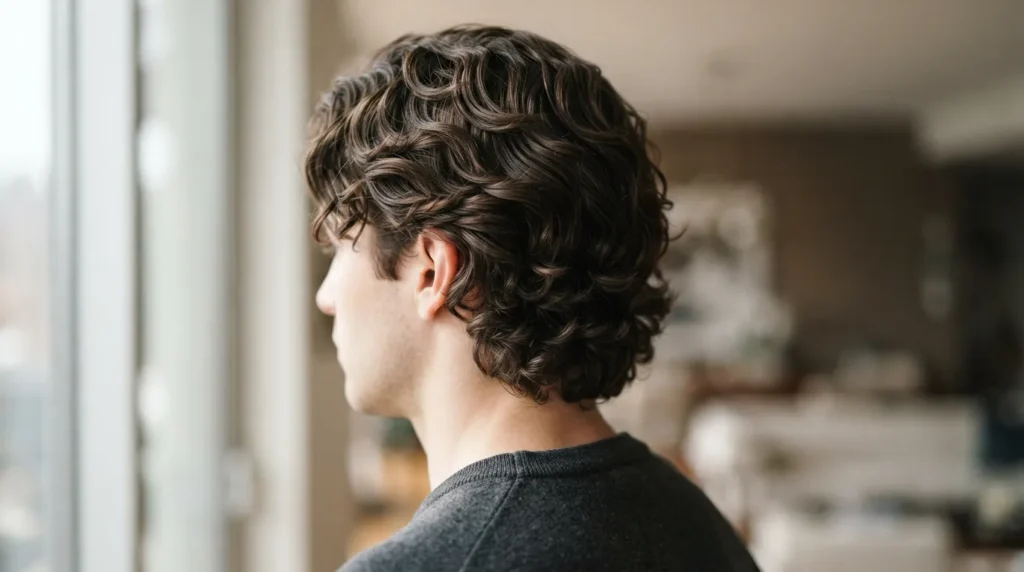
What Is 2C Hair for Men?
2C Hair Men often have thick, defined S-shaped waves that need the right care routine. This guide explains how to identify 2C hair, choose the best products, reduce frizz, and style natural waves for a healthy look 2C hair is the coarsest, most defined subtype of wavy hair on the standard hair typing chart. For men, this means natural waves that form a clear S-shape close to the root, often with enough body to be mistaken for loose curls.
Men with 2C hair usually notice their texture is thicker and more resistant to lying flat than 2A or 2B waves. It also carries more volume, which is a strength when styled correctly and a challenge when left unmanaged — especially in humid weather or after a haircut that doesn’t work with the natural wave pattern.
Men’s wavy hair in the 2C range tends to respond well to lightweight, moisture-focused products rather than the heavy pomades or gels marketed for straight or thick, coarse hair. Getting the routine right is less about taming the wave and more about supporting the pattern that’s already there.
How to Identify 2C Hair
Signs You Have 2C Hair
Wash your hair, skip all product, and let it air dry without touching it. Look for these markers:
- Distinct S-shaped waves that start near the root, not just at the ends
- Coarse to medium strand thickness with noticeable volume
- A texture that looks close to curly in humid conditions or under diffused drying
- Frizz that shows up first at the crown and part line
- Waves that hold shape without a full ringlet or spiral formation
If your waves only appear at the mid-lengths with a straighter root, you’re more likely 2A or 2B. If sections form a complete loop or spring shape, that leans into 3A territory instead.
Hair Density and Porosity
Density and porosity both shape how a 2C routine should be built, and they matter as much as the wave pattern itself.
Density refers to how many strands grow per square inch. A thick ponytail at the crown points to high density, which is common alongside 2C waves and usually means more product is needed to reach every strand evenly.
Porosity determines how well hair absorbs and holds moisture. Drop a clean strand in a glass of water — if it floats, porosity is low and lightweight products work best; if it sinks quickly, porosity is high and richer, sealing products help retain hydration longer.
2C Hair vs 2B vs 3A Hair
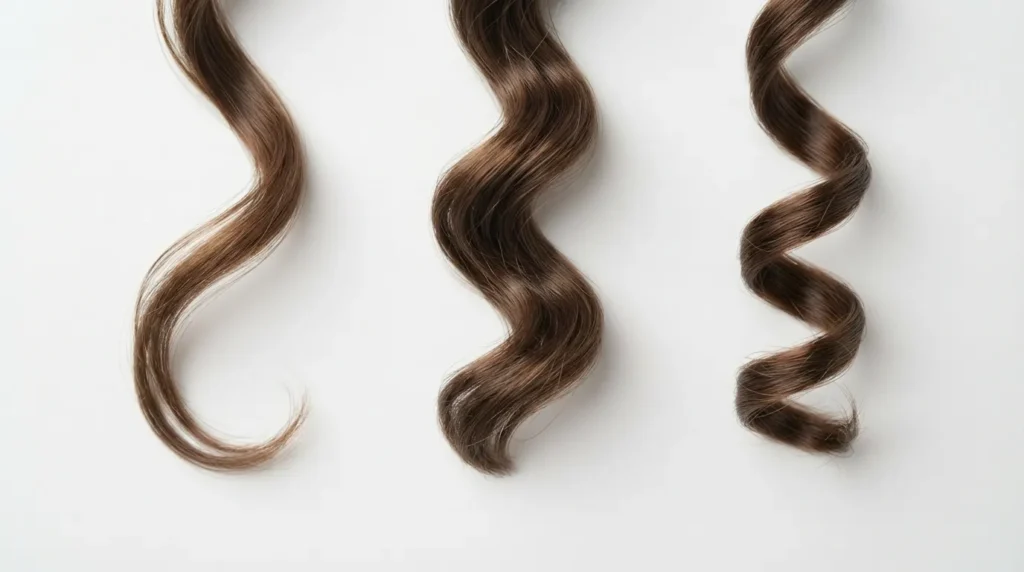
| Feature | 2B Hair | 2C Hair | 3A Hair |
|---|---|---|---|
| Wave/curl shape | Loose S-wave, mid-length down | Defined S-wave, root to tip | Full ringlet |
| Strand thickness | Fine to medium | Medium to coarse | Medium to coarse |
| Volume | Low to moderate | High | High |
| Frizz risk | Moderate | High in humidity | Moderate, humidity-driven |
| Product needs | Light styling cream | Lightweight, moisture-focused | Curl cream, heavier hold |
This comparison matters because a routine built for 2B hair often under-delivers on a 2C head, while 3A-focused products can weigh 2C waves down instead of defining them.
Common Problems With 2C Hair
Frizz at the crown. This is the most common complaint among men with 2C hair, driven by humidity and touching hair while it dries. An anti-frizz leave-in applied to damp hair, left undisturbed until fully dry, solves most of this.
Flat roots under volume. Product buildup or heavy pomade can crush root lift. Switching to a lightweight mousse or sea salt spray applied only at the roots restores volume without weighing down the rest of the wave.
Waves that look “in-between.” Some men feel their texture doesn’t read as clearly wavy or curly. This is normal for 2C hair — it sits at the edge of the wave spectrum, and technique (not a different product line) is usually what sharpens the definition.
Dryness at the ends. Coarser waves make it harder for scalp oils to travel down the hair shaft. A weekly hair mask targeted at the mid-lengths and ends prevents the brittle, frizzy look that shows up first there.
Best Hair Care Routine for 2C Hair Men
Worked example: James has thick 2C waves that go flat by midday and frizz at the temples by evening. He switches from a daily sulfate shampoo to washing every other day, applies a lightweight leave-in on damp hair, and diffuses on low heat instead of air drying — within two weeks his waves hold shape through a full workday.
How Often Should You Wash 2C Hair?
Washing every 2–3 days is typically enough for 2C hair. Daily washing with a sulfate shampoo strips the natural oils that 2C hair needs to fight frizz and hold wave definition.
On non-wash days, a light rinse or co-wash keeps the scalp balanced without disturbing the natural moisture that supports curl definition.
Best Shampoo and Conditioner for 2C Hair
A sulfate-free shampoo cleanses the scalp without over-drying the lengths — this single swap resolves a large share of the frizz and dryness complaints tied to 2C hair. Look for one built for wavy or curly textures rather than general men’s grooming lines.
Conditioner should focus on the mid-lengths and ends, where 2C hair dries out fastest. A silicone-light or silicone-free formula avoids buildup that can flatten wave pattern over repeated washes.
Should You Use a Leave-In Conditioner?
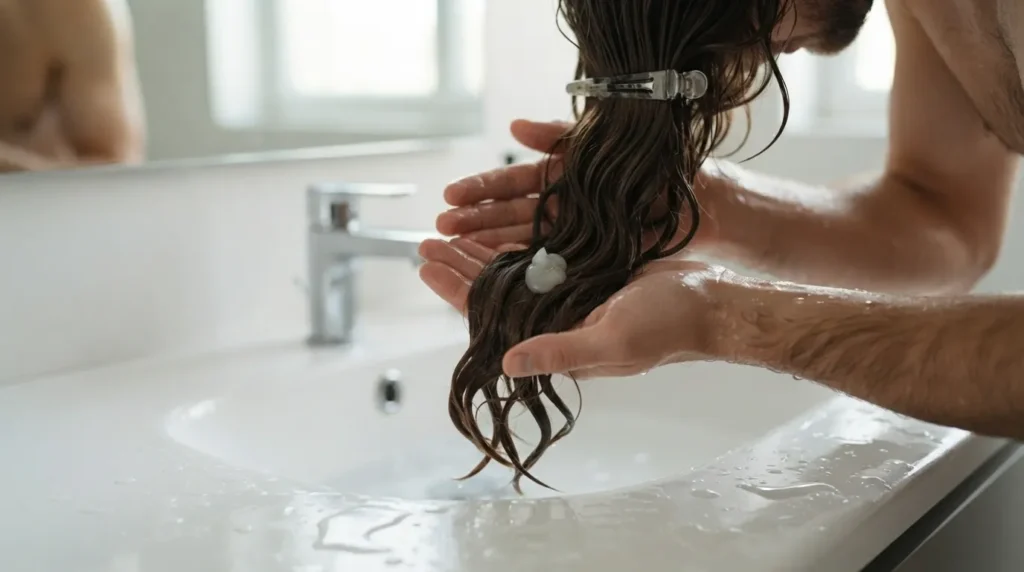
Yes, almost universally for 2C hair. Leave-in conditioner applied to soaking wet hair gives the wave pattern the moisture base it needs before any styling product goes on top, and it reduces reliance on heavier gels later in the routine.
How to Dry 2C Hair Properly
Diffuser drying on low heat and low speed gives the most consistent results, cupping sections toward the scalp instead of moving the dryer around. This lifts root volume while letting the wave pattern set without frizzing.
Air drying works too, but only if hair is scrunched with product while still wet and then left untouched — touching hair mid-dry is one of the fastest ways to break wave definition.
Best Products for 2C Hair Men
- Sulfate-free shampoo — cleans without stripping natural oils
- Lightweight leave-in conditioner — moisture base before styling
- Sea salt spray — adds texture and enhances natural wave pattern
- Curl cream or light styling gel — defines waves without stiffness
- Microfiber towel — reduces frizz during drying compared to cotton towels
- Weekly hair mask — deeper hydration for coarse, wave-prone dryness
Avoid heavy pomades, waxes, and high-alcohol gels — they weigh down 2C waves and dry out strands that are already prone to frizz.
How to Style 2C Hair
How to Reduce Frizz
Apply leave-in conditioner and styling product to soaking wet hair, not damp or dry hair — this is the single biggest factor in frizz control for 2C waves. Scrunch upward from the ends, then leave hair alone until fully dry.
An anti-humidity spray or light gel cast adds a protective layer on high-humidity days without adding heaviness.
How to Define Natural Waves
Finger coiling small sections while product is still wet encourages looser waves to commit to a defined S-shape instead of drying frizzy and undefined. Sea salt spray on damp hair adds texture for a more tousled, natural finish.
Scrunching from root to tip while diffusing reinforces the wave pattern without flattening the crown.
Best Hairstyles for Men With 2C Hair
Short Hairstyles for 2C Hair Men
A textured crop or short taper works with 2C waves by keeping length manageable while letting the wave pattern show at the top. Length that’s too short at the crown can make waves look more like a rough texture than a defined pattern.
Medium Hairstyles for 2C Hair Men
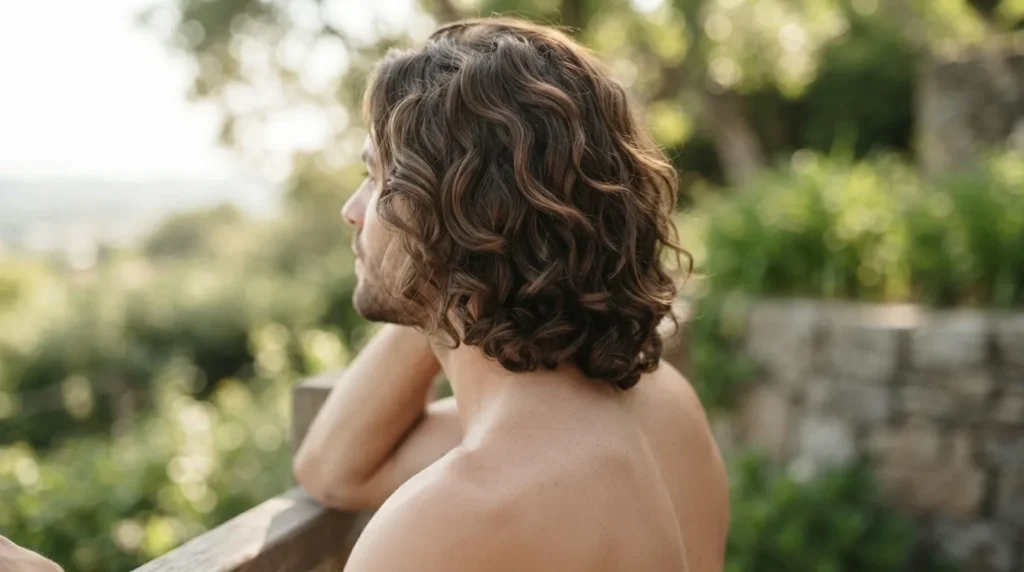
Medium length — roughly 2 to 4 inches on top — gives 2C waves enough room to form full S-bends while staying easy to style with a light cream or sea salt spray.
Long Hairstyles for 2C Hair Men
Longer 2C hair benefits from regular trims to prevent split ends, which flatten wave definition over time. A center or slight side part helps distribute volume evenly across a fuller length.
Mistakes to Avoid With 2C Hair
- Applying product to dry hair instead of soaking wet hair
- Using heavy pomades or waxes meant for straight hair
- Touching or restyling hair while it’s drying
- Washing daily with a sulfate shampoo
- Skipping a leave-in conditioner because it “feels unnecessary” for shorter styles
- Ignoring regular trims, which lets split ends dull wave definition
Tips for Healthy 2C Hair Long-Term
Regular trims every 8–10 weeks prevent split ends from disrupting the wave pattern. A weekly hair mask keeps coarse strands hydrated between washes, and switching to a silk pillowcase reduces overnight friction that causes frizz and flattens root volume.
Diet and hydration also play a role — a dermatologist or trichologist can help rule out scalp issues if dryness or frizz persists despite a solid routine.
Frequently Asked Questions
Is my hair 2C?
If you see distinct S-shaped waves starting near the root, with coarse texture and noticeable volume, you likely have 2C hair. Compare against 2B (looser, mostly mid-length waves) and 3A (full ringlet curls) to confirm.
How often should men with 2C hair wash their hair?
Every 2–3 days with a sulfate-free shampoo is typically ideal. Washing daily strips the oils that keep 2C waves defined and frizz-free.
What’s the best shampoo for 2C hair?
A sulfate-free shampoo formulated for wavy or curly hair works best, since it cleans the scalp without over-drying the lengths.
How do you style 2C hair for men?
Apply leave-in conditioner and a lightweight styling product to soaking wet hair, then diffuse on low heat or air dry without touching hair until it’s fully set.
What’s the difference between 2C and 3A hair?
2C hair forms defined S-shaped waves from root to tip, while 3A hair forms complete ringlet curls. 2C sits at the coarser end of wavy; 3A is the loosest curl type.
Conclusion
2C hair rewards a routine built around moisture, wet-hair application, and minimal disruption while drying. Skip the heavy products made for straight hair, wash less often than you think you should, and let the wave pattern do the work it’s naturally built to do.
Read Next.
Pingback: 2C Hair Care Guide: Routine, Products & Tips